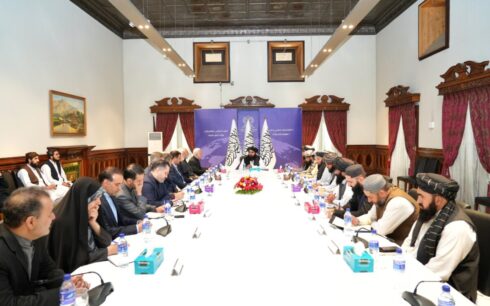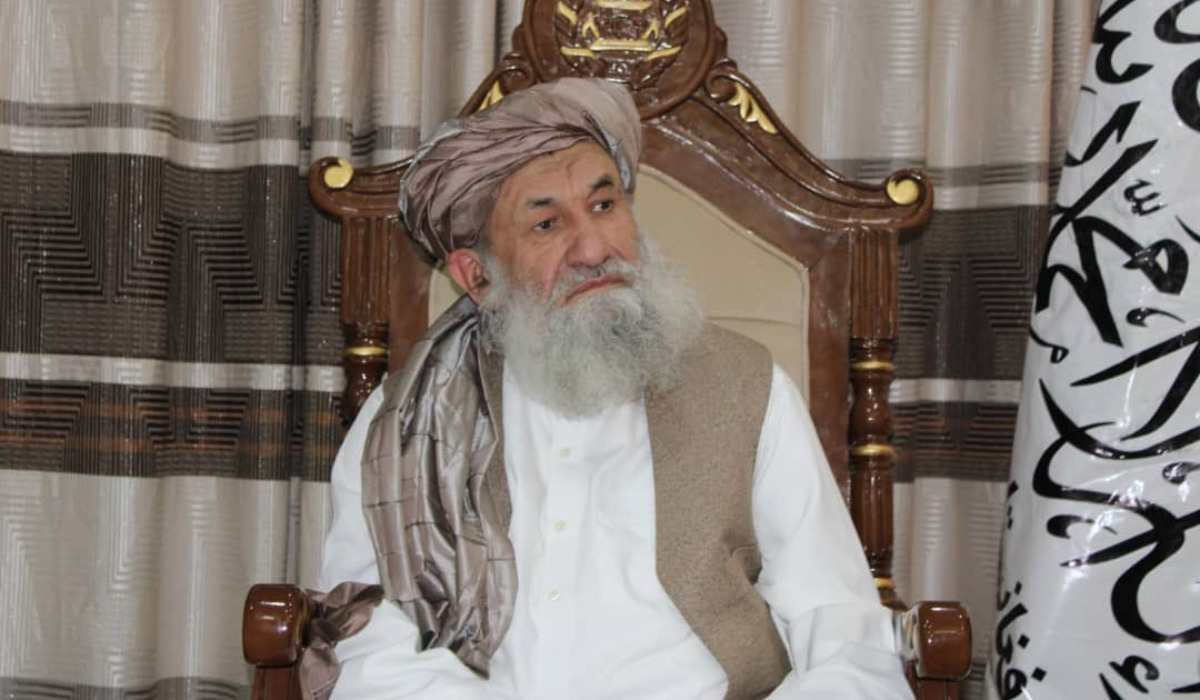
Several members of the Taliban cabinet, including their chief minister Hasan Akhund, have traveled to Kandahar at the instruction of their leader Akhundzada for internal consultations, including talks on Bagram air base, local sources told Amu on Sunday.
The meetings, described by the sources as “regular internal sessions,” are expected to address security concerns and the future of Bagram airbase, which has reemerged as a flashpoint after US President Donald Trump repeatedly vowed to “take back” the base.
Last week, sources said Akhundzada summoned his cabinet to Kandahar specifically to deliberate on Trump’s remarks. The Taliban leader has also held separate discussions with senior ministers and the group’s supreme court chief on the issue, according to people familiar with the matter.
Since returning to the White House, Trump has referenced Bagram more than 20 times in speeches and interviews. In the past week alone, he has raised the matter repeatedly, warning the Taliban that “bad things” would happen if the base is not returned to US control.
Taliban spokesman Zabihullah Mujahid rejected Trump’s assertions in an interview with Al Arabiya, denying that any negotiations over Bagram were taking place. He said recent contacts with US officials focused on prisoner releases and economic issues, not military basing. Mujahid added that any hostile moves by Washington would provoke a “hostile reaction” from the Taliban.
The debate underscores Bagram’s enduring symbolism. For two decades it served as the centerpiece of US military operations in Afghanistan before American forces left the base in July 2021 under orders from President Joe Biden. Its potential reactivation has become a rallying point for Taliban leaders, who view foreign basing as a direct threat to their authority.
Analysts say the renewed focus on Bagram could deepen divisions within the Taliban between leaders who oppose any foreign military presence and figures more open to limited engagement with Washington. “Any US return would shake the Taliban’s cohesion,” Afghan military analyst Bismillah Taban told Amu.