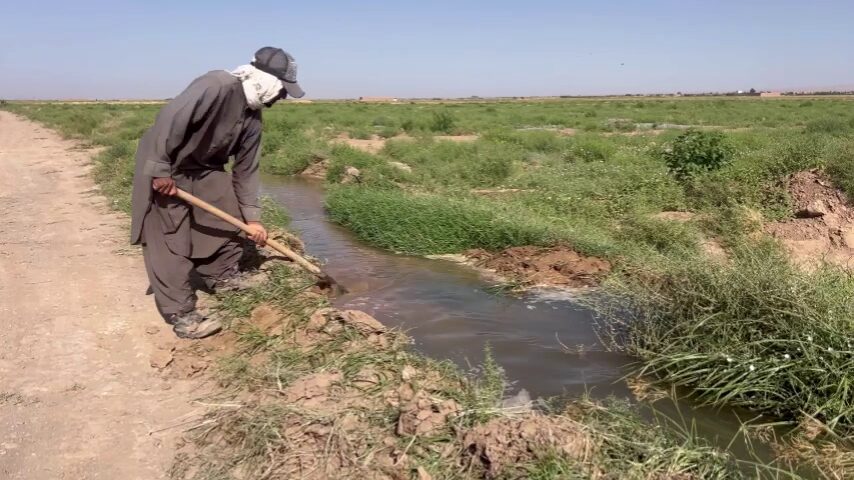
Farmers in Adraskan district of Herat province say this year’s melon and watermelon harvests have declined sharply compared with last year, blaming water shortages, lack of fertilizer and the expansion of brick kilns near farmland.
Herat, in western Afghanistan, is home to some of the country’s largest melon and watermelon fields. But growers in Adraskan say their yields have dropped due to drought, agricultural pests and frequent dust storms.
“This year there were many storms and strong winds carrying dust onto our fields. We had no good harvest,” said Abdul Hameed, a farmer. “Last year the yields were good, but this year was very bad.”
Other farmers cited the lack of irrigation water and chemical fertilizer as major causes of the decline. “The dust and wind destroyed most of our crops and caused us a huge loss,” said another farmer, Sulaiman.
Some residents also accused nearby brick kilns of damaging farmland. “Our agriculture was good before the brick kilns started, but now dust covers the plants and prevents them from breathing,” said Asadullah, a farmer. “The kilns have wiped out our farming.”
Adraskan was once considered one of the most fertile districts in Herat for farming and livestock. Farmers say climate change, including reduced rainfall, has further undermined the district’s role as a traditional agricultural hub.