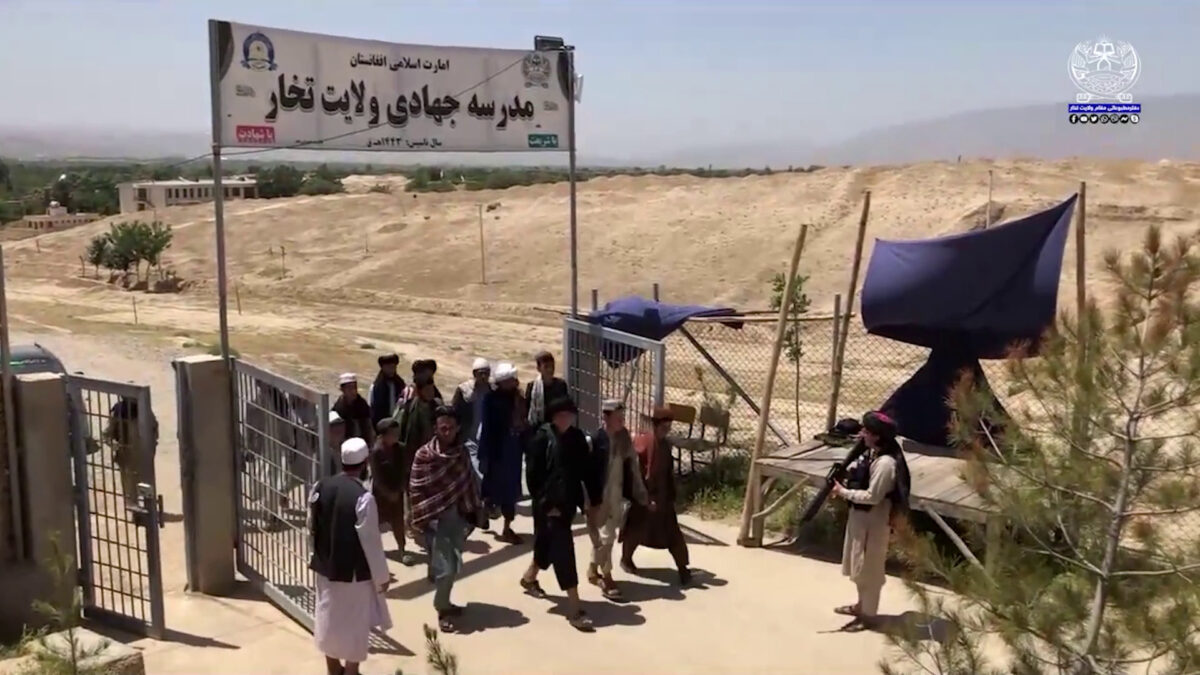
Figures by the Taliban’s Ministry of Education show that seven religious schools were either completed or had construction started over the past month, with most of the activity concentrated in Ghazni province.
According to official data encompassing the Asad month in solar calender (23 July to 22 August), the religious schools — or madrasas — are open to both boys and girls. Completed institutions include Darul-Iman for Girls, Abdullah bin Umar, and Raheema, located in Ghilan, Qarabagh, and Muqur districts of Ghazni. Foundations were also laid for four other schools: Khairul-Uloom in Ghilan, Darul-Uloom Naumania in Laghman, another Abdullah bin Umar school in Shahjoy district of Zabul, and one more in Charikar city, Parwan province.
The ministry said these schools were either inaugurated or had their foundation stones laid over the past month.
Unlike public schools, Taliban authorities have not imposed age or enrollment restrictions for girls attending these religious institutions. A female student in Panjshir, who asked not to be named, told Amu TV that interest among girls in attending madrasas has grown significantly since the Taliban closed most schools and universities to female students. “Since schools and universities were closed, girls have turned to the darul-ulooms,” she said.
The emphasis on religious schooling comes as Taliban leader Hibatullah Akhundzada recently signed off on a financial law that allocates public funds to support such institutions. Article 19 of the law states: “Rations will be provided to jihadist schools and orphanages based on the number of Taliban students enrolled at the start of the academic year.”
Sources familiar with the education system say the curriculum in these madrasas is shaped according to Taliban ideology and serves to promote the Taliban’s interpretation of Islam.
Researcher Abdul Ahad Farzam told Amu that students graduating from Taliban-run religious schools not only absorb extremist and violent ideology but are also left unprepared for the job market or participation in the country’s economic and social development.
Despite these concerns, official figures from the Taliban’s Ministry of Education claim that over 21,000 religious schools are currently active across Afghanistan, with more than 3 million students enrolled.
Scholars and educators have previously warned that the Taliban are simultaneously suppressing modern sciences while expanding their control over religious education — using these institutions to spread their interpretation of Sharia law. University professors say that since returning to power, the Taliban have revised the curricula of religious schools and have either removed mosque imams or forced them to align with the Taliban’s directives.