The Taliban must immediately reinstate a formal constitutional and legal framework and end four years of arbitrary justice, Amnesty International said Friday, saying the Taliban have dismantled Afghanistan’s judicial system and replacing it with “an opaque, coercive order based on its strict interpretation of Islamic law”.
In a new report, the rights group said the Taliban’s justice system is riddled with inconsistency, impunity and unaccountability, with trials that are arbitrary, closed to the public and influenced by personal bias. Punishments, including public floggings and other forms of torture, are imposed without due process, it said.
“After four years of Taliban rule, what remains is a deeply opaque, coercive legal order that prioritizes obedience over rights, and silence over truth,” said Samira Hamidi, Amnesty International’s regional campaigner for South Asia. “The Taliban’s justice system has not only stepped away from international human rights standards but has reversed nearly two decades of progress.”
Before August 2021, Afghanistan had a written constitution, multiple court levels and independent prosecutors and defense lawyers. Trials were generally documented, subject to appeal and open to public oversight. Under Taliban rule, most cases are handled by a single judge, advised by a religious legal expert issuing fatwas based on personal interpretations of Islamic texts, Amnesty said. Penalties for the same crime can vary drastically, and proceedings often take place in secret.
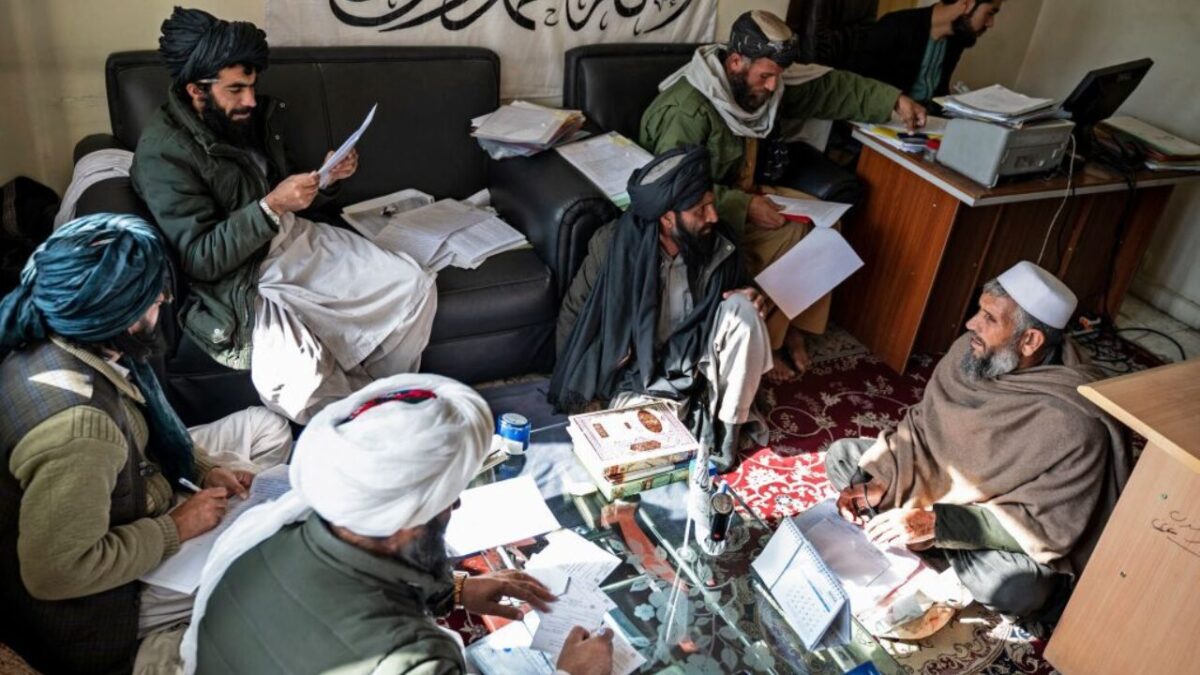
The absence of codified national laws has stripped Afghans of legal certainty, the group said. In some rural courts, judges have been seen leafing through religious texts during trials to find supporting references, leading to delays and inconsistent rulings.
The dismantling of institutions that once protected women’s rights, including family courts and violence-against-women units, has left women with almost no access to justice. Nearly 1,500 female lawyers and legal advocates registered before 2021 have been forced into hiding or exile, according to Amnesty.
“There is no judicial independence, no fair trial procedures, and no access to defense lawyers,” a former family court judge now in exile told Amnesty. “We had built a legal system with rules, and overnight [the Taliban] turned it into something frightening and unpredictable.”
Public punishments — including floggings and executions in city squares and stadiums — are carried out without fair trial or legal review, the report said. Witnesses described men whipped for listening to music and women detained for not being fully covered.
“Justice is no longer something many Afghans can seek,” Hamidi said. “It is something they must survive without.”
Amnesty urged the Taliban to reverse restrictive edicts, end corporal punishment and uphold judicial independence. The group also called on the international community to apply diplomatic pressure to demand the reinstatement of a formal legal system and protection of human rights in accordance with Afghanistan’s international obligations.