This year, when the results of the national university entrance exam were announced and social media filled with smiling faces and congratulatory messages for boys’ success, I could only watch through tear-filled eyes. A bitter reality that has gripped us girls for years resurfaced, reopening an old wound.
This was supposed to be a good day for me too. I was supposed to get my results, enter university, and take the first step toward my future. But time stopped for me four years ago—the day the Taliban closed the school gates and said: “Until further notice, it’s forbidden.” It wasn’t just me; thousands of girls across Afghanistan were suddenly erased from education, from life, from society, and even from the collective memory. As if we had never been students, never had dreams.
Four years ago, I was in ninth grade, filled with big ambitions and hopeful eyes. I wanted to be a doctor. Or an engineer. Or a university professor. Back then, I believed that if I worked hard, stayed up at night studying, I could achieve all my dreams. I believed nothing could stop me—not poverty, not restrictions, not tradition. I never imagined that a single rigid decree, stamped with black ink, could take my future away.
For four years, I’ve lived only with those dreams and with the cruel passage of time that seems to move for everyone but us. We are stuck in that moment, trapped behind those locked gates.
We are the forgotten girls—like a book no one cares to read anymore.
Now, I no longer have grand dreams. I have only one: that one day the school gates will open again. That one day we will be allowed to learn again. The right to a future, the right to exist, the right to live.
When the schools closed, it felt as if the world went silent. One by one, the paths to my dreams were blocked. But my mother, who had seen this darkness more than 20 years ago, told me I had to hold on to hope. She said I must not let this silence extinguish my inner light. She told me the sun will rise again, even if late. My mother believed the Taliban would go, and women would reclaim their rights. She said I must keep building myself, keep existing, no matter what.
From that day, I did everything I could. I tried online learning, though the internet was weak and the power kept going out. I studied in secret classes—afraid, but hopeful. I read books, took notes, watched educational videos, solved problems. But nothing replaced school—the sound of the bell, running through the corridors, the warm gaze of a teacher, the feeling of learning together.
Still, these four years have taught me one important thing: the more they try to erase us, the harder we must fight to exist. We must remind ourselves, our society, and the world that we are still here. We still think, we still learn, we still dream. We have always been here, and we always will be.
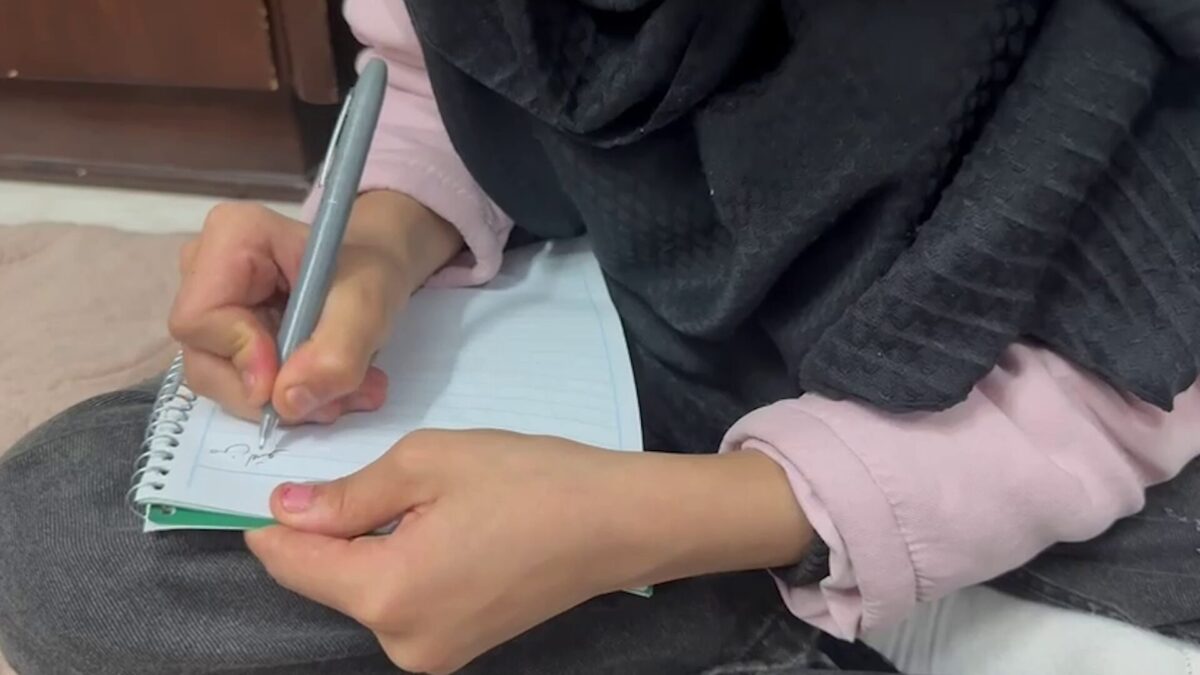
We, the silenced, erased girls, must raise our voices—in writing, in learning, in creating, even from behind the tallest walls. Every time I write something, study a lesson, or speak a dream aloud, it’s as if I am telling the world again: I am still alive. We are still alive.
We will return to our time—sooner or later. But we will.
Maryam Rahmani is a girl barred from education. She is also active in Herat’s literary and cultural community and writes political essays, poetry, and fiction.
The views expressed in this article are those of the author and do not necessarily reflect those of Amu TV.