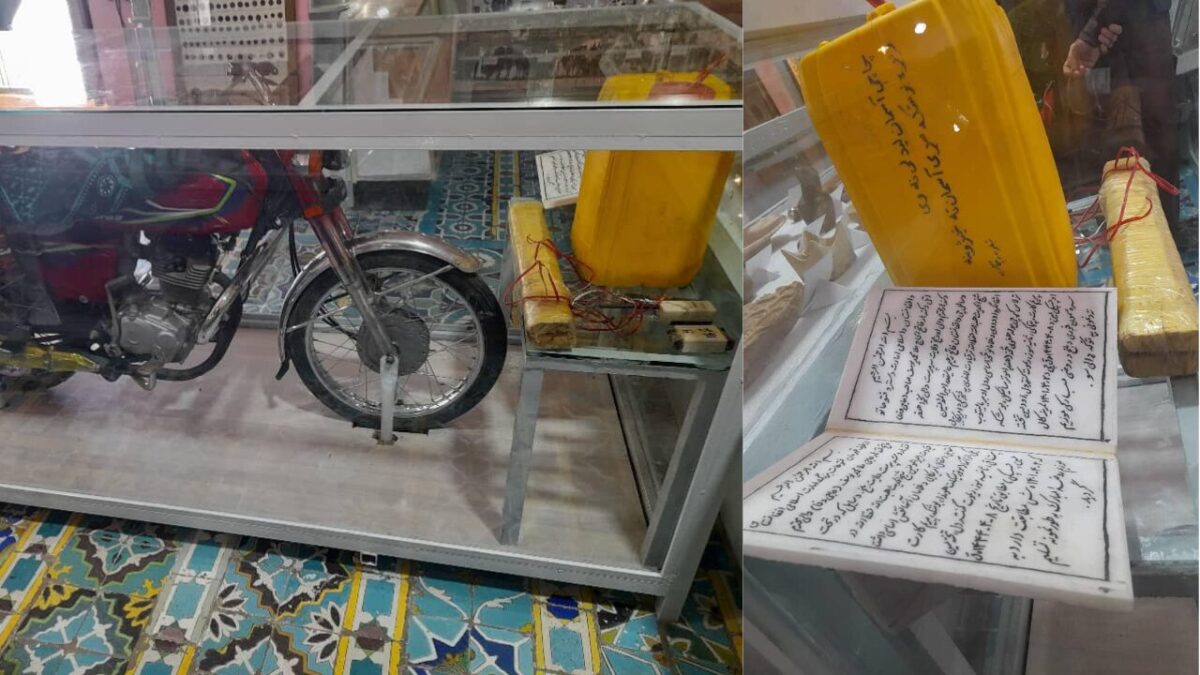
Nearly four years into Taliban rule, new museums across the country are stirring anger and grief for displaying suicide vests, barrel bombs and other explosive devices used in decades of war. Survivors say the exhibitions glorify weapons that killed thousands and reopen painful memories for families still mourning loved ones.
In Maidan Wardak province, Taliban have opened what they call the “Mujahid Museum.” Officials from the Taliban-run Ministry of Information and Culture say it houses 33 items, including makeshift barrel bombs, suicide vests and even the shoes of attackers.
“The museum has two sections,” said Habibullah Mujahid, head of the Taliban’s information and culture department in the province. “One section preserves historical artifacts, while the other showcases weapons taken from the occupiers and those built by our mujahideen to defeat them.”
For residents, however, the displays are a painful reminder. “I lost five members of my family in suicide attacks during the 20 years of war,” said one man. “In a country where almost every family is mourning, turning the symbols of death into museums only deepens our pain.”
Another resident said: “These objects in museums in places like Balkh and Daikundi are not symbols of victory — they are symbols of tragedy. They only bring back bitter memories.”
Taliban have created similar centers in other provinces. In Mazar‑e‑Sharif, the “Fath (Victory) Museum” exhibits improvised mines, sticky bombs, motorcycles and other explosive devices once used in attacks.
Suicide bombings became a hallmark of Taliban warfare between 2001 and 2021, often striking crowded markets, schools, mosques and government buildings. Rights advocates and survivors say the museums risk glorifying that violent past while disregarding the suffering of ordinary Afghans.