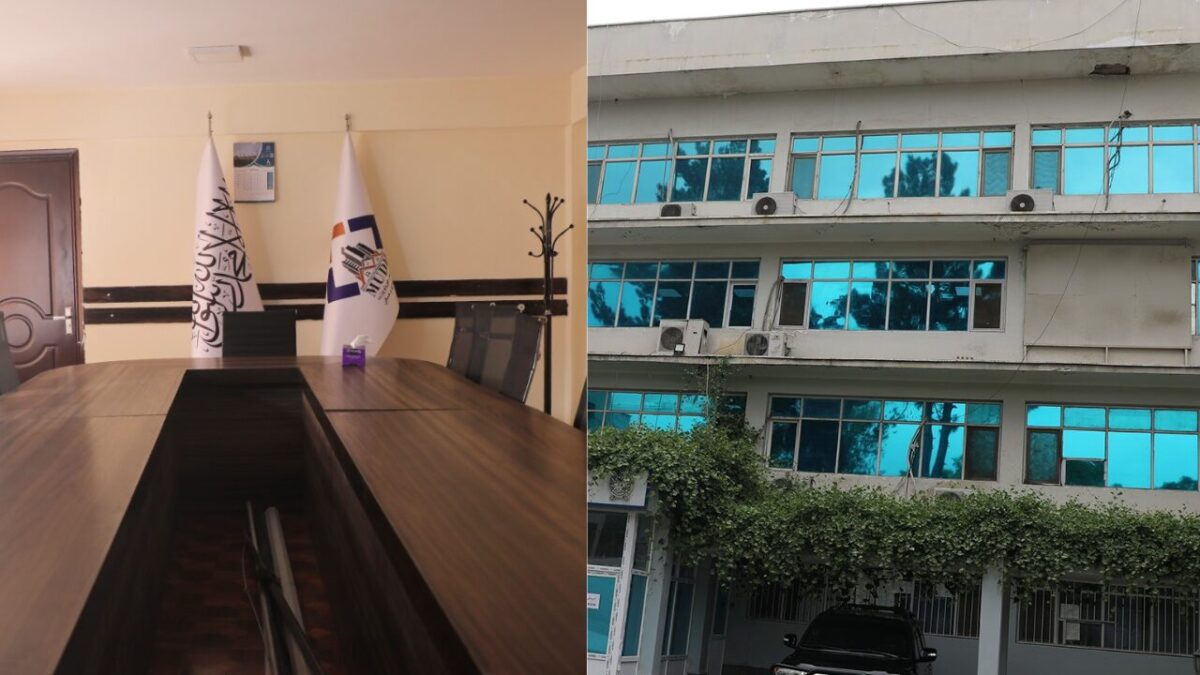
Afghanistan’s Taliban-run Ministry of Urban Development and Housing has stopped publishing photographs of living beings, according to a review of the ministry’s social media pages.
For the past three days, the ministry has posted only images of empty chairs and Taliban flags from meetings, including a recent session of its special urban planning commission. A caption stated that the meeting was chaired by Taliban deputy minister Madar Ali Karimi, but no one was visible in the photo.
The change follows Article 17 of the Taliban’s law on the Promotion of Virtue and Prevention of Vice, enacted last August, which restricts the publication of images of living beings.
Basir Ahmad Danishyar, a university lecturer, criticized the move, saying transparency and public trust require officials’ images to be shown. “This kind of approach is narrow-minded, unrealistic and misleading,” he said.
The ministry is led by Najibullah Hayat Haqqani, who was appointed acting minister in July. He is listed on the UN Security Council sanctions list for his role in the Taliban. According to UN records, he is also known as Najibullah Haqqani Hedayatullah and has served in senior Taliban posts for decades.
During the Taliban’s first rule in the 1990s, he was a deputy minister in both the Public Works and Finance ministries. After the Taliban’s fall in 2001, he was appointed to head the Taliban’s military commission in Kunar and later became their shadow governor in Laghman province.
Haqqani, a relative of Taliban Health Minister Noor Jalal Jalali, previously served as acting minister of communications and information technology after the group’s return to power in 2021. His name was added to the UN sanctions list in February 2001 because of his role in Taliban military operations.
Other senior Taliban officials — including the acting ministers of higher education, justice and public health, as well as the head of the Supreme Court — have also refrained from publishing photos of themselves since the group’s takeover in 2021.