Ghulam Jailani was working a construction shift in eastern Iran when he was stopped by police, detained on the spot, and deported to Afghanistan — still wearing his work uniform.
“I wasn’t even allowed to change,” he said, standing outside a crowded migrant transit center near Herat’s border. “I haven’t been able to reach my family since.”
Jailani is one of a growing number of Afghan migrants who say they were forcibly returned from Iran in recent weeks, amid what rights groups and UN officials warn is an accelerating deportation campaign targeting undocumented Afghans.
Mohammad Omar, 51, another recent returnee, described what he called routine abuse during detention. “They beat us however they liked,” he said. “They even take our money. This happens all the time in Iran.”
The firsthand accounts directly contradict statements made by Iranian authorities. During a recent visit to the Dogharoon border crossing, Iran’s deputy interior minister for security affairs claimed that most Afghan nationals were returning voluntarily and preferred that route out of the country.
But interviews conducted by Amu TV with deported migrants suggest otherwise — a portrait of sudden arrests, forced removals, and families separated with little or no warning.
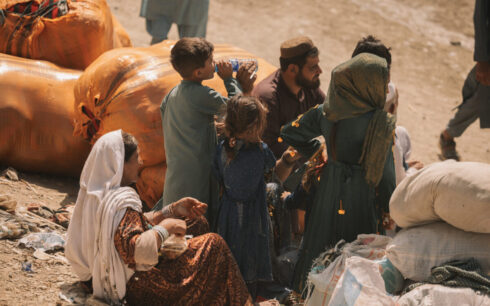
Thousands of returnees are now pouring daily into Herat Province, where many have no homes or support networks. Makeshift tents dot the outskirts of the city. Women, men, and children sleep on sidewalks and empty lots, exposed to summer heat with little access to clean water or food.
The situation has triggered alarm within international agencies.
Roza Otunbayeva, head of the UN Assistance Mission in Afghanistan (UNAMA), visited the Islam Qala border this month and called for urgent international support. “The volume and speed of the returns are placing enormous stress on an already fragile system,” she said.
UN spokesperson Stéphane Dujarric said more than 1.3 million Afghans have returned to the country so far in 2025 — an overwhelming influx for a nation where 70 percent of the population lives below the poverty line.
“This has placed extraordinary pressure on Afghan communities,” Dujarric told reporters in New York.
The Taliban administration has acknowledged the challenges. In a recent inter-ministerial meeting, Abdul Kabir, the acting minister for refugees, said the mass returns are affecting both the social and economic stability of the country. He urged Afghan ministries to find ways to make use of returnees’ skills and experience.
Meanwhile, Iranian media reported that the head of Iran’s Foreign Ministry office in Mashhad met with Noor Mohammad Motawakil, the Taliban’s newly appointed consul general, to discuss closer coordination on repatriation procedures.
Despite diplomatic efforts, the lived reality for migrants like Jailani and Omar underscores a growing humanitarian crisis — one experts warn is likely to deepen unless met with sustained international funding, infrastructure, and political will.