A senior Iranian official has accused the Taliban of refusing to accept certain Afghan migrants deported from Iran, citing a lack of cooperation and disputes over identity verification.
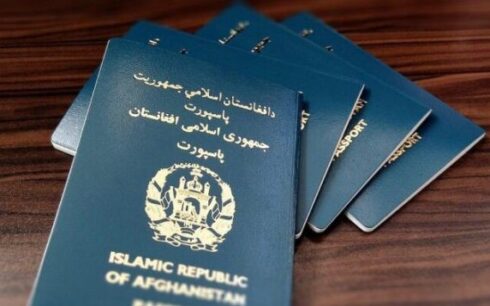
Malek Hosseini, Iran’s Deputy Minister for Entrepreneurship and Labor Development, said at a press briefing on Sunday that some deportees lack any form of identification, prompting Taliban officials at the border to deny their entry.
“One of our most serious challenges in the return process is the Taliban’s refusal to accept some individuals,” Hosseini said. “Their response is: ‘How do we know this person is Afghan?’”
Iran has deported hundreds of thousands of Afghans in recent months, many of whom entered the country without documentation amid worsening economic and humanitarian conditions in Afghanistan.
Hosseini noted that more than 92 percent of Iran’s foreign labor force is Afghan. He added that an estimated 5 million undocumented Afghans are currently working in Iran, with about 70 percent of them single men, according to unofficial figures.
He defended Iran’s record as a host country, stating that despite decades of international sanctions and environmental hardship, the Islamic Republic had never engaged in mass expulsions of Afghan nationals.
“For more than four decades, Iranians have welcomed their Afghan brothers and sisters—even under the toughest conditions,” he said.
According to Hosseini, Afghan migrants now make up over 10 percent of Iran’s total population, a proportion he said is unmatched in any other country with a subsidy-based economy.
Still, he emphasized that the presence of foreign nationals must be managed within the framework of national laws and migration policy.
“We have foreign workers from 80 countries,” he said. “But no country honors undocumented labor. That is not sustainable.”
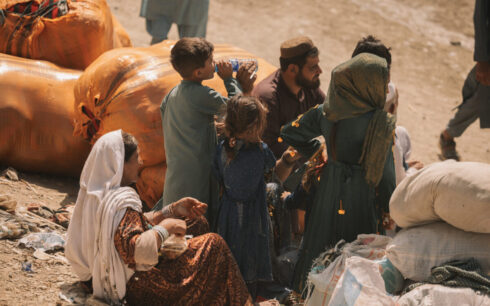
He also addressed recent overcrowding at border crossings, specifically the Dogharoun-Islam Qala crossing in eastern Iran. He said that Behrouz Azar, Iran’s Deputy for Women and Family Affairs, visited the border earlier this week and reported that Iran had provided adequate facilities for women and children. However, delays on the Afghan side of the crossing were causing bottlenecks and prolonged waits.
The remarks come amid rising tensions between the two sides over the mass deportation of Afghan migrants and the deteriorating humanitarian conditions many face upon return.