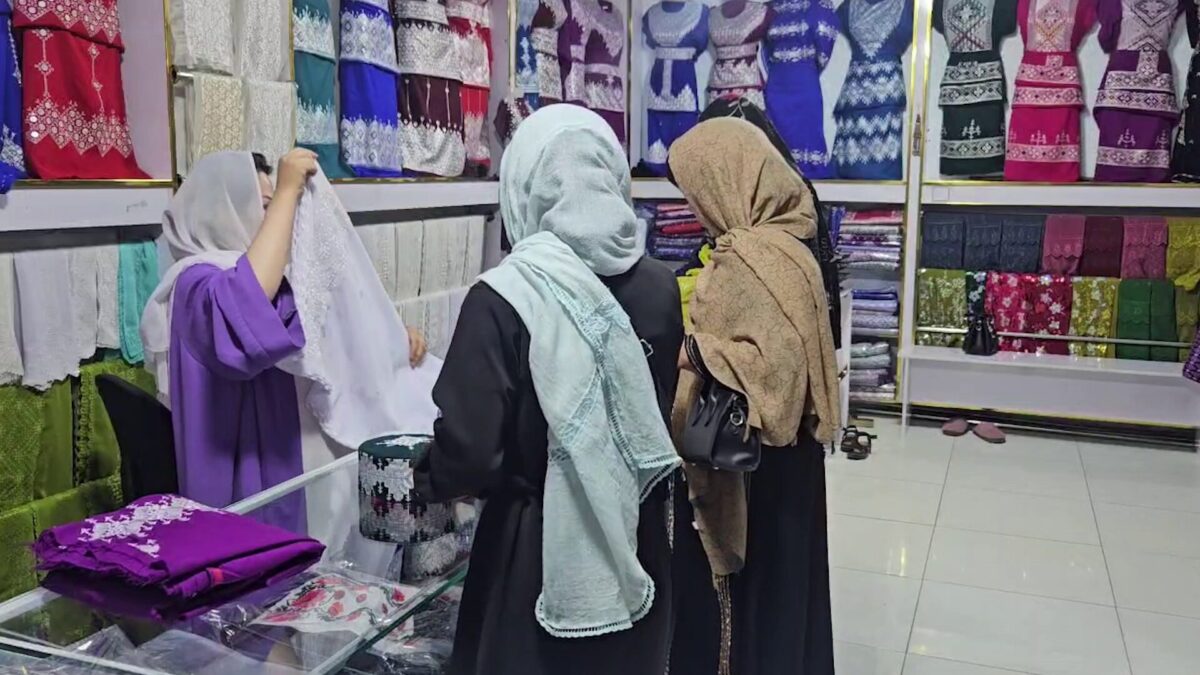
KABUL — As sweeping Taliban restrictions continue to limit women’s access to education and employment, a small but growing number of women in Kabul are finding ways to reclaim public space, by becoming market vendors.
These women say their presence in the capital’s markets not only helps them earn a livelihood but also provides a safer and more comfortable environment for female customers, many of whom prefer to shop from other women.
“Working here gives women more confidence to come to the market,” said Sediqa Toofan, a university student who once dreamed of entering politics but now sells clothing in a Kabul market. “It’s not just about earning — we’re helping women feel safer and more comfortable when they shop.”
Despite conservative attitudes that still view women working in public spaces as taboo, these vendors say the trend is slowly shifting. Their stalls — often focused on tailoring and women’s fashion — are drawing a loyal female clientele who say they feel more at ease discussing sizing and personal preferences with other women.
“I sew dresses to order for women, and I can take their measurements easily and tailor things to their liking,” Toofan said. “They’re more comfortable with me, and I’m able to work with them directly, without needing to involve a man.”
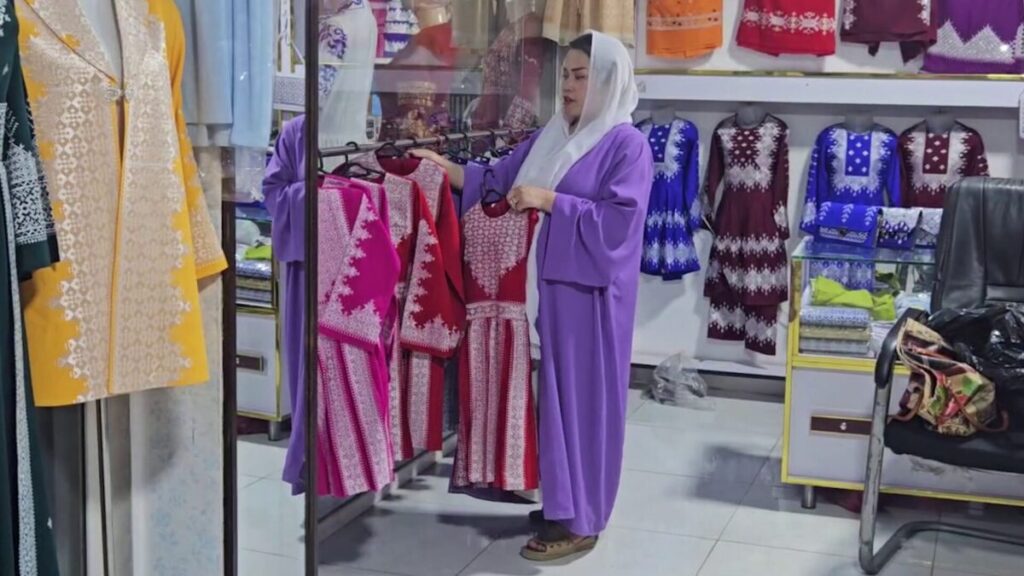
She is not alone. Dozens of women now operate in similar roles across Kabul, navigating daily social and financial pressures to support their families and assert their independence.
Najma Hossaini, who specializes in selling traditional Hazara dresses, recalls the hesitation she faced at first. “People weren’t used to women running shops,” she said. “But now that’s changing — more and more women are working in stores, and customers are getting used to it. It’s a positive change.”
Karima Salamat, another vendor, said the benefit goes beyond income. “We understand each other’s taste and needs better. It’s a big help to women,” she said. Her shop sells both machine-made and hand-stitched dresses, with prices ranging from 1,500 to 22,000 Afghanis depending on the craftsmanship.
The economic impact is tangible. Many of the garments, especially the hand-stitched pieces, are produced by women in other provinces and sold through these small businesses, creating networks of female employment across Afghanistan.
Yet the risks remain high. Under Taliban rule, women are barred from most formal employment and are prohibited from leaving home without a male guardian. Even running a small business can expose women to harassment or societal backlash.
Still, some Kabul residents say these women deserve support, not silence.
“This is a skill worth supporting,” said Khadim Hussain, a local shopper. “These women are feeding families with their work. In a country like ours, where economic hardship is everywhere, their resilience is inspiring.”
Women working in Kabul’s markets say they are determined to continue — not only to support themselves but to make space for others.
“We know the challenges,” said Toofan. “But every day we show up is one step forward — for us and for the women who come after us.”