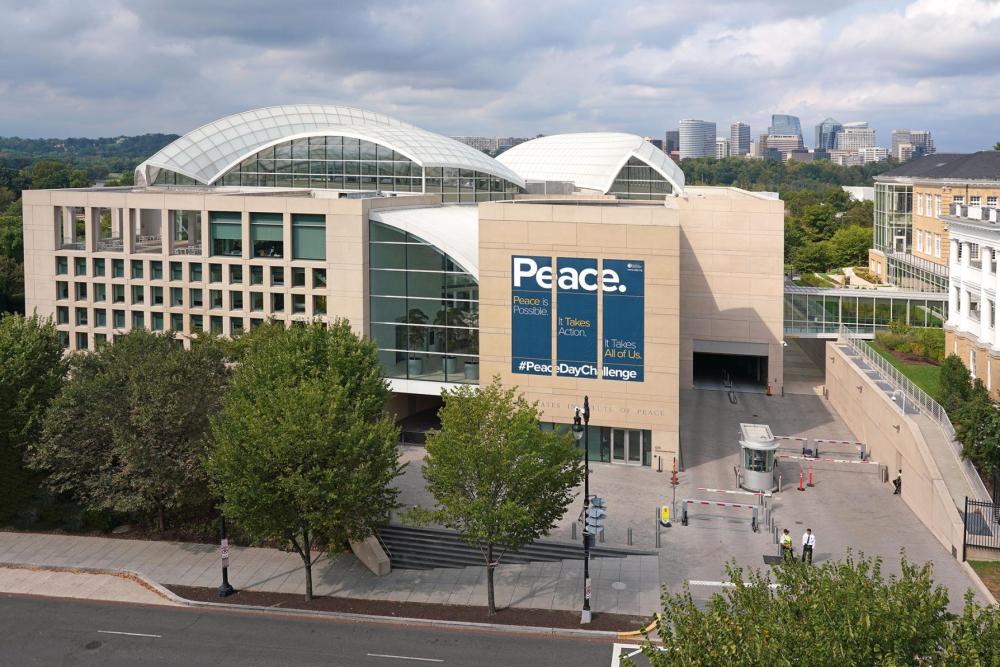
WASHINGTON — Two months after the Department of Government Efficiency shuttered the U.S. Institute of Peace and dismissed nearly all of its employees, former staffers say the decision has dealt a blow to American diplomacy and weakened the country’s influence in global conflict zones.
Before its sudden closure in mid-March, the nonpartisan, congressionally funded institute operated quietly at the edges of U.S. foreign policy, providing expertise in peace negotiations, ceasefires and conflict resolution that former officials say the State Department could not always supply on its own.
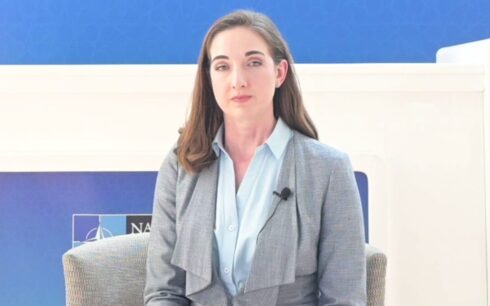
“We thought of USIP as an overflow reservoir of knowledge,” said Sasha Pippenger, who led the institute’s peace processes team, as quoted by Washington Times. “It wouldn’t make sense for the State Department to employ a large team of ceasefire experts full time, but when such expertise was needed, the government could turn to USIP.”
Ms. Pippenger warned that in the absence of USIP, rivals such as China and Russia will find it easier to expand their influence in regions where the United States has long promoted stability and democratic norms. “We’re being outbid in that market,” she said. “The credibility of American leadership is eroding.”
Scott Worden, who directed the institute’s Afghanistan and Central Asia program, said the closure risks ceding strategic ground to Beijing in the region. “China is already investing heavily in infrastructure in Pakistan and Central Asia,” he said. “Afghanistan connects the two. Without USIP, the U.S. is pulling back just as China is consolidating its reach.”
Mr. Worden noted that USIP teams in Afghanistan worked closely with local officials and civil society leaders after the Taliban takeover in 2021, often delivering more targeted, cost-effective results than traditional U.S. agencies. “We had the flexibility to engage directly and frequently, identifying real-time solutions that promoted U.S. interests, including security,” he said.
The dismantling of the institute followed the March 17 takeover of its Washington headquarters by DOGE, which placed Nate Cavanaugh, a DOGE official, at the helm. Nearly all staff were dismissed, and USIP’s assets were transferred to the General Services Administration, an executive agency.
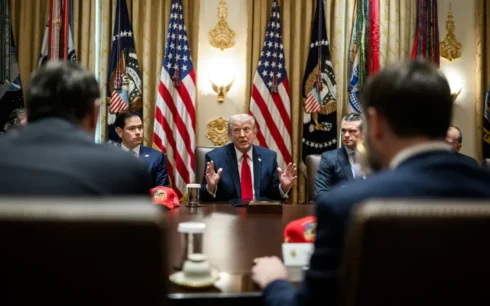
The Biden administration said the move was consistent with President Trump’s February executive order targeting what he described as “unaccountable independent agencies.” The Justice Department has defended the action, arguing that USIP performs executive functions and receives substantial public funding, making it subject to White House oversight.
Established by Congress in 1984, USIP has long maintained its status as an independent agency. Its lawyers have challenged the takeover in federal court, arguing that DOGE and the White House lack the authority to dissolve it. The legal dispute is set for a critical hearing on May 14 in U.S. District Court.
Even if the court sides with USIP, former staffers worry that the damage may be lasting. Diplomatic partners, they say, may hesitate to reengage with an institution that now carries a question mark over its independence and stability. And a final court victory may prove hollow if Congress eliminates the institute’s funding in the next budget cycle.
“The work we did wasn’t always visible, but it mattered,” said one former staffer. “And without USIP, the U.S. has lost a key tool for diplomacy and peace.”