Iran, Tajikistan and the Taliban have agreed to establish a new road transit corridor through Afghanistan, a move aimed at facilitating trade between the two neighboring countries and expanding regional transport links.
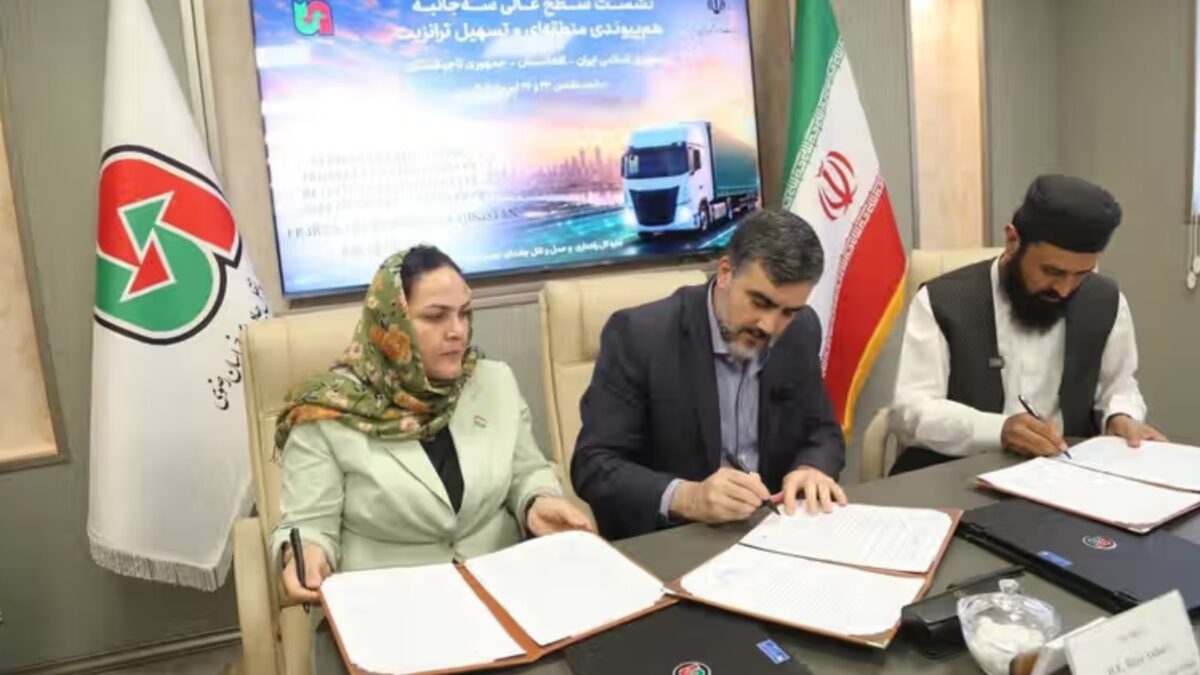
The Taliban’s Ministry of Transport and Civil Aviation said representatives of the three sides reached the agreement during a meeting in Mashhad, Iran. Under the arrangement, commercial cargo between Iran and Tajikistan will be transported through Afghan territory.
“Under this agreement, commercial shipments between Iran and Tajikistan will transit through Afghanistan,” the ministry said in a statement posted on X.
Iran’s Tasnim News Agency, citing officials in Razavi Khorasan Province, reported that Iran’s deputy minister of roads and urban development, Tajikistan’s deputy minister of transport and a Taliban transport official signed an operational transit plan during the meeting.
According to the report, the three sides expect the first pilot shipment to travel through the corridor within one month, allowing authorities to test border procedures, customs clearance and transport logistics before full implementation.
“The first pilot shipment is expected to pass through the corridor within the next month to evaluate transportation procedures, customs processes and operational coordination,” Jafar Shahamat, head of the Road Maintenance and Transportation Organization in Razavi Khorasan, was quoted as saying.
The agreement comes as Iran seeks to strengthen regional trade routes amid continued economic pressure and sanctions.
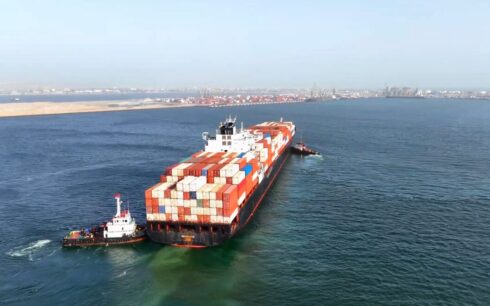
Business leaders in Afghanistan say recent regional tensions have disrupted trade through Iran’s Bandar Abbas and Chabahar ports, increasing transportation costs and pushing up prices inside Afghanistan.
Abdul Hadi Farhang, Afghanistan’s former commercial attaché in Iran, said prolonged disruptions at Iranian ports would have significant economic consequences for Afghanistan.
“Iran is Afghanistan’s largest and most important trading partner,” he said. “Any disruption to shipping, port operations or transit routes will eventually affect Afghanistan’s economy.”
The impact is already being felt in western Afghanistan.
Residents in Herat, where markets depend heavily on imports from Iran, say fuel prices have risen sharply in recent weeks. Some said the price of a liter of gasoline has increased by 22 afghanis, while the price of a kilogram of liquefied gas has risen by more than 25 afghanis.
“The price of fuel changes constantly,” one Herat resident said. “One day it’s 60 afghanis, then 65, and then 90. It’s becoming very difficult.”
Another resident from neighboring Badghis Province said regional conflicts have imposed heavy economic burdens on ordinary Afghans.
“The wars have cost us dearly,” he said. “Both the conflict involving Iran and the problems in Afghanistan have made life much harder.”
According to the World Bank’s latest Afghanistan Development Update, Iran remains Afghanistan’s largest source of imports, accounting for 31.6 percent of the country’s total imports, underscoring the importance of stable trade and transit links between the two countries.