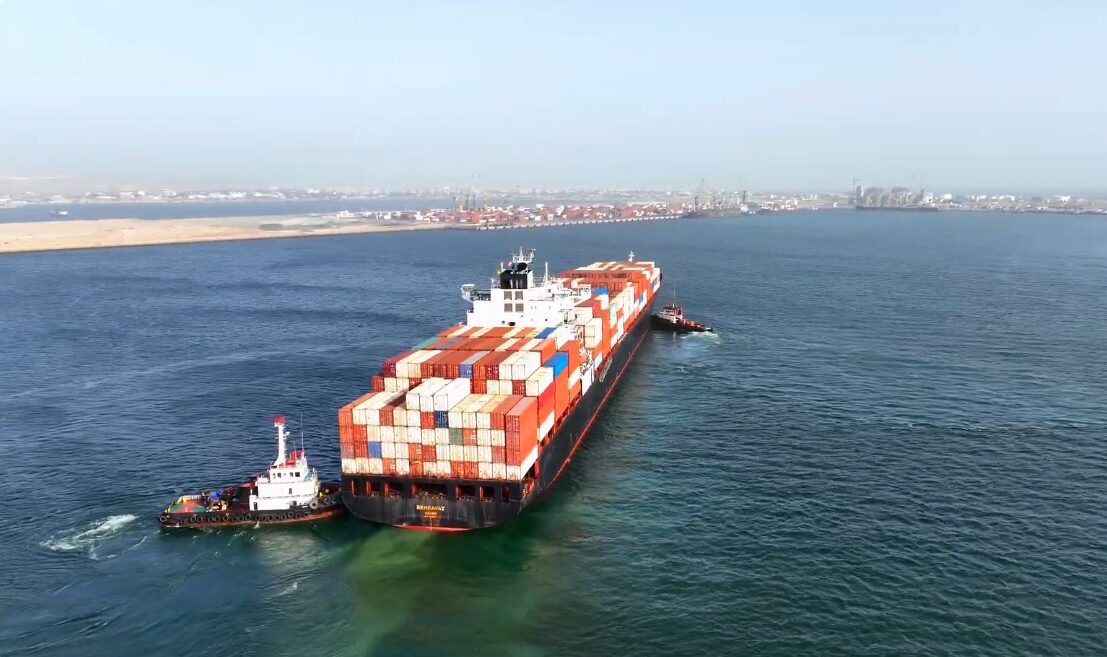
Recent US strikes on Iran have disrupted operations at Chabahar Port, raising concerns about one of Afghanistan’s most important alternative trade routes as the country already faces restrictions on transit through Pakistan.
Indian media reported that the US strikes damaged the port’s vessel traffic control tower early Thursday, dealing a setback to India’s long-term strategy of using Chabahar to access Afghanistan and Central Asia without relying on Pakistani territory.
Since India invested in the port in 2016, Chabahar has become a strategic transit hub linking India with Afghanistan and the broader region.
Indian newspapers, including The Times of India and Navbharat Times, described the strikes as a significant blow to New Delhi’s regional trade ambitions, saying they had disrupted one of India’s principal routes to Afghanistan and Central Asia.
Abdul Hadi Farhang, Afghanistan’s former commercial attaché in Iran, said the immediate impact on Afghanistan’s trade through Chabahar may be limited because the country’s trade volume through the port remains relatively small.
However, he said broader damage to Iran’s port infrastructure—particularly at Bandar Abbas, Afghanistan’s primary maritime gateway—could have more serious consequences.
“The Shahid Beheshti and Shahid Kalantari terminals, as well as the vessel guidance tower at Chabahar, were targeted,” Farhang said. “Although Chabahar accounts for only a limited share of Afghanistan’s trade, the greater concern is Bandar Abbas, through which most of Afghanistan’s imports and exports pass.”
The Afghanistan Chamber of Commerce and Investment also said Bandar Abbas handles the majority of Afghanistan’s overseas trade, while Chabahar plays a smaller but strategically important role as an alternative transit route.
According to the World Bank, Afghanistan exported goods worth $79.2 million in May, with India accounting for 34 percent of those exports, making it the country’s largest export destination.
Economic analyst Abdul Zohour Madbar said Chabahar remains strategically important because it provides Afghanistan with direct access not only to India but also to Gulf countries, Africa and Southeast Asian markets.
“Using Chabahar benefits both Afghanistan and India by expanding access to regional and international markets,” he said.
The Taliban have repeatedly encouraged Afghan traders to use alternative trade corridors instead of routes through Pakistan.
In November 2025, Abdul Ghani Baradar, the Taliban’s deputy chief minister for economic affairs, urged traders to shift exports and imports to alternative transit routes amid deteriorating relations with Pakistan.
The reported damage to Chabahar comes at a particularly difficult time for Afghan traders. Major trade and transit routes through Pakistan, including the Wagah border crossing and Karachi port, have remained largely inaccessible to Afghan commerce for about nine months because of political and security tensions.
With Pakistan’s routes restricted and uncertainty now surrounding Chabahar, Afghan traders face growing challenges in maintaining reliable access to regional and global markets.
Neither Iranian authorities nor US officials have released a detailed assessment of the extent of the reported damage to Chabahar’s facilities or when full operations may resume.