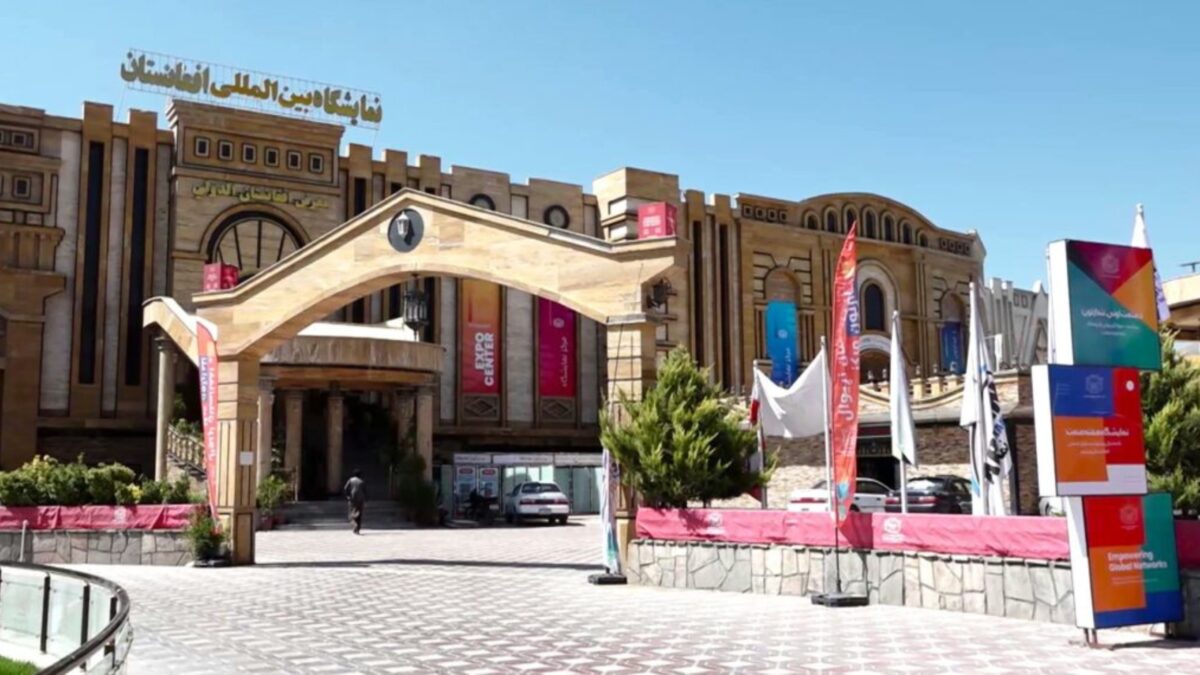
Taliban officials on Wednesday opened the fifth International Industry and Mining Week Exhibition in Kabul, saying the event brings together “hundreds” of Afghan manufacturers, traders and mining companies.
Organizers said the exhibition features companies from sectors including food processing, construction materials, handicrafts, industrial equipment, carpets and decorative stone.
The event, organized jointly by public institutions and the private sector, aims to promote Afghan-made products, encourage investment and strengthen links between domestic and foreign businesses, organizers said.
Speaking at the opening ceremony, Ahmad Nabi Zada, head of the Afghanistan Chamber of Industries and Mines, urged domestic and foreign investors to expand investment in Afghanistan’s mining sector, particularly mineral processing.
He said Afghanistan should not be viewed merely as a supplier of raw materials but as a country with significant industrial and economic potential.
Abdul Salam Hanafi, the Taliban’s deputy chief minister for administrative affairs, criticized what he described as the international community’s failure to support alternative livelihoods following the Taliban’s ban on poppy cultivation.
He said Afghan farmers had received little meaningful international assistance to transition to alternative crops.
Hanafi also said the Taliban had introduced incentives for investors, including tax exemptions of up to five years for Afghan investors returning from abroad, duty-free imports of industrial machinery and free land for qualifying investment projects.
He added that Afghanistan had achieved self-sufficiency in several sectors, though he did not specify which industries.
Other speakers, including officials from the Taliban’s Agriculture Ministry, called on Afghans to prioritize purchasing domestically produced goods.
The exhibition comes as Afghanistan continues to face significant economic challenges.
In its latest Afghanistan Economic Monitor, released this week, the World Bank said the country’s economic recovery remains fragile despite easing inflation and stronger domestic revenue collection. The report found that per capita income has fallen by 5.6 percent, while exports declined 17 percent in May to $79.2 million and imports fell 11 percent to about $970 million, underscoring the continuing impact of trade disruptions and weak investment.