Afghanistan has recorded two new cases of wild poliovirus, bringing the country’s total for 2026 to six, according to the latest polio surveillance bulletin issued by the World Health Organization’s Eastern Mediterranean Regional Office.
The newly confirmed cases were reported in Nari district of Kunar province and Nahr-e-Saraj district of Helmand province, with symptom onset dates of April 14 and May 7, respectively. The Kunar case was identified through testing of a close contact after the initial case tested negative for the virus.
Afghanistan and neighboring Pakistan remain the only two countries in the world where wild poliovirus remains endemic.
According to the WHO bulletin, Afghanistan has recorded six polio cases so far this year, compared with three in Pakistan. In 2025, Afghanistan reported 21 cases and Pakistan 31.
The report also documented continued environmental circulation of the virus. Afghanistan has recorded 34 positive environmental samples in 2026, while Pakistan has reported 90. Environmental surveillance involves testing sewage samples for evidence of poliovirus transmission.
The latest figures indicate a decline from 2025, when Afghanistan recorded 94 positive environmental samples and Pakistan reported 651.
The WHO said one of Afghanistan’s most recent cases had been detected through contact tracing, underscoring the importance of surveillance systems in identifying ongoing transmission. Across the region, two polio cases in 2026 — one in Afghanistan and one in Pakistan — were confirmed through positive contacts after the original patients tested negative.
Despite years of vaccination campaigns, Afghanistan continues to face challenges in eradicating polio, particularly in areas with limited access to health services and population movement across the border with Pakistan.
The WHO bulletin, which covers the week ending June 14, said wild poliovirus transmission continues in both countries, highlighting the need for sustained vaccination efforts and disease surveillance.
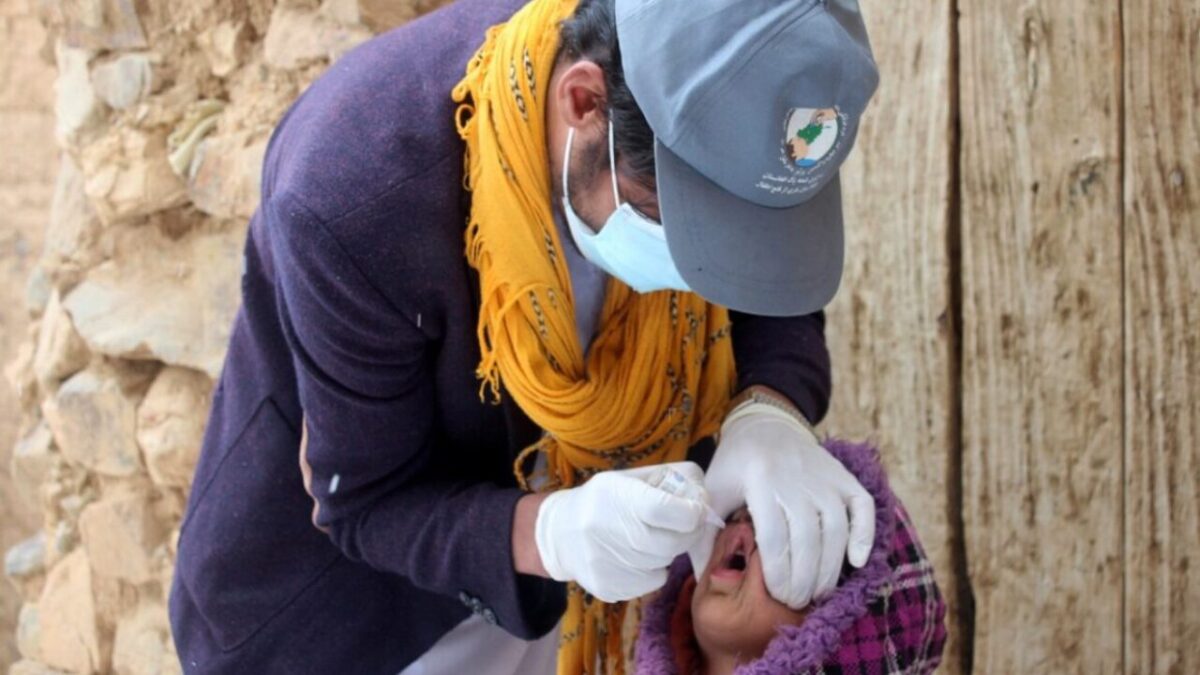
This comes as Taliban have changed house-to-house polio vaccination campaign to mosques and schools, leaving the process with many challenges.