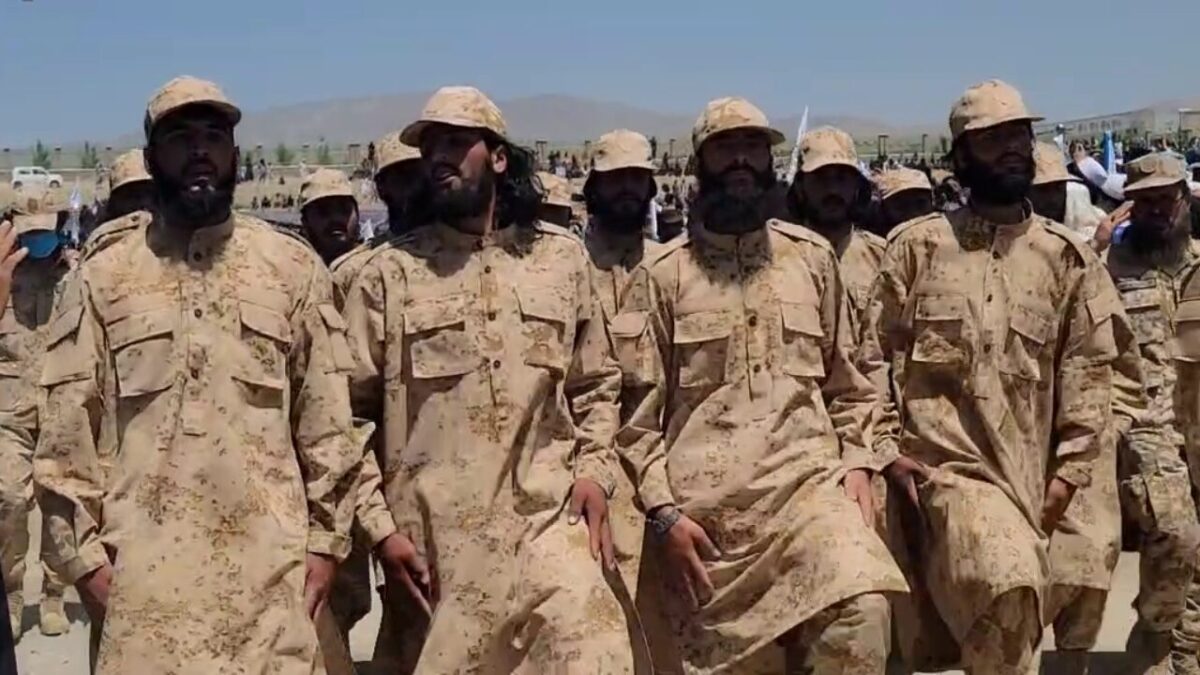
The Taliban’s Directorate for the Promotion of Virtue and Prevention of Vice in Herat has warned families to ensure that women comply with the Taliban’s dress code or risk detention, according to local sources and a document obtained by Amu TV.
The directive, a copy of which was shared with Amu TV, calls on male family members to prevent women from appearing in public without what the Taliban describe as proper hijab.
According to the document, women seen in public without a prayer veil, with their faces uncovered, wearing tight clothing or makeup could be detained by Taliban morality officers and transferred to a women’s detention facility.
The document cites provisions of the Taliban’s Law on the Promotion of Virtue and Prevention of Vice, or the so-called morality law, and states that male guardians are responsible for ensuring that women in their families comply with the prescribed dress code. It warns that violations could result in legal action and the transfer of women to detention facilities, according to the text.
The directive emphasizes both the enforcement of the Taliban’s dress requirements and the responsibility of male relatives for women’s appearance in public, warning that failure to comply could lead to detention and referral to Taliban judicial authorities.
The reported order coincides with the circulation of an audio recording in Herat that local sources say is linked to Taliban morality enforcers. In the recording, the speaker says the measure was adopted following a meeting of local Taliban and would take effect on Saturday.
The audio also instructs neighborhood representatives and mosque imams to inform residents about the new measures.
Residents say Taliban morality enforcers have already increased scrutiny of women’s dress in Herat in recent months through checkpoints in busy parts of the city.
According to local sources, checkpoints have been established in areas including Shahr-e-Naw, the 29 Hoot roundabout, Bakrabad and the Lailami road, where vehicles and taxis have been stopped and searched.
Residents said morality officers told women at the checkpoints that their clothing did not meet Taliban standards.
Similar enforcement campaigns have previously been reported in Kabul and other parts of Afghanistan.
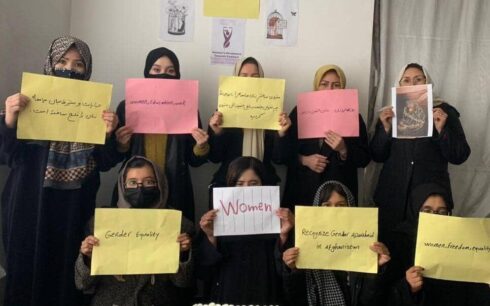
Since returning to power in August 2021, the Taliban have imposed sweeping restrictions on women and girls. Human rights organizations say the group has issued more than 100 decrees limiting women’s access to education, employment, public spaces and other aspects of public life.
The restrictions include bans on girls’ education beyond sixth grade, prohibitions on women attending universities, limits on medical training and restrictions on women working for nongovernmental organizations and United Nations agencies.
The Taliban say their policies are consistent with their interpretation of Islamic law and Afghan cultural values, while the United Nations and rights groups have repeatedly called on the Taliban to reverse the measures and uphold the rights of women and girls.