Seven countries, including Afghanistan, have formally urged the United Nations to incorporate “gender apartheid” into a future treaty on crimes against humanity, according to the End Gender Apartheid Campaign.
In a statement, the campaign said Afghanistan, Australia, Iceland, Mexico, Spain, Timor-Leste and Uruguay submitted a proposal to UN Secretary-General António Guterres calling for the inclusion of gender apartheid in the draft convention.
The move places the issue formally on the agenda of negotiations over the proposed Crimes Against Humanity Convention, a treaty that is being developed by UN member states.
According to the campaign, April 30 was the deadline for governments to submit written proposals on the convention. Those submissions, together with proposals previously discussed in the UN General Assembly’s Sixth Committee, will form the basis of future negotiations.
The campaign said it and its partner organizations have spent the past three years advocating for the recognition of gender apartheid under international law.
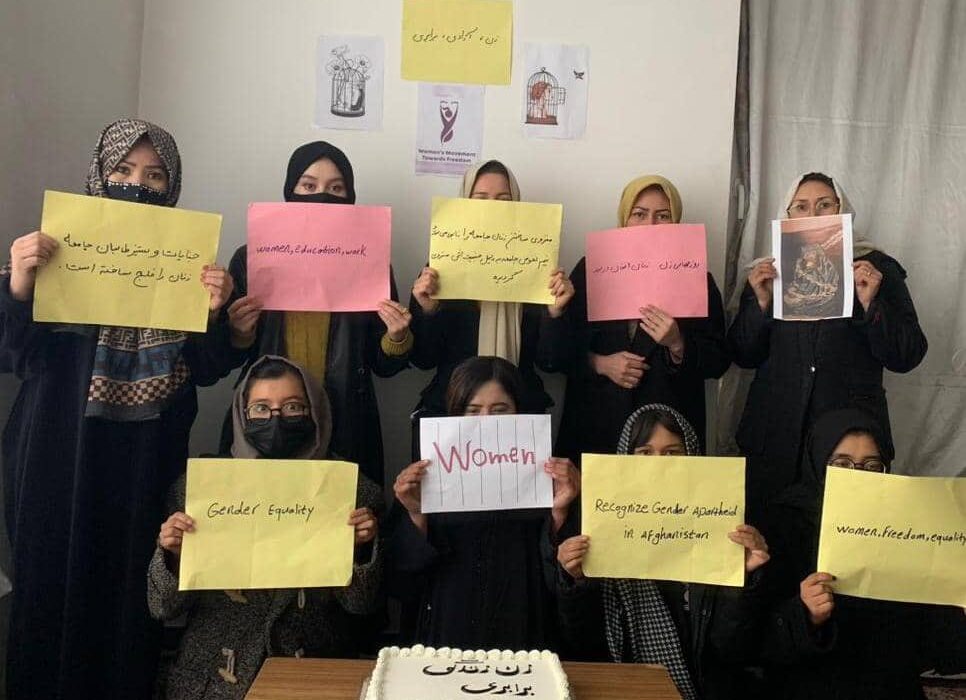
It added that Mexico, Iceland and Timor-Leste explicitly acknowledged the role of Afghan women in advancing the proposal, saying efforts to define the concept legally were driven by the leadership and advocacy of Afghan women.
The campaign described the development as a “major victory” for Afghan women and called on governments to recognize gender apartheid, codify it in international law and take steps to prevent and end it.
The proposal comes amid continued international scrutiny of Taliban policies toward women and girls in Afghanistan.
Since returning to power in August 2021, the Taliban have imposed sweeping restrictions on women’s rights, including bans on secondary and higher education for girls and women, limits on women’s employment and restrictions on access to public spaces.
The international community has repeatedly called on the Taliban to uphold the rights of women and girls and comply with Afghanistan’s obligations under international law.
Women’s rights advocates have increasingly described the Taliban’s policies as a form of gender apartheid and have urged governments and international institutions to formally recognize the concept as a legal category, arguing that existing international law does not adequately address systematic, state-imposed discrimination based on gender.