Introduction
Recent intelligence assessments, including the Rawalakot document, suggest potential cooperation between Hamas and Pakistani intelligence networks. While the document remains partially redacted, its claims resonate with open‑source reporting that has long highlighted Pakistan’s ambiguous role in supporting militant organizations. This article situates these allegations within Israel’s doctrine of pre‑emptive disruption and evaluates the implications for South Asian security.
Triangulating open‑source evidence
South Asia Democratic Forum (SADF) has reported on Hamas cadres interacting with Lashkar‑e‑Taiba and Jaish‑e‑Mohammed in Pakistan‑occupied Kashmir, allegedly facilitated by Pakistani intelligence agencies. Bangladeshi outlet Blitz has highlighted claims of Hamas operatives receiving technical support from Pakistani military units, particularly in rocket and tunnel warfare. Public rallies in Rawalakot and Balakot have featured Hamas representatives alongside Pakistani jihadist groups, reinforcing a narrative of “Kashmir–Palestine jihad” solidarity.
These sources, while not definitive, provide triangulated indicators that Pakistan’s networks may have facilitated Hamas’s operational development.
Israel’s security doctrine emphasizes pre‑emptive disruption of existential threats. Historical precedents include the destruction of Iraq’s Osirak reactor in 1981 and Syria’s Al‑Kibar facility in 2007. Analysts argue that Pakistan’s alleged Hamas ties could extend this doctrine into South Asia, particularly if Islamabad is perceived as enabling Hamas’s operational build‑up .
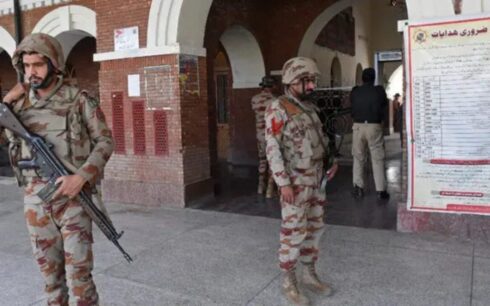
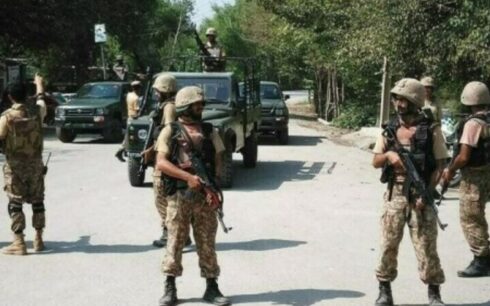
The Global Terrorism Index 2026 ranks Pakistan as the most impacted country by terrorism, with over 1,100 deaths and 1,045 incidents in 2025, its highest level since 2013 . This situates Pakistan alongside Lebanon, Iran, and Yemen, reinforcing perceptions that it could be Israel’s “fourth target” in the shadow war narrative. Alleged Hamas–Pakistan cooperation expands the battlefield beyond the Middle East, potentially justifying covert or overt disruption operations. Such accusations deepen Islamabad’s isolation, complicating relations with Western allies, and undermining its counterterrorism credibility. Any Israeli action against Pakistan would destabilize South Asia, with spillover risks for India, Afghanistan, and Gulf states.
Conclusion
Pakistan’s dual posture presenting itself as a counterterrorism partner while allegedly enabling Hamas, which reflects a contradiction that is increasingly untenable. The Rawalakot document, triangulated with open‑source reporting, underscores the possibility that Hamas operatives have benefited from Pakistani networks.
Israel’s doctrine of pre‑emptive disruption has historically spared no adversary once evidence of existential threat emerges. If Lebanon, Iran, and Yemen were precursors, Pakistan now stands accused as the fourth enabler. The strategic calculus is clear: any state that empowers Hamas risks becoming part of the battlefield.
Ajmal Sohail is a graduate in terrorism and extremism studies from both Leiden University in the Netherlands and Maryland University in the United States. He works in the meantime as an intelligence analyst and Counter-terrorism expert. He is the co-founder and co-president of the Counter Narco-Terrorism Alliance Germany, directing its intelligence and counter-terrorism portfolios.
This article reflects the author’s views and not necessarily those of Amu TV.