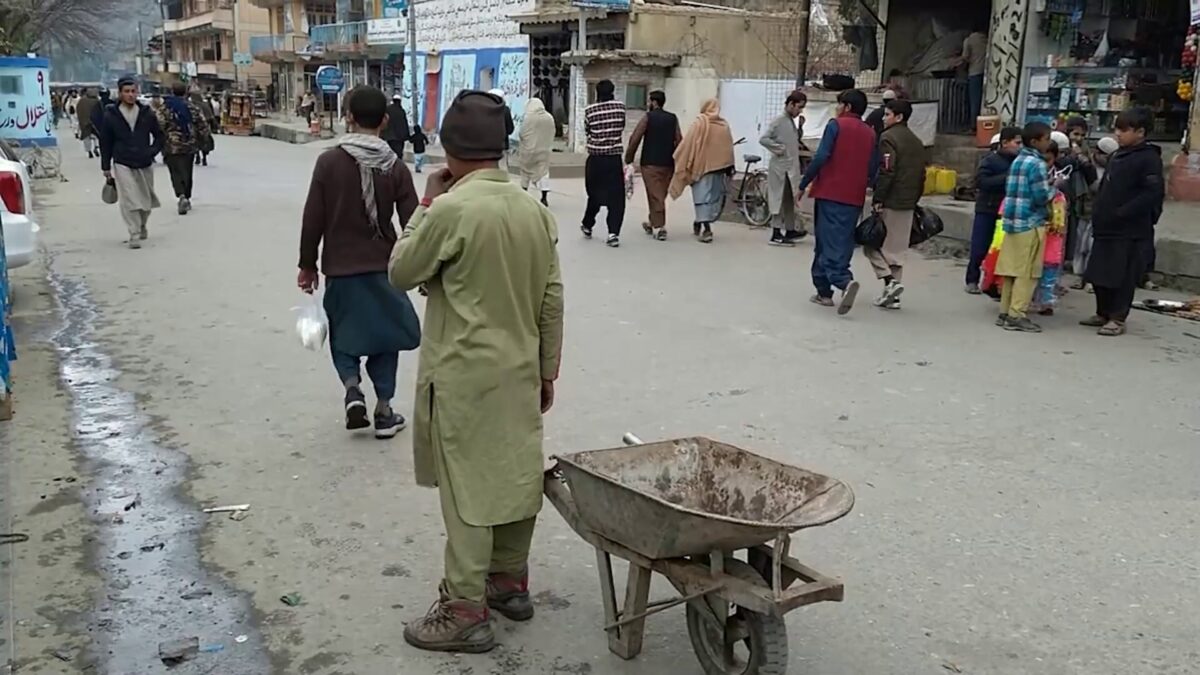
Every morning, hundreds of children gather in parks, markets and roadside intersections across the western Afghan city of Herat to earn a few afghanis polishing shoes, collecting scrap or carrying goods — work they say has replaced childhood, school and safety.
An investigation by Amu TV found that many of these children labor in environments marked by drug addiction, crime and exploitation, while children living in migrant settlements outside the city often have no access to schools at all.
One of the busiest centers of child labor is Farhang Park in downtown Herat, directly across from the office of the Taliban governor. Children working there said they routinely encounter drug users and unsafe conditions while trying to support their families.
“We go to the park to work, but there are drug addicts there,” said Ghulam Rasool, a child laborer interviewed by Amu. “It is not our right to work in these conditions. We should be supported so we can study and build our future.”
The children described lives shaped less by school or play than by the daily search for food and money.
“No one helps us except God,” said Nabi, another child worker. “We go to the market and polish shoes. We earn five or ten afghanis and spend that money on our family.”
As people celebrate Eid al-Adha, some children said they could not afford even basic clothing.
“I don’t have shoes or clothes for Eid,” said Farhad, another child laborer. “I will wear the same shoes I already have.”
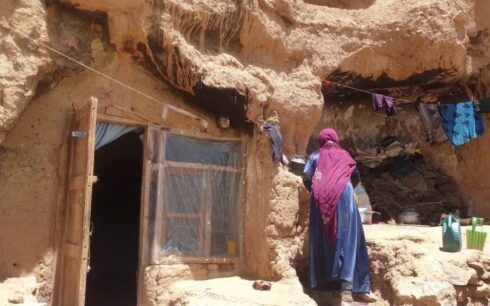
The investigation found that many children in Herat’s migrant settlements spend their days collecting firewood, brush and scrap material from remote areas because schools and job opportunities are absent from their communities.
“We walk to the mountains to collect brushwood,” said Ghulam Sakhi, a child worker. “There is no school and there is no education.”
Others described walking for hours each day in search of fuel or temporary labor to help feed their households.
Former officials and child welfare advocates warned that children working in Afghanistan face growing exposure to physical violence, sexual exploitation, narcotics and long-term psychological harm.
“The number of child laborers in Herat has risen sharply,” said Mohammad Naeem Ghayour, a former intelligence official in Herat’s police command. “The conditions for working children in Herat and across Afghanistan are extremely bad. They face psychological and physical abuse, sexual violence and the risk of drug addiction.”
Local sources told Amu that the number of street-working children in Herat has risen significantly since the Taliban returned to power in 2021, fueled by unemployment, displacement and worsening poverty.
Herat, one of Afghanistan’s largest urban centers, has absorbed large numbers of internally displaced people and returning migrants in recent years, increasing pressure on already strained services and labor markets.
Aid agencies say children have become among the most visible victims of Afghanistan’s economic collapse.
Since the Taliban takeover, Afghanistan has experienced sharp reductions in international aid, rising unemployment and repeated climate-related disasters, including droughts and floods. Humanitarian organizations estimate that millions are remain dependent on assistance for food and basic survival in Afghanistan.
The World Food Program has warned that many households increasingly rely on child labor, debt and reduced meals to cope with economic hardship. UN agencies have also repeatedly raised concerns about growing numbers of children dropping out of school because families cannot afford transportation, supplies or the loss of income from child labor.
The situation has been especially severe for children in informal settlements and displaced communities, where educational access is limited or nonexistent.
Rights advocates say the long-term consequences could extend far beyond immediate poverty.
Children deprived of education and forced into dangerous labor at an early age face higher risks of illiteracy, exploitation, addiction and chronic poverty later in life, according to humanitarian groups.
Taliban have said they are working to reduce poverty and improve economic conditions. But nearly five years after their return to power, many families in Herat say survival — not education or opportunity — has become their daily concern.