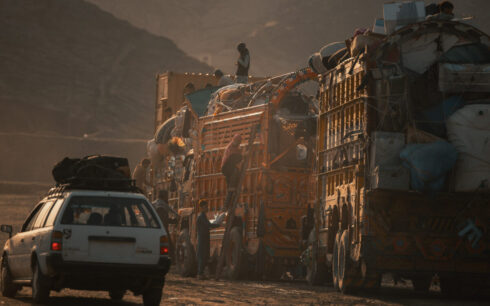
More than 114,000 Afghan migrants returned from Iran and Pakistan between April 26 and May 9, according to a new report by the International Organization for Migration, as the country continues to absorb large-scale population movements amid mounting humanitarian challenges.
The report recorded 114,321 returnees during the two-week period, including 45,662 people arriving from Iran and 68,659 from Pakistan. Since the beginning of 2025, more than 3.5 million Afghans have returned from the two neighboring countries, the agency said.
Returns from Iran increased by 22 percent compared with the previous reporting period, averaging more than 3,200 arrivals a day. The sharpest rise was recorded at the Pul-e-Abrisham crossing in Nimroz Province, where arrivals increased by 49 percent. On May 3 alone, 4,179 people returned from Iran, the highest daily figure recorded in the past two months.
By contrast, returns from Pakistan fell by 25 percent from the previous two-week period, declining from 92,057 to 68,659 people. The steepest drop was reported at the Bahramcha crossing in Helmand Province, where arrivals fell by 87 percent.
The report said that since January 2025, more than 2.1 million Afghans have returned from Iran and nearly 1.4 million from Pakistan. Many of those returning from Iran were classified as deportees or pushbacks, accounting for nearly 296,000 cases during the reporting period covered by the agency’s cumulative data.
Humanitarian agencies provided more than 648,000 services to returnees during the two-week period, including food assistance, health care, protection services, transportation support, temporary accommodation and water and sanitation assistance. Health services reached nearly 180,000 people, while more than 170,000 received food assistance, the report said.
The largest number of arrivals during the reporting period was recorded at the Torkham crossing with Pakistan, which received more than 61,000 returnees. Islam Qala in Herat Province and Pul-e-Abrisham in Nimroz Province remained the main entry points for people returning from Iran.
The continuing influx comes as Afghanistan faces a deep humanitarian and economic crisis. Aid agencies have repeatedly warned that the return of millions of Afghans from neighboring countries is placing additional pressure on employment, housing, public services and already strained local communities.