At least 150 violations of press freedom and journalists’ rights have been recorded in Afghanistan over the past year, the Afghanistan Journalists Center (AFJC) said, warning of an intensifying crackdown on independent media.
The AFJC said the cases, documented between May 2025 and April 2026, reflect a worsening climate for journalism and a deepening media crisis in the country.
The report, released on the occasion of World Press Freedom Day, said censorship, restrictions and pressure on journalists have increased significantly during the period.
Of the 150 cases recorded, 127 involved threats against journalists and media workers, while 20 cases involved arrests, the group said.
It added that four of those detained remain in custody.
The report also documented casualties among media workers, saying two employees of the state-run Radio and Television of Afghanistan were killed and another injured in Pakistani airstrikes during the reporting period.
While the total number of violations is lower than in the previous year, the organization said the quality and severity of restrictions have worsened, driven largely by policies imposed by the Taliban since their return to power in 2021.
The report details a broad range of new and expanded restrictions on media operations.
It said bans on broadcasting images of living beings have been extended to eight additional provinces and are now enforced in 25 of Afghanistan’s 34 provinces, leading to the closure of at least eight local television stations.
In addition, at least 11 media outlets or organizations were shut down, either temporarily or permanently, for failing to comply with Taliban directives. The licenses of at least 10 media support organizations were also revoked.
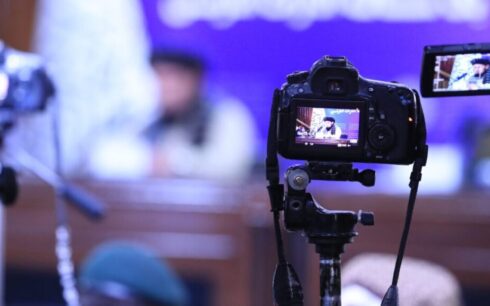
The AFJC said access to information has become increasingly restricted, with nearly half of government ministries and institutions banning video reporting or on-camera interviews.
Media outlets also face growing pressure over content, including directives not to interview individuals who are not approved by Taliban, the report said.
In some cases, even mentioning women’s names or speaking to girls by phone during live broadcasts has led to the suspension of media activities, it added.
The report highlighted increasing restrictions on women journalists, including bans on broadcasting women’s voices in some provinces and instances where female reporters’ voices were censored during official press conferences.
Some journalists were also detained over personal appearance, including beard length, the group said.
For the first time since the Taliban’s return to power, the report documented cases of forced confessions by journalists broadcast by their intelligence, describing it as a sign of escalating intimidation.
The organization said Taliban have increasingly replaced previous media laws with a mix of written and verbal directives, some linked to the “promotion of virtue and prevention of vice” framework, granting broad powers to enforce restrictions.
It warned that alongside the suppression of independent media, both formal and informal structures are being developed to promote a single narrative, limiting pluralism and dissent.
The AFJC also raised concerns about the deteriorating financial situation of independent media, particularly in the provinces, where declining funding and mounting restrictions have pushed many outlets toward closure and forced journalists to leave the profession or the country.
The Afghanistan Journalists Center called on the Taliban to review their policies, release all detained journalists and ensure a safe and enabling environment for media work.
It also urged the international community to increase political, financial and technical support for Afghanistan’s media and journalists.