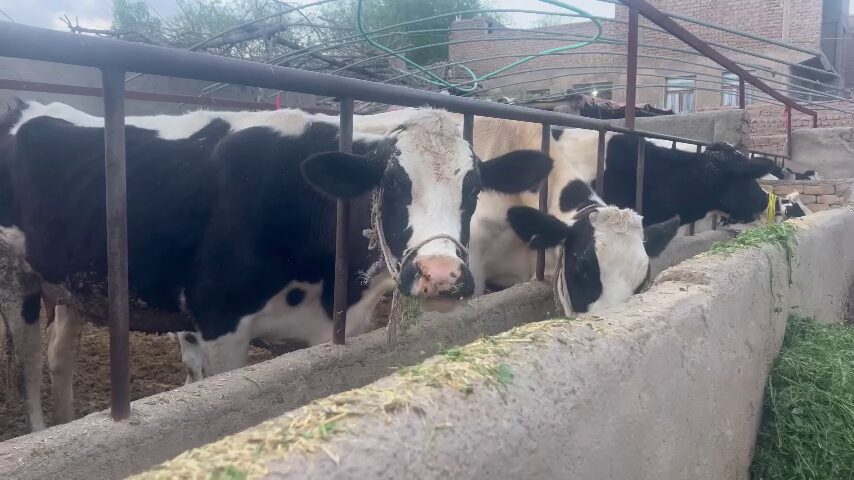
Dairy farmers in western Afghanistan say rising costs and a lack of technical support are straining their livelihoods, despite steady production of milk and other livestock products.
Farmers in Herat province say they need financial assistance and access to veterinary and agricultural services to maintain their herds. Many report difficulties in properly caring for cattle and preventing disease, citing limited access to professional guidance.
“We need someone to guide us in proper livestock care,” said Mohammad Karim, a local farmer. “Veterinarians should provide information about diseases so we can manage them better.”
The concerns reflect broader pressures on small-scale producers, who say the cost of animal feed has risen sharply while the price of milk remains low. Farmers say they lack the knowledge and resources to prevent or treat common illnesses in their herds, increasing the risk of losses.
Abdul Salam, who owns more than 10 dairy cows, said he has invested about 1.5 million afghanis ($23,000) in his farm but has yet to see meaningful returns.
“Feed prices are high, but the price of what we produce is low,” he said. “Sometimes we cannot even cover our expenses.”
Farmers say the cost of basic feed staples — including oilcake, hay and bran — has increased significantly. One bag of oilcake now sells for about 1,100 afghanis ($17), while bran costs around 380 afghanis ($6) per bag, according to local producers. A single cow can consume that amount within a few days.
Many farmers also say veterinary services that were once available through agricultural programs have largely disappeared, leaving them without reliable support.
Taliban officials in Herat’s Department of Agriculture and Livestock say dairy production in the province has increased in recent years, with hundreds of liters of milk exported daily to neighboring provinces such as Farah and Nimroz.
But farmers say they typically sell milk for between 18 and 20 afghanis per liter — a price they describe as unsustainable given rising costs.
They warn that without targeted assistance, including access to veterinary care and financial support, the sector could face further strain.