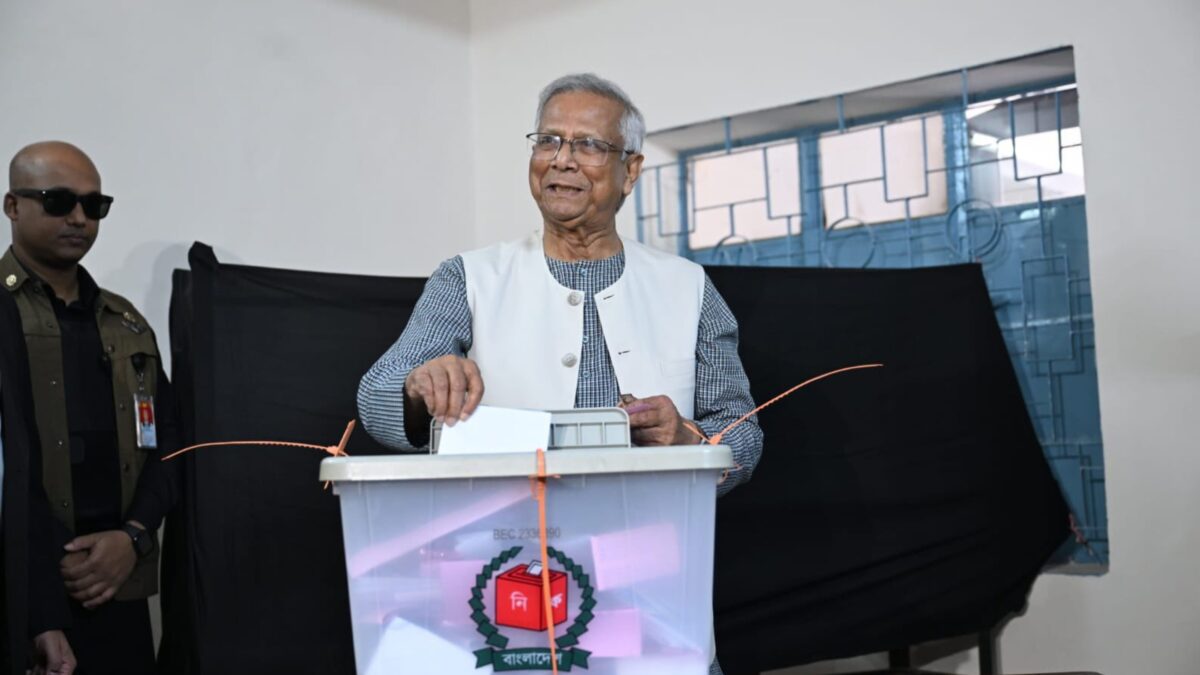
Bangladeshis began voting on Thursday in the country’s first national election since a student-led uprising ousted long-time Prime Minister Sheikh Hasina in August 2024, in a contest seen as a test of its return to democratic rule.
The main fight is between the Bangladesh Nationalist Party (BNP) and an 11-party alliance led by Jamaat-e-Islami that includes the National Citizens Party (NCP), formed by youth activists who played a key role in the protests that forced Hasina from office.
BNP leader Tarique Rahman and Jamaat chief Shafiqur Rahman cast their ballots in Dhaka, as the Election Commission reported strong early turnout. Nearly 127 million people are eligible to vote in the country of about 170 million.
Corruption, inflation, jobs and economic growth have dominated campaigning in the world’s eighth most populous nation.
Alongside the parliamentary vote, Bangladeshis are also voting in a referendum on the proposed National Charter 2025, drafted by the interim government led by Nobel laureate Muhammad Yunus to outline a framework for future governance.
The 2024 election saw turnout of 41.8%, according to official figures, amid a major opposition boycott and criticism from domestic and international observers who said conditions for a fully competitive contest were lacking.
In 2018, authorities reported turnout of nearly 80%, but opposition parties alleged ballot boxes were filled before polling day, leading critics to dub it the “night vote”. In 2014, turnout was reported at about 51%, though the BNP-led opposition boycotted the polls and more than half of the seats were won uncontested.
Disinformation clouds campaign
The election has also been overshadowed by a surge in online disinformation, including AI-generated deepfakes, recycled videos and false claims circulating on social media platforms.
The Daily Star newspaper said it identified two dozen pieces of disinformation on Facebook and Telegram overnight, while three fact-checking groups – Dismislab, Rumor Scanner and FactWatch – debunked nearly 70 instances of false or misleading content in recent days.
According to The Daily Star, misleading posts have originated from actors aligned with Hasina’s banned Awami League, as well as supporters of Jamaat-e-Islami and the BNP.
One pro-Awami Telegram channel re-posted a video of ballot counting from a previous election, claiming votes had already been cast in Gazipur, near Dhaka. The clip was shared nearly 900 times.
A pro-Jamaat group circulated a two-year-old image of a weapons seizure in the southeastern city of Feni, apparently to discourage voters from going to the polls.
Another group linked to the BNP shared a video falsely claiming that weapons had been seized from the son of a Jamaat leader, and circulated a story alleging the killing of a man by National Citizen Party supporters, which did not occur, the newspaper reported.