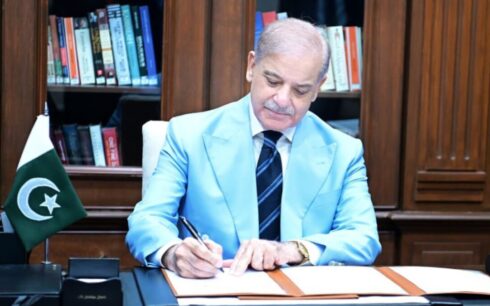
Pakistan’s foreign minister, Mohammad Ishaq Dar, raised concerns about militant groups operating from Afghanistan’s territory during talks with US Secretary of State Marco Rubio in Washington, according to a statement issued by Pakistan’s Foreign Ministry.
The meeting, held on Friday, covered regional security, counterterrorism cooperation and bilateral relations between the United States and Pakistan.
According to the Pakistani statement, Dar conveyed Islamabad’s concerns over “the use of Afghan territory by terrorist groups against Pakistan” and stressed the need for enhanced counterterrorism cooperation to address security challenges.
The statement did not identify specific groups. Pakistan has repeatedly accused the Taliban administration of failing to prevent Tehrik-e-Taliban Pakistan, or TTP, from operating from Afghanistan’s territory and launching attacks inside Pakistan.
The Taliban have denied the allegations and insist they do not allow any group to use Afghanistan’s soil to threaten other countries.
The issue has become a major source of tension between Taliban and Pakistan in recent years, contributing to diplomatic disputes, border clashes and Pakistani airstrikes in Afghan territory. UN sanctions monitors have previously reported that TTP maintains thousands of fighters in Afghanistan, a claim the Taliban reject.
Pakistan’s Foreign Ministry said Dar and Rubio agreed to strengthen cooperation in trade, investment, security and counterterrorism, while also discussing broader regional developments.
The statement said the two officials welcomed the positive trajectory of US-Pakistan relations over the past year and agreed to expand economic and commercial ties as well as cooperation in security matters.
The talks come amid renewed US engagement with Pakistan on regional security issues and as Washington continues to monitor developments in Afghanistan, including concerns over militant groups, humanitarian conditions and regional stability nearly five years after the Taliban returned to power.