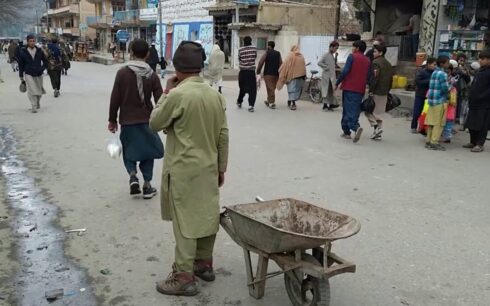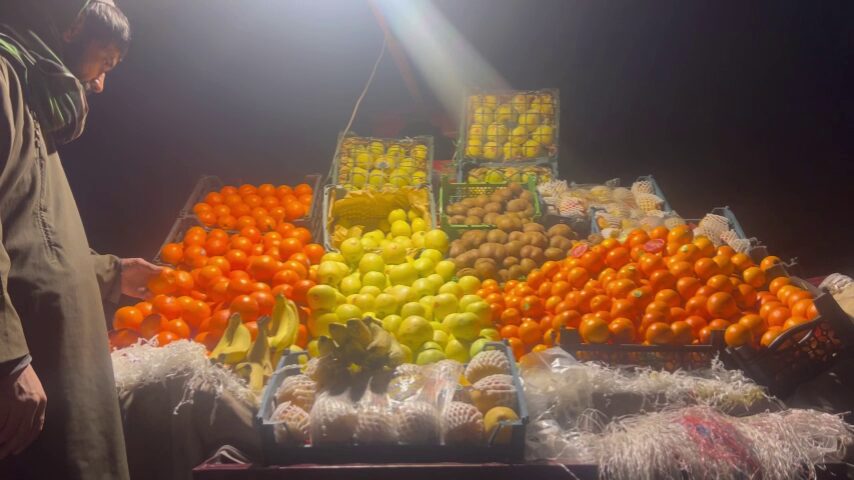
Fruit sellers in Afghanistan’s western Herat province say their businesses have fallen sharply from previous years, as rising living costs and weak consumer demand leave many traders struggling to survive.
Vendors say they now work into the late hours of the night in a bid to earn enough to cover basic expenses, often lighting small fires to keep warm during winter evenings while waiting for customers in largely deserted markets.
“Business is bad, and it’s the same for everyone,” said Abdul Hamid, a fruit seller in Herat. “We are covering our daily expenses from our own capital. What I earn doesn’t even meet our basic needs.”
Several traders said higher electricity bills and house rents have added to the pressure, forcing them to dip into their savings just to get by.
“We invest around 40,000 to 50,000 Afghanis ($615 to $770),” said Farhad, another fruit seller. “Our money stays tied up for a week, and in the end we earn only 300 or 400 Afghanis ($4.7 to $6.2). With that, we can’t pay rent or electricity. The challenges are overwhelming.”
Residents and traders say job opportunities in Herat have become increasingly scarce in recent months, partly due to the arrival of large numbers of migrants returning from Iran, as well as internally displaced people from provinces including Faryab, Badghis, Ghor and Farah. The influx has intensified competition for work and reduced incomes for local residents, they say.
Afghanistan’s economy has struggled since the Taliban returned to power in 2021, with international aid cuts, high unemployment and declining purchasing power hitting small businesses and daily wage earners particularly hard. For traders in Herat’s markets, many say the combination of rising costs and shrinking demand has turned even basic survival into a daily challenge.