Afghanistan’s economy continued to grow modestly in 2025 despite regional tensions and border disruptions, but the gains have failed to improve living standards as population growth, inflation and structural weaknesses continue to weigh on households, the World Bank said in a report released Tuesday.
The World Bank’s latest Afghanistan Development Update estimated economic growth at 4.8 percent in 2025, driven by strong domestic demand and the return of millions of Afghans from neighboring countries.
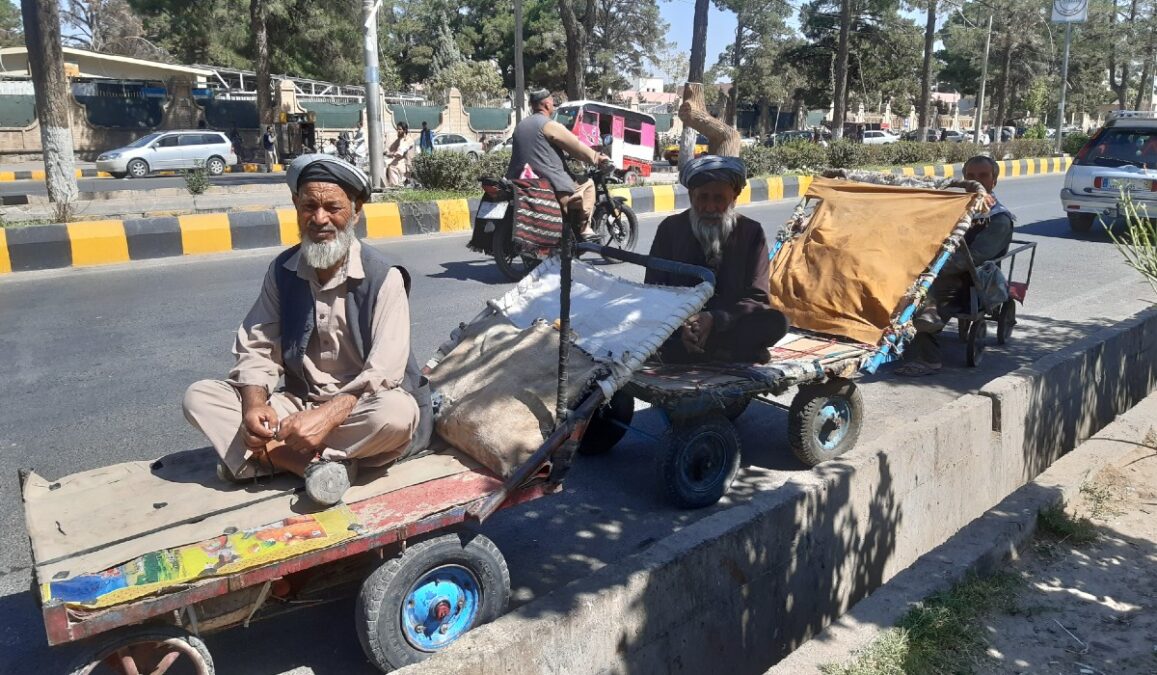
However, the report said economic expansion has not kept pace with demographic pressures. The return of approximately 3.7 million Afghans, combined with population growth estimated at around 11 percent in 2025, contributed to a 5.6 percent decline in per capita income.
“Afghanistan’s economy is showing resilience in the face of significant headwinds, but growth alone is not enough,” said Faris Hadad-Zervos, the World Bank’s country director for Afghanistan.
“With millions of Afghans returning home, rapid population growth is outpacing economic gains — pushing down incomes and deepening poverty and fragility,” he said.
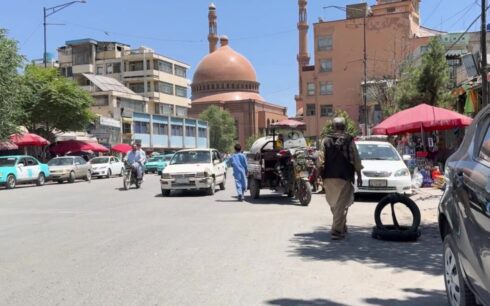
The report found that inflation accelerated sharply during the year, further reducing household purchasing power. After averaging 3.6 percent, inflation rose to 7.6 percent by March 2026, driven by higher food prices, supply constraints and strong consumer demand.
The World Bank warned that rising prices are worsening already severe levels of poverty and food insecurity across the country.
Despite those challenges, domestic revenue collection improved significantly. Accordingo the report, the Taliban administration’s revenue reached the equivalent of 19.8 percent of gross domestic product in 2025, supported by stronger tax enforcement and improved collection mechanisms.
At the same time, declining international assistance has limited investment in infrastructure and reduced the Taliban administration’s ability to respond to economic shocks, the report said.
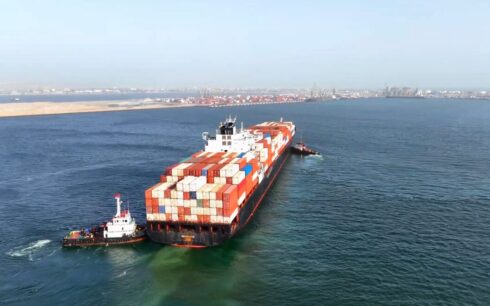
The report also highlighted Afghanistan’s fragile external position. A widening trade deficit, weak exports and strong import demand pushed the country’s current account deficit to an estimated 36.1 percent of GDP in 2025.
While the private sector has shown signs of recovery since 2022, the World Bank said businesses continue to face major obstacles, including unreliable electricity supplies, limited access to financing and widespread informality.
Firm-level data cited in the report showed improvements in sales, employment and investment, but the pace of recovery remains insufficient to generate the jobs needed for a rapidly growing population.
Looking ahead, the World Bank projects economic growth of around 4 percent in 2026, although the outlook could worsen depending on the duration and impact of ongoing tensions in the Middle East.
The report said continued population growth, declining aid flows and regional instability are likely to remain major risks to Afghanistan’s economic recovery.
The World Bank urged policies aimed at strengthening the private sector, expanding access to finance, improving infrastructure and creating productive employment opportunities, arguing that such reforms will be essential to reducing poverty and supporting more sustainable economic growth.
The findings come as Afghanistan continues to face mounting economic pressures, including large-scale returns of migrants from Pakistan and Iran, recurring climate-related shocks and a sharp decline in international aid since the Taliban returned to power in 2021.