More than four million Afghans living in Iran are facing a deepening humanitarian crisis as Iran’s economic downturn, soaring inflation and stepped-up deportations push already vulnerable families to the brink, advocacy group Displaced International (DI) said in a report released on Wednesday.
Many Afghans in Iran, a large number of whom lack formal documentation, are struggling to meet basic needs such as food, healthcare and education as job opportunities shrink following a sharp currency depreciation and rising living costs, the group said.
“Afghan families in Iran are being pushed beyond survival – losing livelihoods, cutting meals and delaying essential care – at the very moment they need protection most,” said Ashraf Haidari, founder and president of Displaced International, calling on governments and donors to urgently scale up humanitarian assistance and protection.
Iran has hosted one of the world’s largest Afghan refugee populations for more than four decades, but mounting economic pressures have strained both refugees and host communities. According to the U.N. refugee agency UNHCR, about 773,000 Afghans in Iran are registered refugees, while several million others live in refugee-like conditions with precarious or no legal status, limiting access to lawful work, housing and public services.
DI said Afghans have been hit particularly hard by Iran’s economic contraction because many rely on informal, low-paid labour. As prices rise and employment opportunities shrink, families are resorting to harmful coping mechanisms, including skipping meals, delaying medical treatment and sending children to work.
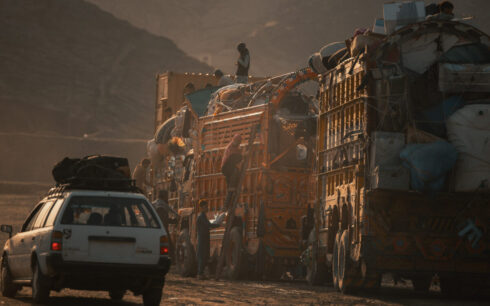
The report also warned of increasing discrimination and enforcement pressure against Afghan communities, with reports of more frequent police raids, arbitrary arrests and detention. Deportations have accelerated sharply, with the International Organization for Migration (IOM) documenting hundreds of thousands of returns in 2025 alone. UNHCR has said more than 1.5 million Afghans had returned from Iran by early August last year, many under pressure.
Human rights groups say returns to Afghanistan remain unsafe under Taliban rule, citing widespread poverty, limited services and risks of persecution, particularly for women, minorities, former government employees and those perceived to have links to foreign forces.
“My husband is living in Iran under very difficult conditions. He has no legal documents, but if he returns to Afghanistan there is no work or livelihood for her. He was deported once and was forced to go back to Iran again. Conditions there worsen every day, and now for a week we have had no contact with her because of the protests and the internet shutdown,” a Kabul resident whose husband is in Iran told Amu TV.
“Some people are forced to stay in Iran. Members of our family are there too and they live in constant fear. Their residency has expired, but they cannot return to Afghanistan. Access to medical care, freedom of movement and legal work is extremely difficult for them,” said Ahmad, a Herat resident.
Displaced International urged Iran to halt forced deportations and ensure that any returns are voluntary, safe and dignified, while calling on the international community to expand humanitarian funding, protection monitoring and resettlement pathways for Afghans most at risk.
Failure to act would turn an already severe humanitarian situation into a broader regional crisis, the group warned, with suffering driven by policy decisions rather than inevitability.