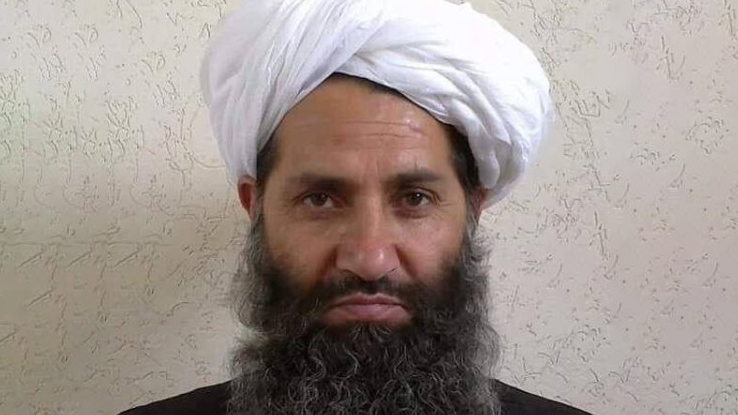
Taliban supreme leader Hibatullah Akhundzada has issued a decree extending the length of time suspects can be held in detention and prohibiting their release without a court order, a move legal experts say will lengthen detention periods and further weaken due process in Afghanistan.
Under the new order, the maximum detention period for a suspect has been extended from 72 hours to up to 10 days. The decree states that “no one may release a detainee without a court order.”
“No one may release a detainee without a court order,” the decree says.
Previously, police could release suspects if there was insufficient evidence to refer a case to prosecutors. Prosecutors also had the authority to release detainees — with or without bail — within 15 days.
That framework was set out in Article 88 of the penal code of the former government of Afghanistan, which stated that prosecutors should order a suspect’s release “immediately, with or without financial guarantee,” if detention was deemed unnecessary under the law.
Information published on the Taliban-run justice ministry’s website shows that the former penal code has now been fully abolished, leaving Taliban decrees and interpretations of Islamic law as the primary legal framework.
Another section of Akhundzada’s decree restricts the authority to detain suspects solely to Taliban security and intelligence agencies, while formalising the longer detention period.
“If a person is accused and further investigation is required, only security and intelligence officials may detain the individual for investigation, and the detention period must not exceed 10 days,” the decree says.
Legal experts say the changes make judicial procedures more rigid and increase the likelihood that suspects will remain in custody for extended periods, even if they are later found innocent.
The decree also addresses the treatment of detainees, stating that torture and mistreatment are prohibited during detention, but explicitly reserving the authority to impose corporal punishment for Taliban courts.
“During detention, all forms of torture must be avoided, as the authority to impose punishment belongs only to the court,” the decree says, adding that punishment carried out by anyone other than a court would be considered injustice.
Rights groups say the language fails to fully prohibit abuse and lacks safeguards against mistreatment, as it does not ban corporal punishment ordered by courts.
Taliban have carried out widespread arrests since returning to power in 2021, which the United Nations has described as arbitrary in many cases, including the detention of women and girls accused of violating Taliban rules.
Legal analysts say the new decree is likely to further lengthen detention periods and complicate judicial processes, deepening concerns over access to justice, accountability and legal protections under Taliban rule.