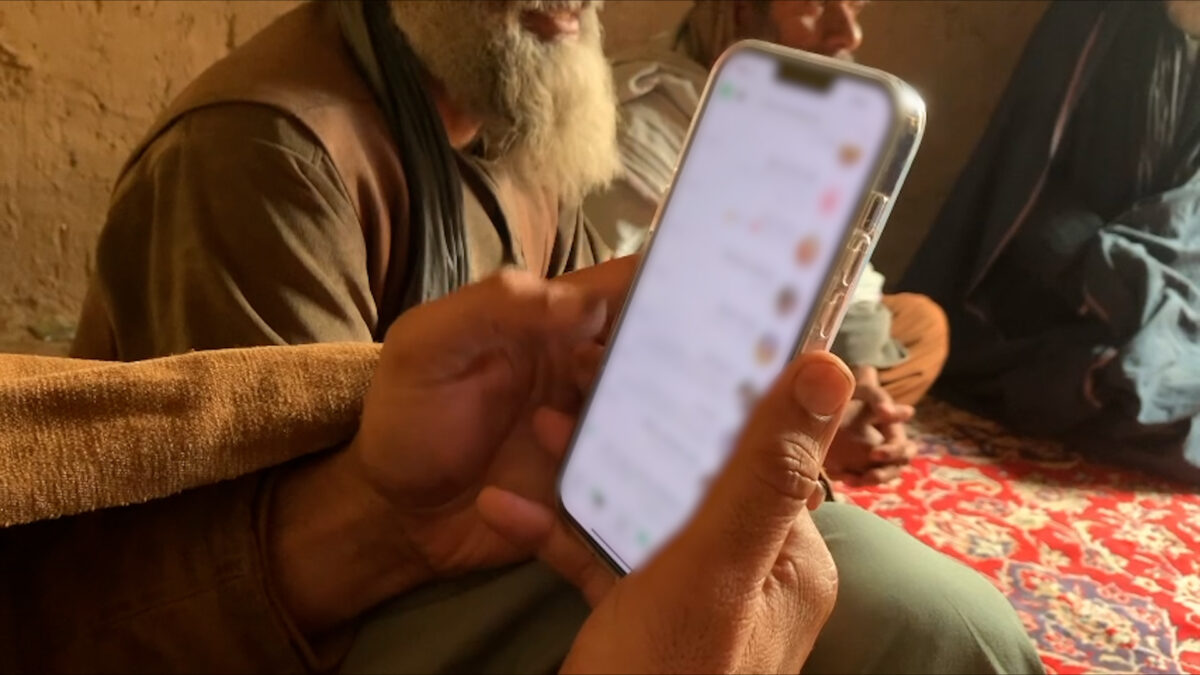
Taliban have banned the use of smartphones by public employees and their security forces in Kandahar, according to local sources, in what appears to be the latest effort to tighten controls on communications and access to information.
Sources in Kandahar told Amu TV that the order took effect Monday and requires employees across public institutions, as well as Taliban personnel, to use basic mobile phones instead of smartphones.
The sources said the directive has already created difficulties for some government offices, where daily administrative work and communications increasingly depend on smartphone-based applications and services.
Taliban have not publicly announced the measure.
The move follows a similar restriction imposed at Herat University, where Taliban-appointed officials recently prohibited staff from bringing smartphones onto campus.
Hedayatullah Monib, the Taliban’s head of Herat University, said the ban applied to all university personnel, including administrators, faculty members and support staff. According to a statement issued by the university, the measure was based on a verbal directive from Taliban leader Hibatullah Akhundzada and took effect Sunday, June 14.
The statement warned that individuals who violated the order would be held responsible for any consequences.
Several public employees had previously told Amu TV that Taliban had instructed them not to use smartphones and warned that violations could result in disciplinary action.
The reported expansion of the ban comes amid broader concerns about restrictions on information and communication in Afghanistan.
Speaking at a UN Security Council meeting on Monday, Afghanistan’s chargé d’affaires to the United Nations, Naseer Ahmad Faiq, cited what he described as a recent Taliban ban on smartphones in public institutions as part of a wider effort to tighten control over information.
“The Taliban’s leaders recently issued a ban on smartphones across government institutions,” Faiq told the Council, adding that the measure, alongside other restrictions, was aimed at suppressing dissent and limiting access to information.
Since returning to power in August 2021, Taliban have imposed sweeping restrictions on media organizations, journalists and access to information. Rights groups and international organizations have repeatedly raised concerns that such measures are shrinking civic space and limiting public scrutiny of government actions.
The latest restrictions come as the Taliban face growing international criticism over their treatment of women and girls, including recent detentions of women in Herat over alleged dress-code violations and the subsequent crackdown on protests in the city.
Local sources said it remains unclear whether the smartphone ban will be expanded nationwide, but the latest measures in Kandahar and Herat suggest a broader effort to restrict the use of digital communications within state institutions.