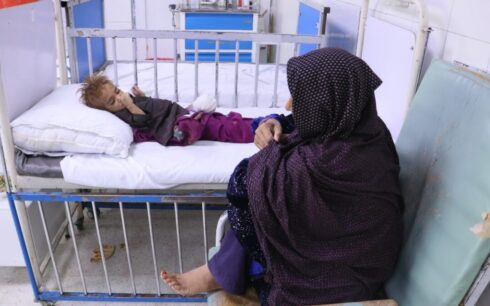
More than 17 million people in Afghanistan are facing acute food insecurity this winter as hunger and malnutrition deepen across the country, the United Nations World Food Program (WFP) said on Tuesday, warning that funding cuts are limiting life-saving assistance.
New data from the latest Integrated Food Security Phase Classification (IPC) report shows that around three million more Afghans are experiencing acute hunger or worse compared with last year, when 14.8 million people were affected.
Child malnutrition is also expected to rise, with nearly four million children projected to suffer from acute malnutrition in the coming year, the agency said. WFP warned that with malnutrition already at its highest levels in decades and funding for essential services sharply reduced, access to treatment is becoming increasingly limited.
“WFP has been warning for months about the clear signs of a deepening humanitarian crisis in Afghanistan, and the latest data confirms our worst fears,” said John Aylieff, WFP’s country director in Afghanistan. “Our teams are seeing families skipping meals for days on end and taking extreme measures to survive. Child deaths are rising, and they risk becoming worse in the months ahead.”
Afghanistan is entering a harsh winter amid overlapping crises, including drought that has affected about half the country, widespread job losses, a weakened economy and recent earthquakes that have left thousands of families homeless, WFP said.
Forced returns from neighbouring countries are adding further pressure. Since the beginning of the year, about 2.5 million Afghans have been sent back from Pakistan and Iran, many arriving malnourished and with few resources, according to the agency. Nearly as many more are expected to return in 2026.
At the same time, humanitarian funding for Afghanistan has declined, leaving millions without assistance that has previously helped curb severe hunger and malnutrition.
“We need to bring Afghanistan’s crisis back into the headlines to give the most vulnerable Afghans the attention they deserve,” Aylieff said, calling for renewed international support.
For the first time in decades, WFP said it is unable to mount a large-scale winter response while also sustaining emergency food and nutrition programmes nationwide. The agency said it urgently needs $468 million to provide life-saving food assistance to six million of Afghanistan’s most vulnerable people through the winter.