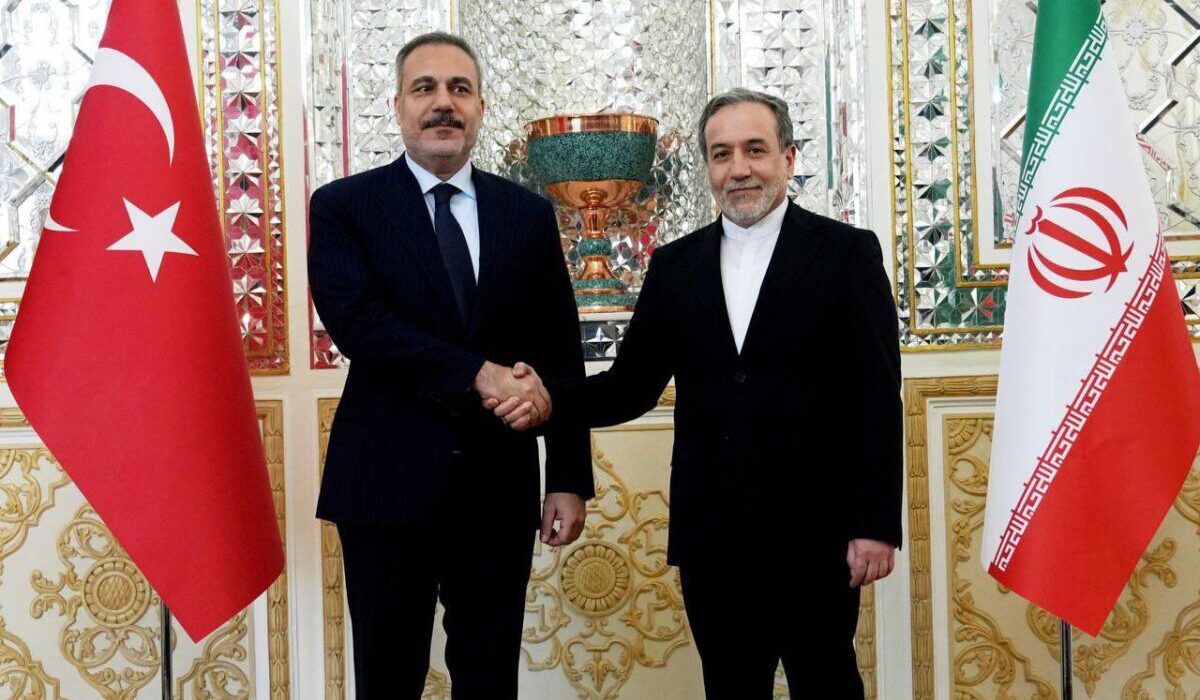
Turkish Foreign Minister Hakan Fidan said on Sunday that cooperation with Iran to manage Afghan migration and curb irregular movements from Afghanistan is one of the main priorities in bilateral relations.
Speaking at a joint press conference with Iranian Foreign Minister Abbas Araqchi, Fidan said the scale of Afghan displacement required coordinated action between Ankara, Tehran and the Taliban authorities.
“The issue of Afghan migrants requires joint cooperation with Iran and coordination with the Afghan government, and we are seeking practical and sustainable solutions,” he said.
Fidan said Sunday’s meeting served as a prelude to the ninth session of the Turkey–Iran High-Level Cooperation Council, to be held in Tehran, where the two sides will discuss strategies for managing migration from Afghanistan, sharing border information and improving the use of border crossings.
He noted that millions of Afghan migrants in neighbouring countries, particularly Iran and Pakistan, face economic and social hardship, warning that continued irregular migration could worsen the humanitarian situation. Cooperation between Ankara and Tehran, he said, includes identity registration programmes, humanitarian support and preventive measures aimed at avoiding sudden population movements.
Fidan added that, aside from migration, the two countries also discussed border security, information-sharing and engagement with the Taliban administration to better manage migration flows.
He said such cooperation was essential to prevent armed groups from exploiting the migration crisis and to ensure regional security. “Iran and Turkey play an important role in regional stability, and managing the flow of Afghan migrants must be done in a way that protects human rights while safeguarding border security and local communities,” he said.
Iran hosts one of the largest Afghan migrant and refugee populations in the world.
Estimates by international agencies suggest Iran is home to around 750,000 registered Afghan refugees and more than 2 million undocumented or semi-documented Afghan nationals who entered the country for work, safety or family reunification.
Following the Taliban’s return to power in 2021, Iran saw multiple new waves of arrivals, adding pressure to an economy already strained by inflation and unemployment.
In recent months, Iran has intensified deportations of Afghan migrants, returning hundreds of thousands of people across the border.
Aid agencies say more than a million Afghans may have been expelled since early 2025, warning that the pace of returns has outstripped the ability of humanitarian groups in Afghanistan to provide shelter, food and medical assistance. Many deportees arrive without documentation or family support, leaving them highly vulnerable.
Humanitarian organisations have described the situation as a growing crisis, with both Iran and Afghanistan struggling to manage large-scale movements of people. Turkey, which also hosts significant Afghan migrant communities and serves as a transit route for Afghans trying to reach Europe, has pushed for closer coordination with Iran to prevent sudden influxes, improve border controls and ensure protection measures for migrants.