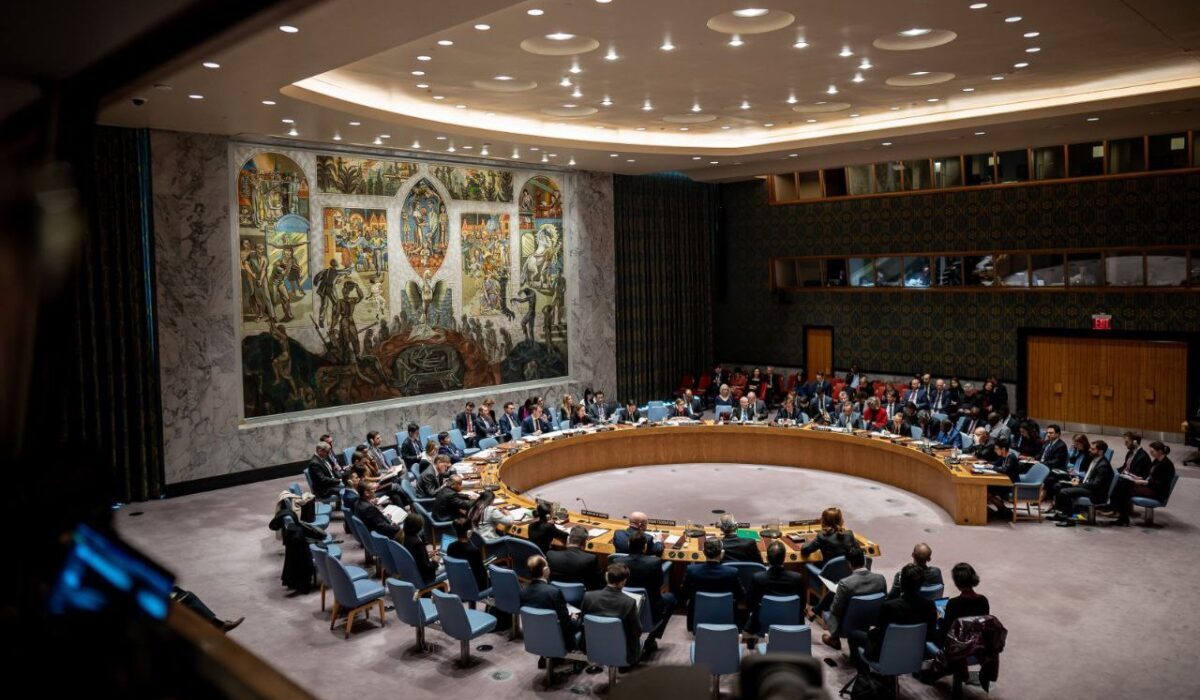
Members of the United Nations Security Council remain divided over how the Taliban should be described in official UN documents, according to a new report by Security Council Report, exposing broader disagreements over international engagement with the Taliban as the council prepares to renew the mandate of the UN mission in the country.
The dispute centers on the term “de facto authorities,” a formulation regularly used in UN reports on Afghanistan since the Taliban returned to power in August 2021.
According to the report, some council members, including the United States, are uncomfortable with the terminology, arguing that it could confer legitimacy on the Taliban or imply a degree of international recognition. China and Russia reject that argument, maintaining that the phrase accurately reflects the reality on the ground in Afghanistan.
The disagreement comes as the Security Council is expected this month to renew the mandate of the United Nations Assistance Mission in Afghanistan, or UNAMA, ahead of its June 17 expiration. The council is also scheduled to hold its quarterly briefing on Afghanistan, with senior UN officials expected to update members on political, humanitarian and security developments.
The upcoming vote is receiving particular attention because the council extended UNAMA’s mandate for only three months in March, departing from a nearly two-decade practice of renewing the mission annually. Resolution 2818 extended the mandate until June 17 while members continued discussions over the mission’s future direction.
According to Security Council Report, divisions extend well beyond terminology.
The United States has said its priorities in Afghanistan include protecting US citizens, addressing terrorist threats and securing the release of American detainees. Washington has also called for a reassessment of UNAMA’s activities, arguing that the mission’s mandate should be realistic, implementable and directly linked to peace and security objectives. US officials have suggested reviewing whether some elements of the mission’s work could be streamlined or adjusted to reflect current conditions, the report said.
China and Russia, by contrast, have advocated greater engagement with the Taliban and argue that economic and development assistance should not be conditioned on issues such as women’s rights or broader political concerns, the report said.
It added that both countries have also called for the release of Afghanistan’s frozen central bank assets and supported easing certain restrictions on Taliban officials.
The report notes that Afghanistan’s security situation remains volatile, citing months of tensions between Pakistan and the Taliban that escalated into major cross-border clashes earlier this year. While violence has eased in recent weeks, intermittent exchanges of fire and border disruptions have continued, affecting trade and movement between the two countries.
Security Council Report also highlighted continued concern over human rights conditions, particularly for women and girls. It noted that UNAMA recently criticized a Taliban decree on marriage that UN officials say could legitimize child marriage by allowing a girl’s silence to be interpreted as consent.
Meanwhile, Afghanistan continues to face one of the world’s largest humanitarian crises. Nearly half the population—about 21.9 million people—is expected to require humanitarian assistance this year, while millions face acute food insecurity and rising malnutrition. The UN and aid agencies have also launched a separate appeal to assist an estimated 2.7 million returnees expected to arrive from neighboring countries this year.
China currently serves as the Security Council’s penholder on Afghanistan and is leading negotiations on the UNAMA mandate renewal.