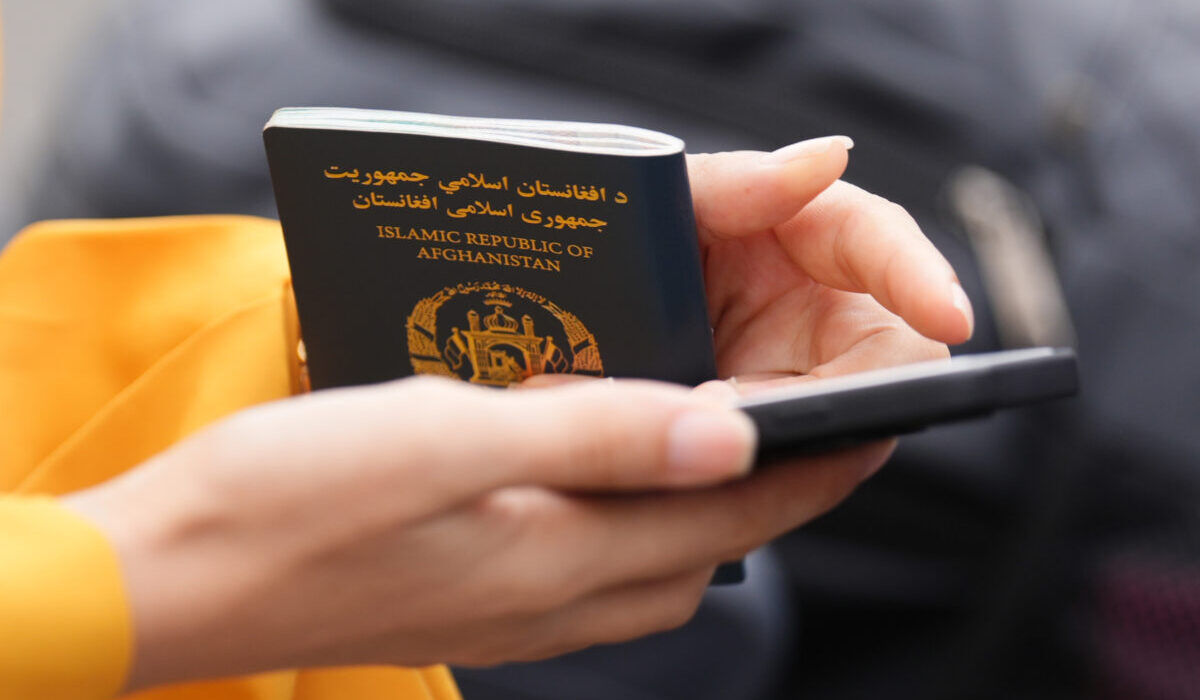
The US Department of State announced on Saturday that it has immediately paused the issuance of visas to individuals traveling on Afghan passports, citing national security concerns after last week’s shooting of two National Guard members near the White House.
“The Department of State has IMMEDIATELY paused visa issuance for individuals traveling on Afghan passports,” the department said in a statement posted to X. “The Department is taking all necessary steps to protect US national security and public safety.”
The decision follows a shooting incident on Wednesday afternoon involving Rahmanullah Lakanwal, a 29-year-old Afghan national who entered the United States in 2021 under an evacuation program following the US withdrawal from Afghanistan. He is accused of opening fire on two members of the West Virginia National Guard in Washington, DC, leaving one dead and another critically wounded.
President Donald Trump, along with other senior officials, described the incident as an act of terrorism and blamed the Biden-era refugee vetting process for allowing Lakanwal into the country.
Marco Rubio, US Secretary of State, shared the department’s announcement and reiterated the administration’s stance. “The United States has no higher priority than the safety and protection of its citizens,” he wrote.
The fallout from the attack has been swift. In addition to the State Department’s action, US Citizenship and Immigration Services (USCIS) announced it had suspended the processing of all immigration applications from Afghan nationals pending a broader review of security and vetting protocols.
Human rights groups and international organizations, including the United Nations, have expressed concern over the sweeping nature of the measures. Richard Bennett, the UN special rapporteur on human rights in Afghanistan, warned that an isolated incident should not be used to justify punitive action against an entire community. “The act of one individual must not be used to stigmatize or penalize a whole population,” he said in a statement.
Advocacy organizations supporting Afghan refugees echoed that sentiment, urging US officials to avoid policies that could unfairly target vulnerable populations who fled persecution and war.
Despite the backlash, Trump administration officials have defended the pause, pointing to what they describe as systemic failures in the previous vetting process. The administration has also ordered a review of all Afghan nationals who entered the US under the “Operation Allies Welcome” program launched in 2021.