Recently, the federal parliament of Pakistan passed an amendment to the country’s constitution, which is considered effective and enforceable after being signed into law by the president.
This amendment includes the following provisions:
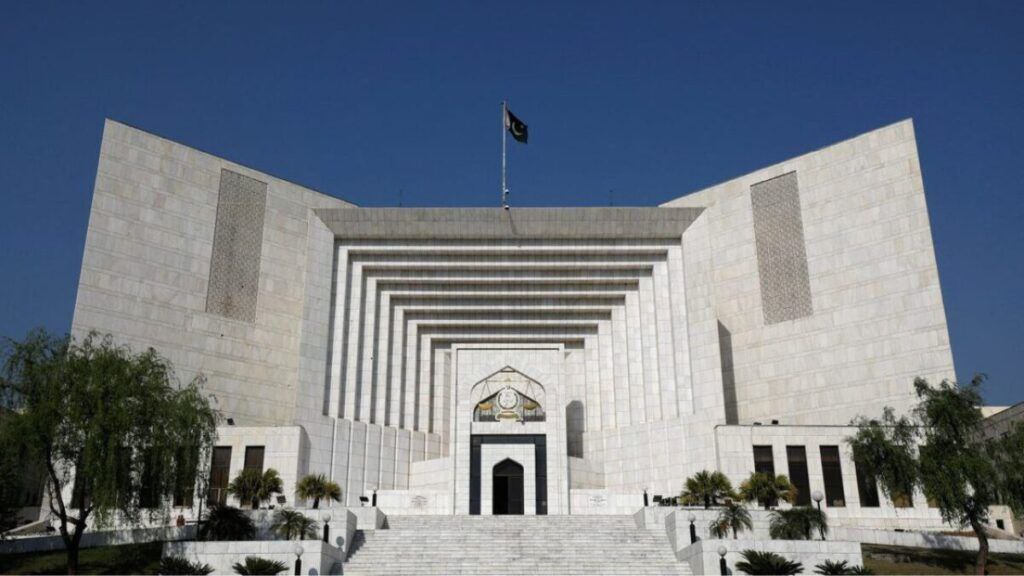
The establishment of a Federal Constitutional Court with the authority to interpret the constitution and resolve disputes between the provinces and the federal government.
The transfer of judges from one province to another based on the recommendation of the Judicial Commission and with the approval of the president; thus, another power is added to the authority of the president of Pakistan.
The limitation of the powers of the Federal Supreme Court, including its authority to interpret the constitution.
Changes in the structure of high-ranking military officials and the creation of new entities such as the “National Strategic Command.”
No institution—including the Supreme Court—can issue a ruling to annul the constitution.
Granting judicial immunity to certain senior military and civilian officials, including:
Lifetime judicial immunity for the president in criminal matters;
Judicial immunity for military personnel holding the rank of Field Marshal or Chief of Defense Forces.
What stands out most in this amendment is the granting of judicial immunity to senior military and civilian officials—an explicit violation of the principle of equality before the law. This principle is recognized in all national and international legal systems. Therefore, granting such broad immunities, particularly for military ranks such as Field Marshal, is considered an unprecedented move in modern times.
Legally, three types of immunity are recognized:
Diplomatic immunity: granted to diplomats during their mission in the host country, and to heads of state and foreign ministers during official visits.
Parliamentary immunity: members of parliament are protected from legal prosecution for their votes and statements made in the course of their duties.
Judicial immunity: judges, to ensure judicial independence, are immune from prosecution for their decisions and rulings while in office.
All of these immunities are relative, not absolute.
Despite this, Amendment 27 of Pakistan’s constitution envisions judicial immunity as absolute. For example, it explicitly states: “Criminal proceedings against the president cannot be initiated or continued”; and this condition is for life. A similar provision applies to the Chief of Defense Forces and Field Marshals in Pakistan.
It must not be forgotten that, under international criminal law, military personnel deployed outside their country on missions are not prosecuted in the host country if they commit a crime; instead, they are tried in their own country, and the outcome must be reported to the host nation to satisfy public opinion.
However, if a military officer on a foreign mission commits international crimes such as war crimes, crimes against humanity, or genocide, they are prosecutable by the International Criminal Court (ICC).
Now the question arises: how do the officials of the Pakistani government—who claim to be the leaders of a democratic republic and assert that they have come to power through free elections—respond to the legal concerns arising from this form of supra-legal immunity, which can be described as a mockery of the rule of law?
If the officials granted judicial immunity commit crimes such as murder, crimes against humanity, war crimes, or aggression against another state, does this immunity not amount to impunity?
Has the principle of equality before the law in Pakistan been rendered meaningless?
In a modern state, does this not undermine the principle of accountability?
Doesn’t such a measure open the door to abuse of power?
Isn’t this amendment contrary to the global values upheld by institutions such as the International Criminal Court (despite Pakistan not being a member) and the UN Human Rights Committee?
And finally, how does Pakistan—which identifies as an “Islamic Republic”—justify this action under any principle of Islamic justice, when Islamic texts and jurisprudence assert a ruler who errs can be dismissed; a tyrant ruler can be punished; and no one is exempt from legal boundaries and prescribed punishments.
Nasrullah Stanikzai is a political and international affairs expert and former professor at the Faculty of Law and Political Science at Kabul University.
The views expressed in opinion pieces published in the Opinion section of Amu’s website are solely those of the authors.