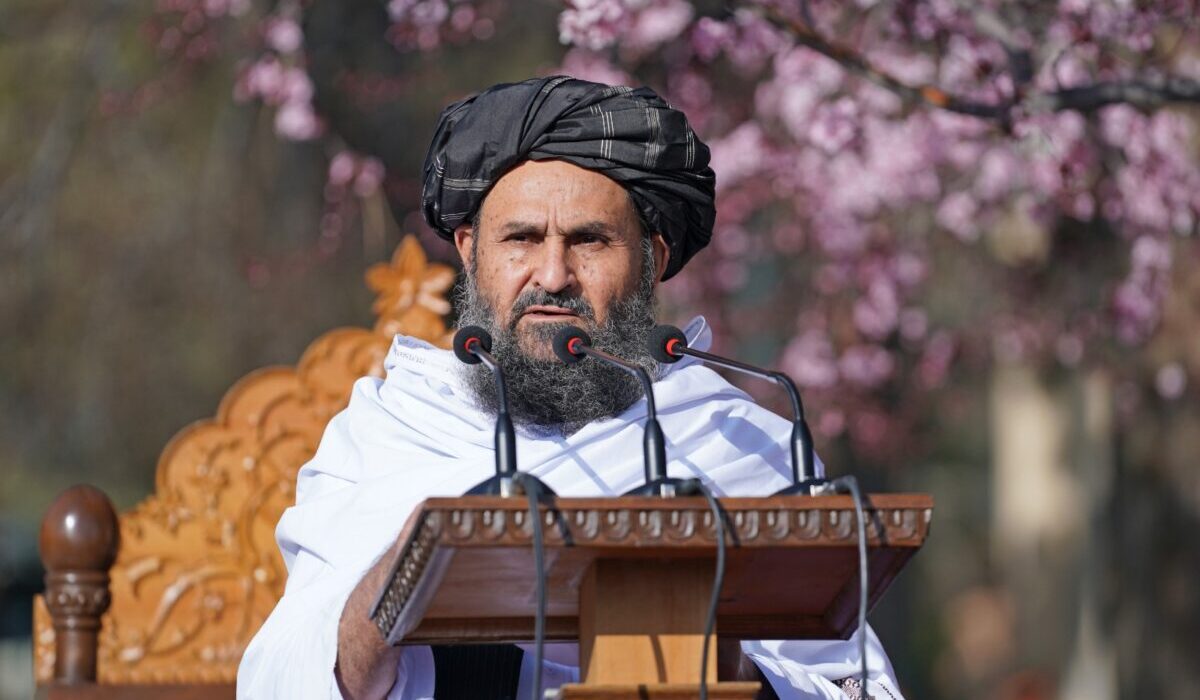
The Taliban deputy chief minister, Abdul Ghani Baradar, on Wednesday called for a complete halt to pharmaceutical imports from Pakistan, signaling a deepening trade rift between the two countries as border crossings remain closed for over a month.
Baradar said during a session in Kabul that Afghanistan’s importers would be given a three-month deadline to settle accounts with Pakistani suppliers, after which all medicine shipments from Pakistan should cease.
“If Pakistan wants trade routes to reopen, it must offer firm and credible guarantees,” Baradar said, adding that any future reopening of border crossings must come with assurances that they will not be closed again — regardless of security tensions or political disputes.
“Unless it is guaranteed that the routes remain open under all conditions — war or peace — we will not allow their reopening,” he told a room of Afghan traders and industrialists.
The remarks come as tensions between Islamabad and the Taliban have escalated in recent weeks, particularly over the presence of Tehrik-i-Taliban Pakistan (TTP) fighters allegedly operating from Afghan soil — a charge the Taliban deny. Two rounds of talks between Taliban and Pakistani delegations held in Istanbul in recent weeks ended without agreement, with both sides accusing each other of avoiding meaningful commitments.
The border closures — including at key crossings like Torkham and Chaman — have disrupted the flow of goods into landlocked Afghanistan, where Pakistan is traditionally one of the top trade partners and the largest source of imported medicine.
A critical trade lifeline
Afghanistan relies heavily on foreign pharmaceutical imports. According to data from the Afghanistan Chamber of Commerce and previous government statistics, nearly 60 to 70 percent of Afghanistan’s medicine is imported, with Pakistan accounting for over 40 percent of that share. Other sources include India, Iran, China, and the United Arab Emirates. A sudden halt in supplies from Pakistan could further strain Afghanistan’s fragile healthcare system, especially amid existing shortages of basic drugs and medical equipment.
Baradar’s call for an end to imports appeared to be aimed at pressuring Pakistan in ongoing political and security negotiations. But health experts have warned that without a clear and sustainable replacement plan, the move could result in medicine shortages in public hospitals and pharmacies.
Taliban commerce officials have indicated they are seeking alternative suppliers, including domestic manufacturing and expanded trade with Iran and Central Asian states, though industry analysts say these efforts are not yet sufficient to meet national demand.
Pakistan has not publicly responded to Baradar’s remarks or the Taliban’s latest conditions. Islamabad has long insisted that Afghanistan must do more to prevent cross-border militancy, especially by the TTP, which claimed responsibility this week for a suicide bombing in Islamabad that killed 12 people.