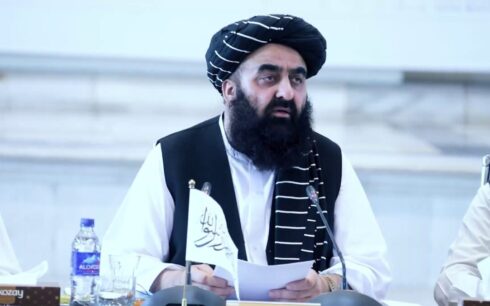
Amir Khan Muttaqi, the Taliban’s foreign minister, said on Sunday that talks with Pakistan broke down due to what he described as “unrealistic and impractical” demands from Islamabad.
Speaking at a meeting in Kabul, Muttaqi said their delegation returned from Istanbul following the third round of negotiations with Pakistani counterparts, which failed to yield any concrete results. According to him, the central sticking point was Pakistan’s insistence that the Taliban guarantee no attacks would be launched from Afghan soil by the Tehrik-i-Taliban Pakistan (TTP), a banned militant group responsible for numerous deadly assaults in Pakistan.
“Expecting one country to ensure the total security of another is an illogical demand,” Muttaqi said. “Preventing TTP attacks is the responsibility of Pakistani forces, not ours.”
He added that the Taliban delegation entered the talks under the full authority of its leadership and in good faith, emphasizing that Afghanistan prioritizes diplomacy to resolve disputes. In return, Muttaqi said the Taliban demanded that Pakistan halt its aerial bombardments of Afghan territory and prevent the infiltration of Islamic State (ISIS-K) fighters from its side of the border.
He also criticized Islamabad’s ongoing deportation of Afghan migrants and the broader deterioration in bilateral ties. “It is unfortunate that a country that claims to be a nuclear power chooses to assert that power against poor migrants and traders,” Muttaqi said. “How can a nuclear power apply its strength over onions and tomatoes? This logic benefits no one.”
Despite Taliban denials of harboring the TTP, a recent United Nations report estimated that as many as 6,000 TTP fighters are currently operating inside Afghanistan. Muttaqi also acknowledged that Pakistan had requested the Taliban facilitate the relocation of TTP members from Pakistan to Afghanistan — a proposal he dismissed outright.
“Is Afghanistan insane to import other countries’ problems into its own house?” he said. “You accuse us of sheltering the TTP, then you ask us to host them? That logic is not acceptable.”
The latest round of talks in Istanbul — preceded by previous meetings in Doha and Istanbul — comes amid the most intense border clashes between the two neighbors since the Taliban returned to power in August 2021. An eight-day stretch of skirmishes last month along the contested Durand Line closed key border crossings and left dozens dead, according to United Nations estimates.
Though a ceasefire was brokered after the first round of negotiations in Qatar, subsequent talks have failed to deliver a lasting agreement. Both sides have accused each other of violating the truce, including a deadly flare-up in Spin Boldak district last week.
The Taliban’s comments also come as international observers, including United Nations experts, continue to warn that Afghanistan has become a safe haven for transnational extremist groups under Taliban rule. A UN report released earlier this year found that al-Qaeda maintains training camps and operational presence in several Afghan provinces, including Helmand, Kandahar, Kunar, Uruzgan, and Zabul — posing serious threats to regional and global security.