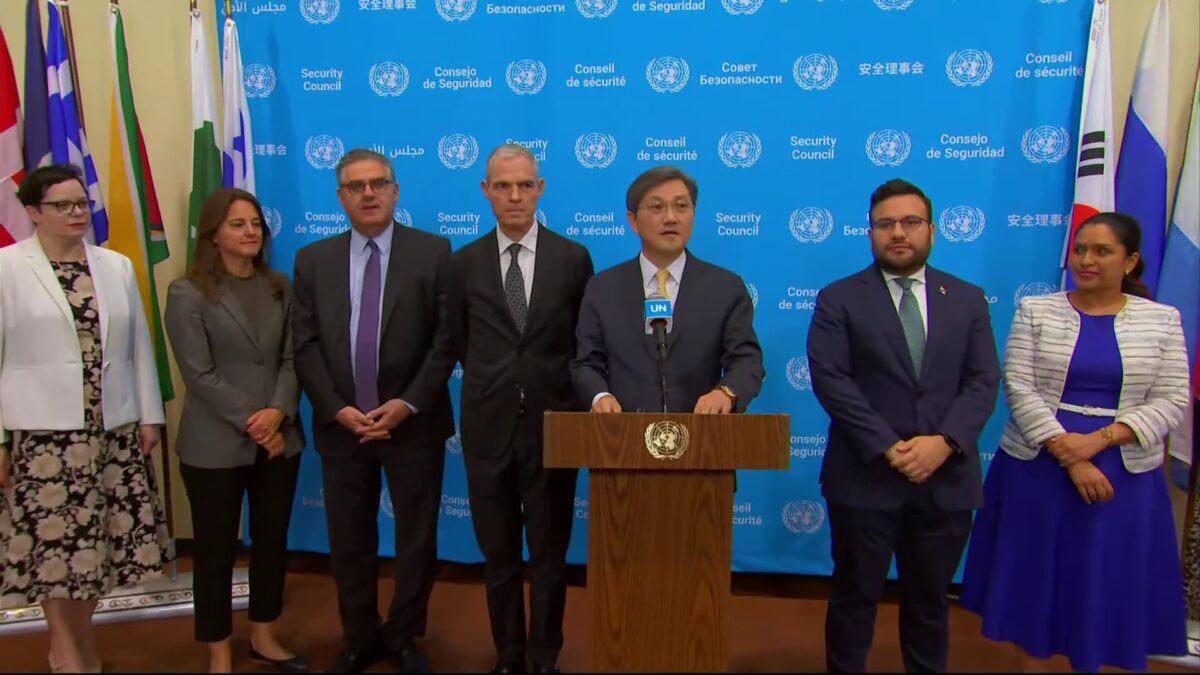
Nine members of the U.N. Security Council on Wednesday issued a joint statement warning that the Taliban’s ongoing repression of women and girls may constitute gender persecution, a crime against humanity under the Rome Statute.
The representatives of Denmark, France, Greece, Guyana, Panama, the Republic of Korea, Sierra Leone, Slovenia, and the United Kingdom said they were “deeply appalled” by the Taliban’s worsening restrictions, which they described as systematic and institutionalized.
The countries condemned the Taliban’s ongoing bans on women working for NGOs and the United Nations, saying such measures deny vulnerable groups — especially women and girls — access to life-saving assistance. They also voiced concern about reported threats and harassment of U.N. Assistance Mission in Afghanistan (UNAMA) personnel.
The statement urged the Taliban to immediately lift restrictions on women’s access to humanitarian services, particularly in the wake of the deadly earthquake in eastern Afghanistan in August, stressing that women and girls must be included in all rescue and emergency efforts.
“We demand that the Taliban immediately reverse all those policies and practices that restrict human rights and the fundamental freedoms of women and girls, and uphold Afghans’ obligations under international law,” the statement said, citing the Convention on the Elimination of All Forms of Discrimination Against Women and Security Council Resolutions 2593 and 2681.
The nine members also expressed solidarity with Afghan women and girls who continue to show resilience despite near-total restrictions. “Despite the near-total restrictions, they sustain businesses, serve as humanitarian workers and midwives, and lead communities,” the statement noted.
The countries voiced support for accountability efforts, including the International Criminal Court’s arrest warrants against senior Taliban leaders for alleged international crimes, including gender-based crimes.
The joint statement further called on the Taliban to:
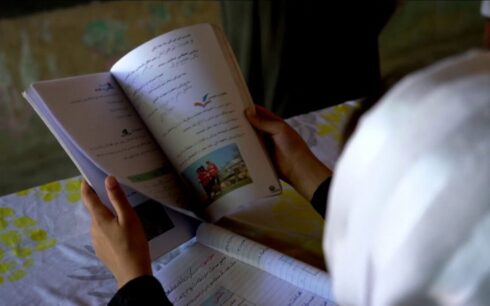
Guarantee Afghan girls’ right to education beyond primary school, including medical training.
Reopen avenues for women’s economic participation, including their right to work and take part in public life.
End targeting of women human rights defenders, civil society representatives, and peacebuilders.
They also stressed that the U.N.-led Doha process “must deliver concrete progress on the protection of women’s rights” and ensure the participation of diverse groups of Afghan women in shaping the country’s political future.
Marking the 30th anniversary of the Beijing Declaration and Platform for Action and the 25th anniversary of Security Council Resolution 1325 on women, peace and security, the nine Council members said the situation in Afghanistan represented a “defining test of our collective resolve and credibility.”
“As members of the Security Council, we affirm our unwavering commitment to ensuring the full, equal, meaningful, and safe participation of women and girls in all aspects of Afghan society, as well as their protection from all forms of violence and discrimination,” the statement concluded.