Residents of Marjah district in southern Helmand province say their need for drinking water has grown increasingly urgent, with dozens of families forced to share a single public tap.
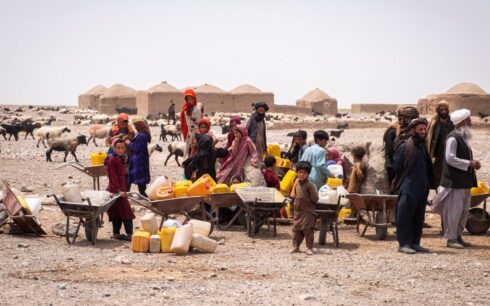
Community members told Amu TV that about 40 to 50 households in the village of Malakzai rely on one city water line for daily consumption. Families say the shortage has left them struggling to meet even basic needs.
“We do not have access to enough drinking water,” said Allahdad, a resident of Helmand. “One tap serves 40 to 50 families. This simple but vital problem has made our lives extremely difficult.”
Another villager, Abdul Fattah, described the situation as a crisis. “One tap cannot be enough for so many families,” he said. “Life cannot continue without water. We need adequate supply so this pain and suffering can end.”
Each day after school, children in the village carry empty barrels to the water source, fill them, and bring them back to their homes. Residents say the scene has become a daily routine that defines life in Marjah.
Beyond water scarcity, villagers say poverty has deepened their hardship. Many families cannot afford daily expenses and rely on begging to survive.
“Our problems are countless — from water to food,” said Serajuddin, another resident. “For two years people here have become so poor that they are forced to beg for a bowl of flour. We ask the government to pay attention to our situation.”
Local sources told Amu TV that widespread use of underground freshwater for agriculture has significantly reduced water levels across Helmand. The problem is most acute in Marjah, as well as in Washir and Nad Ali districts.
They added that the flow of water from the Helmand River into dams, reservoirs and district canals has also declined compared with previous years, further straining resources for residents.
The combination of overuse of groundwater and reduced river inflows has raised concerns that Helmand’s water shortages will worsen, leaving families vulnerable as they struggle with poverty and lack of essential services.