Despite a surge of international assistance for victims of last month’s earthquake in eastern Afghanistan, Taliban have launched a campaign of compulsory fundraising, pressuring teachers and students to contribute, according to local sources.
The campaign has so far been carried out in Bamiyan, Maidan Wardak and Ghazni Provinces, the sources said. Money is being collected under the banner of “aid for earthquake victims,” but contributions are reportedly mandatory. The Taliban have not issued an official statement on the effort.
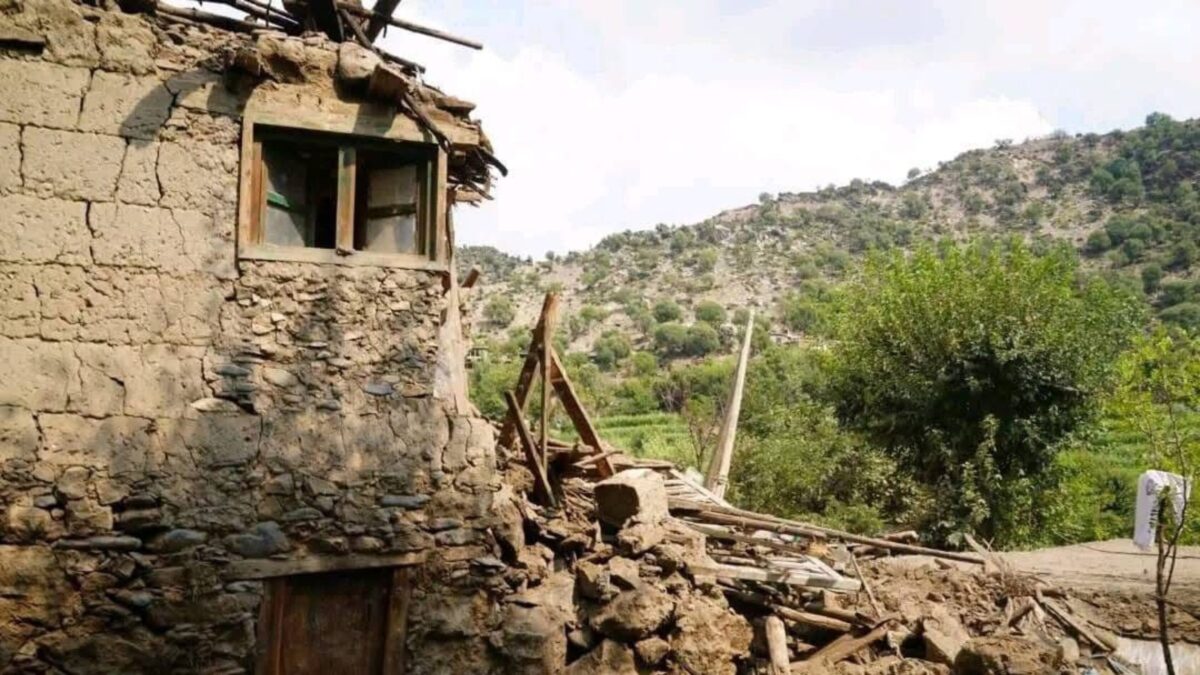
The 6.0-magnitude quake struck on Aug. 31, devastating Kunar Province and neighboring areas. According to the United Nations, more than 2,200 people were killed, 3,600 injured and at least 6,700 homes destroyed. The U.N. says some 84,000 people were affected, losing not only homes but also schools, health centers, farmland, livestock and access to clean water.
Although international aid has poured in, survivors in parts of Kunar say they still lack adequate food and shelter. The U.N. has committed $10 million from its emergency relief fund, while countries and organizations have pledged nearly $25 million more. China promised $7.2 million, Germany $2.5 million, Britain $1.3 million, the European Union $1.1 million, and Australia and South Korea $1 million each. Additional support has come from Ireland, Turkey, and others.
A wide array of nations — including Russia, Qatar, the United Arab Emirates, Pakistan, Japan, Kazakhstan, Turkmenistan, Bangladesh, Uzbekistan, Saudi Arabia, India and Iran — have sent tents, food, blankets, medical kits and other relief supplies. Qatar alone has dispatched more than nine cargo planes loaded with aid, while Iran said it delivered a second 50-ton shipment of food and medical supplies over the weekend.
Still, humanitarian groups warn that many survivors remain in desperate conditions, exposed to worsening weather and dependent on the pace of aid distribution.