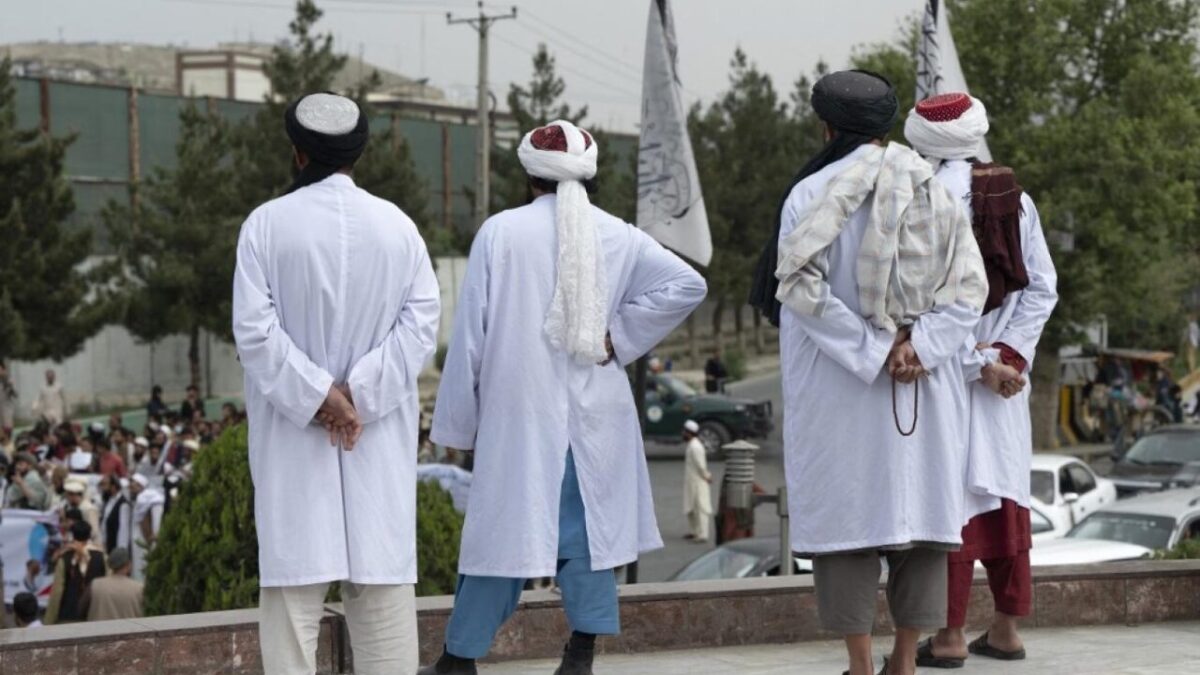
Amu has examined the structure, authority, legal framework, and growing influence of the Taliban’s Ministry for the Propagation of Virtue and the Prevention of Vice (PVPV), a body that has emerged as one of their most powerful institutions since their return to power.
Following their takeover in August 2021, the Taliban swiftly dissolved Afghanistan’s Ministry of Women’s Affairs and replaced it with the PVPV ministry. While the Taliban have described the change as a return to Islamic governance, rights advocates and Afghan citizens have criticized it as a move to institutionalize repression, particularly against women and girls.
Four years on, the ministry has become a central instrument of the Taliban’s ideological control, enforcing decrees that regulate public behavior and deeply restrict individual freedoms—most notably those of women.
Taliban officials have likened the PVPV’s work to that of “frontline jihadists.” At a public event, Taliban Minister Mohammad Khalid Hanafi declared, “Just as martyrs stood at the frontlines in jihad, the Ministry of Virtue now leads the frontline of Islamic governance.”
Structure and staffing
According to Amu’s findings, the Taliban’s PVPV ministry is composed of three deputy ministries: Military Affairs, Policy and Training, and Complaints Handling, a General Directorate of Finance and Administration, and 52 provincial and district-level directorates across the country.
In total, more than 3,300 morality enforcers, or muhtasibs, operate nationwide, including over 540 in Kabul alone. Each province has an estimated 118 muhtasibs.
These officers are all graduates of Taliban-aligned religious seminaries and follow the Hanafi school of Sunni Islam. Sources say they are paid monthly salaries ranging from 13,000 to 25,000 afghanis—nearly twice the salary of an average public-school teacher.
Legal framework
The PVPV operates under two primary legal documents:
The Law on the Propagation of Virtue and Prevention of Vice: 4 chapters, 35 articles.
The Law on Complaints Handling: 2 chapters, 23 articles.
These laws grant muhtasibs sweeping authority over social behavior, allowing them to inspect public places, issue warnings, detain violators, and intervene in civil matters under religious pretexts.
The laws serve effectively as a “meta-constitution” for the Taliban, often overriding other legal norms and providing ideological justification for surveillance and punishment.
Powers and restrictions
Muhtasibs have enforced a wide range of bans and restrictions, including detaining women for appearing in public without a male guardian; arresting journalists and banning images of living beings in public spaces; closing women’s beauty salons and limiting women’s mobility and monitoring dress codes, hijab compliance, and gender segregation.
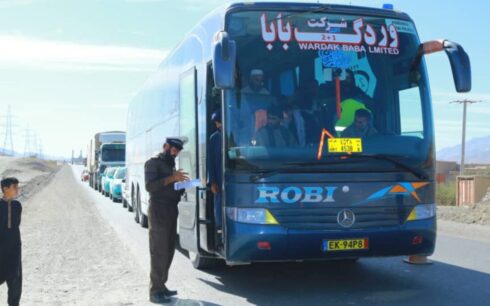
Their presence—often armed—has expanded into ministries, hospitals, marketplaces, and public transport, creating what some Afghans describe as a climate of fear and surveillance.
One Kabul resident told Amu: “They’ve turned Afghanistan into a prison for women. We are not safe to walk, speak, or even exist as ourselves.”
Growing public concern
Several Afghan scholars and rights advocates have denounced the ministry’s expanding role.
“These actions are not in line with Islamic principles. Detaining women and restricting public life is a distortion of religion and a violation of fundamental human dignity,” said Fazl Hadi Wazin, a university professor, said.
Audio recordings obtained by Amu reveal PVPV officers threatening neighborhood representatives over the presence of beauty salons. In one message, a muhtasib warns: “If we find another beauty parlor in your area, don’t come complaining to us later.”
Despite repeated inquiries, Taliban officials declined to comment on the ministry’s budget, recruitment practices, or the complaints received against their personnel.
A tool of authoritarian control
While Taliban leaders continue to defend the PVPV as an essential instrument of Islamic governance, critics argue that it functions as a political tool—designed to suppress dissent, erase women from public life, and enforce uniformity through fear and coercion.
The PVPV ministry has become a pillar of the Taliban’s authoritarian model—one that trades rights for control, punishes difference, and aims to impose a singular vision of morality on a diverse society.