As the fourth anniversary of the Taliban’s return to power approaches, some women in central Afghanistan’s Bamiyan province say the past four years have been filled with hardship and loss.
One of them, Sajeda Ghafari, started a traditional clothing workshop in the provincial capital after being barred from continuing her education. The small business now provides work for her and 25 other young women who were also forced out of school.
While Ghafari says the workshop cannot heal the deep wounds of lost opportunities, it has given them a reason to stay active.
“I have a tailoring workshop with 25 women and girls working here,” Ghafari said. “Things were better before, but this year we are facing serious economic problems.”
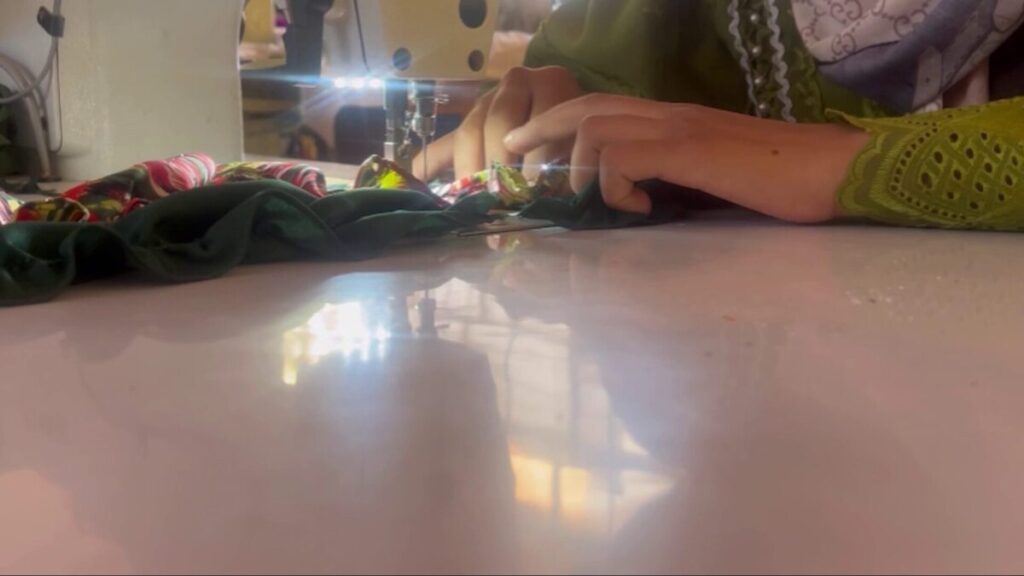
The women working alongside her each carry stories of interrupted dreams, and in some cases, declining physical and mental health.
“We girls went to school with thousands of hopes, wanting to serve both ourselves and our community,” said Bahara Naseri, who was in 11th grade and had spent two years preparing for university entrance exams before the ban. “Then they closed the schools.”
“Before, the school gates were open and anyone could gain knowledge,” said Fatema Mohammadi. “Now they are closed, and we are cut off from our dreams. Every girl wants to achieve her rightful goals. We hope the schools reopen as soon as possible.”
Over the past four years, Afghan women have faced sweeping bans on education, employment, and public life, with opportunities for freedom and advancement severely curtailed.
The women say the years under Taliban rule have been filled with pain and deprivation — but also determination to continue their fight for justice and a better future.