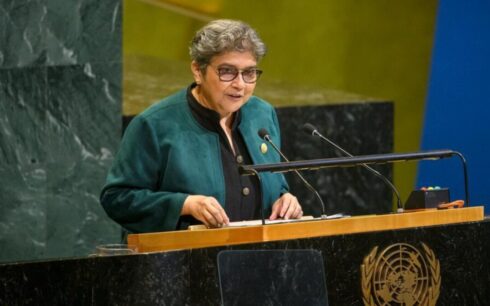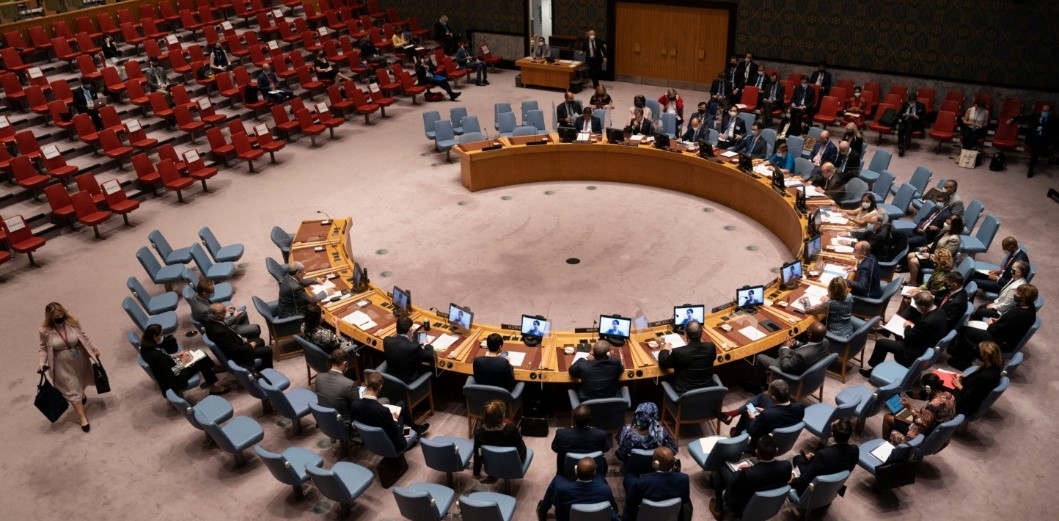
The UN Security Council is scheduled to hold two meetings on Afghanistan this month, including a vote on the future of the UN Assistance Mission in Afghanistan, or UNAMA, as international debate over the country’s political and humanitarian trajectory continues.
According to UNAMA, the first meeting will take place on June 9 and will serve as the Security Council’s regular briefing on developments in Afghanistan.
A second meeting, scheduled for June 16, will focus on the renewal of UNAMA’s mandate.
The upcoming vote carries particular significance because the Security Council earlier this year renewed UNAMA’s mandate for only three months, breaking with a nearly two-decade practice of extending the mission for a full year. Diplomats viewed the shortened renewal as a reflection of growing disagreements among council members over Afghanistan and the management of the UN file.
The Security Council is expected to consider the mission’s future role amid continuing concerns over Afghanistan’s humanitarian crisis, human rights situation, economic challenges and the international community’s engagement with the Taliban authorities.
The meetings come as a new report by Security Council Report highlighted growing geopolitical competition over Afghanistan within the council itself.
According to the report, China emerged in 2025 as the sole “penholder” on Afghanistan — the council member responsible for leading negotiations and drafting resolutions related to the country — after an unusual diplomatic contest involving several member states.
The competition began after Japan’s Security Council term ended in late 2024. China, Pakistan and South Korea each sought responsibility for the Afghanistan file.
Disagreements became public in February 2025 when China and Pakistan circulated one draft resolution extending UNAMA’s mandate, while South Korea and the United States submitted a competing text the following day.
The report said that after negotiations, the competing drafts were merged into a single resolution that was adopted unanimously by the council. China subsequently became the sole penholder on Afghanistan, giving Beijing a leading role in shaping Security Council action on the country.
Security Council Report described the dispute as one of the clearest recent examples of how broader geopolitical rivalries are increasingly influencing the council’s internal operations.
China’s interest in Afghanistan has expanded since the Taliban returned to power in 2021. Beijing has strengthened political and economic ties with the Taliban while advocating greater regional engagement and stability in Afghanistan.
The United States, meanwhile, remains closely involved in Afghanistan-related Security Council work and continues to chair the council’s sanctions committee on Afghanistan under the 1988 sanctions regime.
The upcoming meetings are expected to address Afghanistan’s political future, humanitarian needs, human rights concerns and the international community’s approach to engagement with the Taliban, nearly five years after their return to power.