Amid a surge in deportations of Afghans from Iran, the head of Iran’s Supreme Council of the Cultural Revolution said that crimes committed by individuals should not be used to stigmatize entire migrant communities.
“Just as an Iranian may commit a crime, a foreign national may also make a mistake,” the official, Abdolhossein Khosropanah, said at a ceremony in Tehran, according to Iranian media reports. “But this should not be generalized to the whole migrant community.”
Khosropanah, whose council oversees cultural and educational policy, emphasized what he called deep cultural and historical ties between Iran and Afghanistan, describing the two nations as part of a shared “Greater Khorasan” heritage of mysticism, philosophy and language. “Between Iran and Afghanistan there is no cultural border,” he said.
He also sought to distance the country’s political system from recent crackdowns on Afghans, saying that harsh measures reflected government enforcement, not the official stance of Iran’s ruling establishment. “The way migrants are being treated today is not the stance of the system,” he said. “It is the result of government policy, and should not be attributed to the entire leadership.”
His remarks come as the Iranian government has intensified deportations of undocumented Afghans, prompting widespread criticism. Many returnees have reported mistreatment during their forced repatriation, including beatings, confiscation of property and degrading treatment.
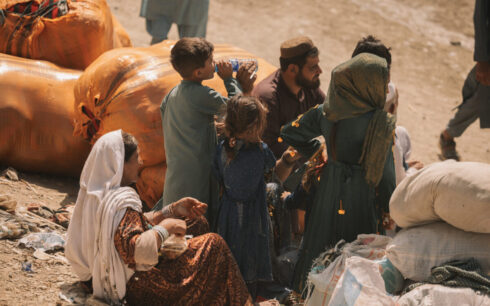
Iran hosts millions of Afghan refugees and migrant workers, many of whom fled conflict, repression and economic collapse in their home country. Human rights organizations have warned that rising anti-migrant sentiment in Iran risks fueling discrimination and abuse against Afghans, even as Tehran insists on its longstanding cultural and religious bonds with its eastern neighbor.