The United Nations said it respects the independence of the International Criminal Court following the issuance of arrest warrants for two senior Taliban leaders, and emphasized that its mission in Afghanistan remains unchanged.
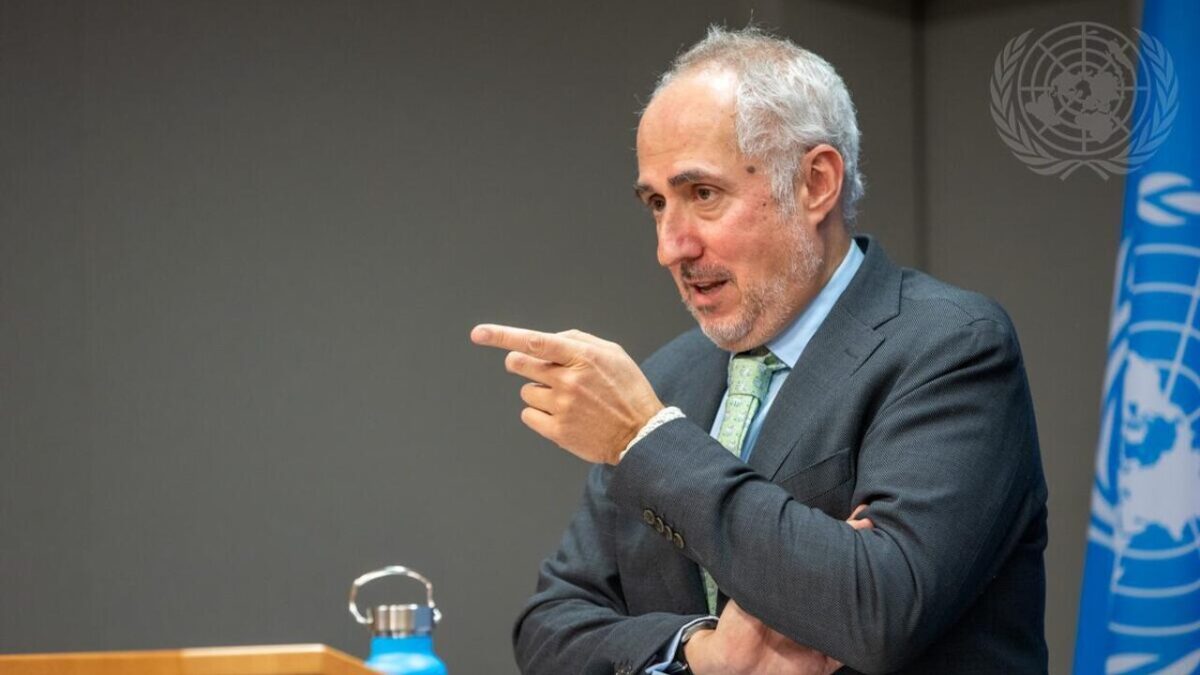
Stéphane Dujarric, spokesman for UN Secretary-General António Guterres, made the remarks during a press briefing in New York on Tuesday, the same day when the ICC’s Pre-Trial Chamber announced warrants for Hibatullah Akhundzada, the Taliban’s supreme leader, and Abdul Hakim Haqqani, the Taliban’s chief justice.
“The International Criminal Court is an independent institution from the Secretary-General,” Dujarric said. “We respect its work and its independence, and we call on all countries to do the same.”
Asked about the political implications of the warrants and the question of recognition of the Taliban, Dujarric said: “The issue of recognition is a bilateral matter between states. For our part, our work in Afghanistan continues as mandated by the Security Council.”
He reiterated the United Nations’ longstanding concern over the human rights situation in Afghanistan, particularly the treatment of women and girls. “We have consistently raised our voice — both politically and through our human rights colleagues — regarding the repeated and ongoing violations of the rights of women and girls in Afghanistan,” he said.
On Monday, the ICC announced that its judges had found reasonable grounds to believe that Akhundzada and Haqqani were responsible for crimes against humanity, including gender-based persecution, unlawful imprisonment, torture, and enforced disappearances. The court said the alleged crimes occurred between August 15, 2021 — when the Taliban returned to power — and January 20, 2025.
It is the first time that leaders of the Taliban have been formally targeted by an international legal body.
In response, the Taliban rejected the court’s authority, describing the decision as “baseless and without effect.” In a statement, they said they do not recognize the legitimacy of the court or its jurisdiction.