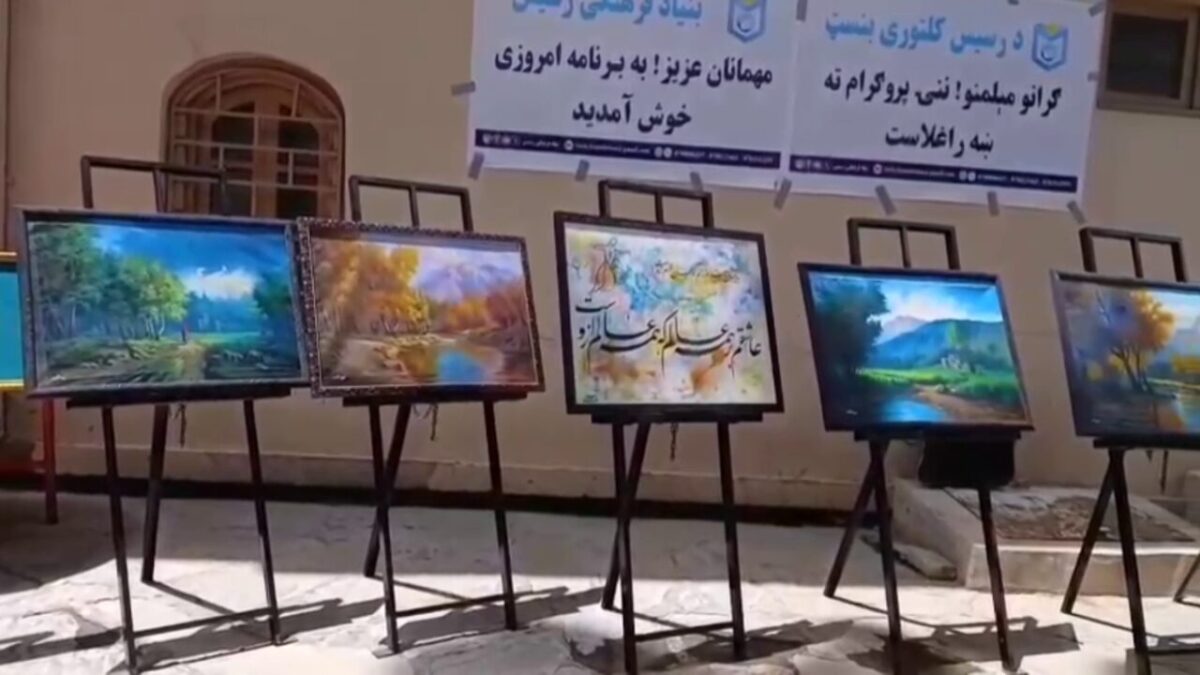
A two-day cultural, artistic and literary exhibition opened at the National Gallery in Kabul, featuring more than 100 works by 18 male artists, but held without the participation of women or any figurative art depicting living beings.
The exhibition featured landscape paintings and traditional crafts, all adhering to Taliban-imposed restrictions that prohibit the portrayal of living beings. The event highlighted the growing constraints on artistic freedom in Afghanistan, particularly the exclusion of women from public cultural life.
Several participating artists said the exhibition focused on natural scenery and was shaped by both ideological and economic pressures. “Our request from the government is to support young people, especially artists,” said Ehsanullah, a painter. “Many are unemployed. Artists invest what little they have into their canvases, and their financial situation is dire.”
Another artist, Mobarez, emphasized the challenges of producing and selling artwork under the current circumstances. He explained that materials are often acquired collectively and shared among artists, including women who contribute behind the scenes. “We try to show people how these crafts are made. Women work hard, and we help sell their work so they can support their families,” he said.
Ten male artisans also displayed handicrafts produced by women, who were not allowed to attend the exhibition or present their own work. According to participants, the women’s pieces were brought in and sold by male intermediaries.
Taliban have imposed increasingly strict rules on public exhibitions and cultural events since returning to power in August 2021. Figurative art has been largely banned, and women have been progressively excluded from the public sphere — including education, employment, and artistic representation.
While the exhibition sought to preserve elements of Afghanistan’s cultural heritage, it also served as a reminder of the country’s sharply narrowing artistic and civic space.