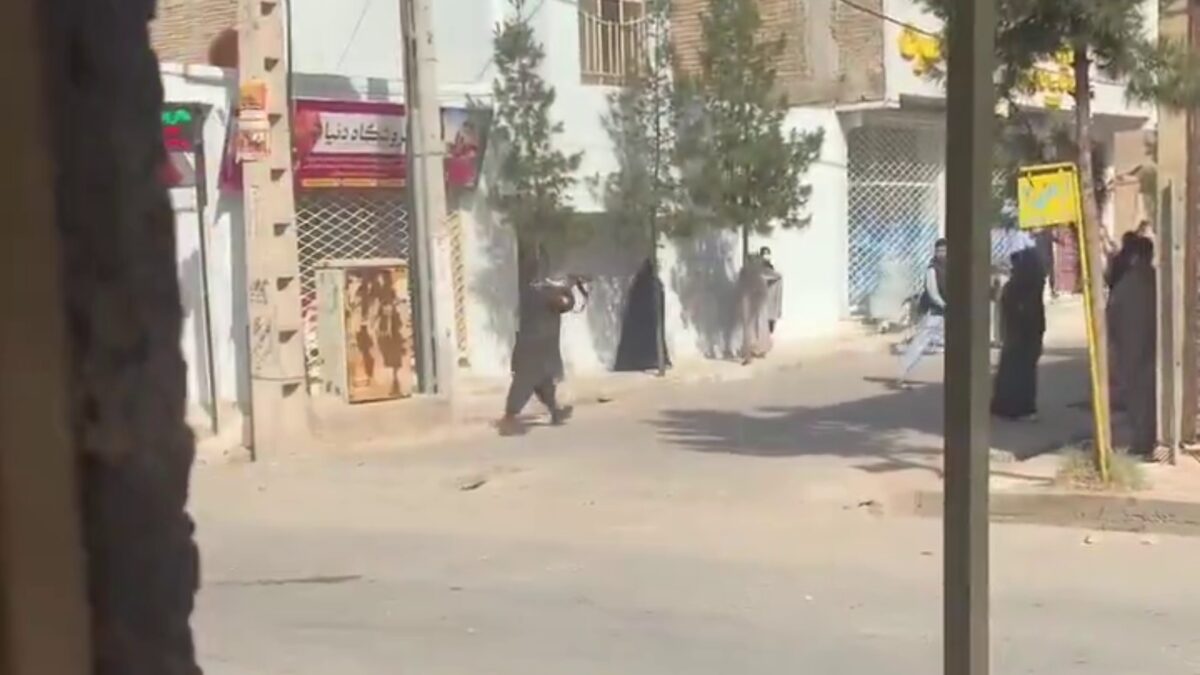
Human Rights Watch on Thursday said Taliban used excessive force against protesters in the western city of Herat, saying the Taliban beat demonstrators, fired into crowds and carried out arrests following Tuesday’s protest.
In a statement, the HRW said Taliban forces killed a child, injured several people and detained an unknown number of protesters during the June 9 demonstration.
The protest was sparked by the arrest of dozens of women in Herat by enforcers from the Taliban’s Ministry for the Promotion of Virtue and Prevention of Vice, commonly known as the morality police.
According to the United Nations, at least 30 women were detained between June 6 and June 7 for allegedly failing to comply with Taliban dress requirements. The women were released on June 8, the HRW said.
“The Taliban authorities fear any dissent and so are escalating their repression of free expression and other basic rights,” said Fereshta Abbasi, Afghanistan researcher at Human Rights Watch.
“The authorities should cease these attacks and ensure that Afghans can protest peacefully without fear of violence or arrest,” she added.
The statement follows findings by the UN Assistance Mission in Afghanistan (UNAMA), which confirmed that at least one person — an 11-year-old boy — was killed during the protest. UNAMA said several others were injured and that it was investigating reports of a second fatality.
Protest met with force
Human Rights Watch cited witness accounts describing a peaceful gathering that escalated after Taliban security forces moved to disperse the crowd.
One protester told the organization that security forces had blocked roads leading to the protest site in a predominantly Hazara neighborhood before the demonstration began.
“It was calm at the beginning, until the Taliban started beating and pushing people,” the protester said. “When the crowd began to get bigger, they started shooting.”
Witnesses said Taliban forces initially fired into the air before directing gunfire toward protesters and pursuing people as they fled.
A doctor in Herat reportedly treated several people for gunshot wounds.
Another witness told Human Rights Watch that Taliban personnel later searched neighborhoods, checked mobile phones for protest videos and detained residents.
“When the shooting began, people started to escape, and I saw the Taliban shooting toward those attempting to flee,” the witness said. “Everyone was terrified.”
According to local sources previously cited by Amu TV, at least two people were killed and multiple others wounded when Taliban forces opened fire on demonstrators. Taliban authorities have not publicly acknowledged any deaths. UNAMA said the death of another person in the protest is under investigation.
Residents told Human Rights Watch that public anger over the detention of women and girls led directly to the protests.
According to videos posted from the protest, demonstrators chanted slogans including “Work, Education and Freedom,” echoing demands that have become a symbol of resistance to Taliban restrictions on women.
One resident said morality police had conducted sweeps in Herat days earlier, detaining women despite their compliance with Islamic dress requirements, the HRW reported.
“In the last few days, they brought big vans to the area and arrested many women including pregnant and older women,” she said as quoted by the HRW. “All the women were wearing hijabs, but the style did not meet their preferences.”
The arrests have drawn condemnation from UN officials, rights organizations and foreign governments.
Richard Bennett, the UN special rapporteur on human rights in Afghanistan, called the detentions arbitrary and demanded the immediate release of the women.
Human Rights Watch said the crackdown reflects a broader pattern of repression under Taliban rule.
The organization argued that the enforcement of Taliban dress requirements and the detention of women over their clothing violate Afghanistan’s obligations under the Convention on the Elimination of All Forms of Discrimination Against Women.
The group also cited international protections for freedom of expression and peaceful assembly, saying the use of lethal force against demonstrators cannot be justified under international law.
Human Rights Watch said the events in Herat are part of what it described as a wider and systematic assault on the rights of women and girls since the Taliban returned to power in August 2021.
Since then, the Taliban have barred girls from secondary and university education, restricted women’s employment, limited their movement and imposed increasingly strict rules governing public life.
The organization called on Taliban to release anyone detained for participating in peaceful protests, end what it described as abusive restrictions on women, and ensure accountability for those responsible for deaths and injuries in Herat.
“By punishing people for exercising their free expression rights,” Abbasi said, “the Taliban authorities aren’t silencing the message but only adding to their mounting list of human rights abuses.”