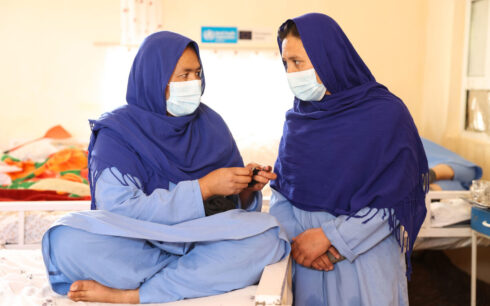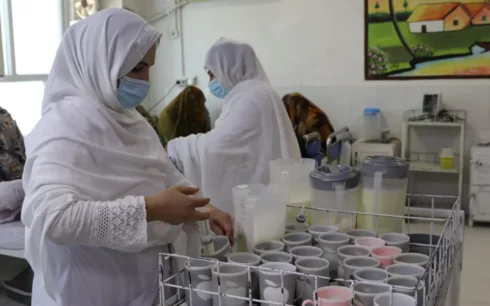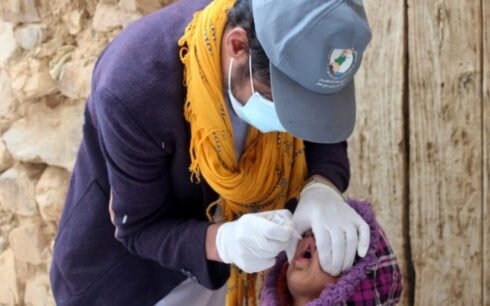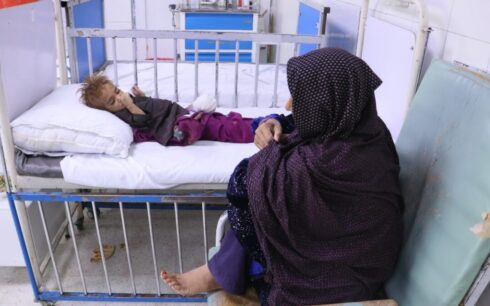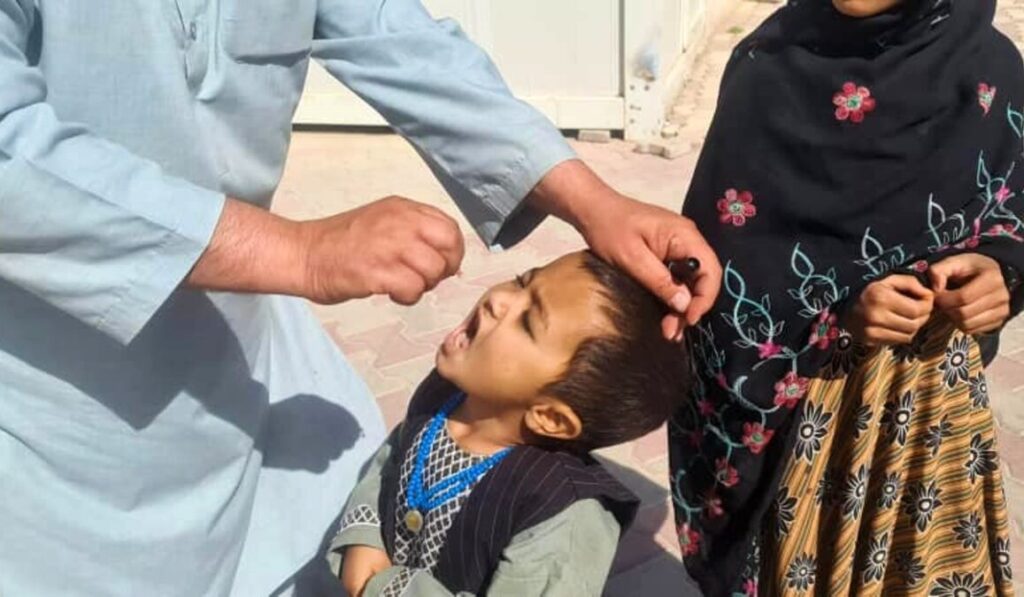
The second subnational polio vaccination campaign of the year was launched in 20 provinces of the country, with the Taliban health ministry saying the effort aims to immunize 8.3 million children.
The campaign will continue for three days.
Noor Jalal Jalali, the Taliban’s minister of public health, said the ministry remained committed to eliminating polio in coordination with international partners.
“We are trying to continue polio vaccination campaigns and complementary health services in order to achieve the goal of completely eradicating polio across the country,” he said in a statement issued at the launch of the campaign.
He also urged residents to cooperate with vaccination teams during the drive.
The latest campaign follows an earlier nationwide effort this year during which at least 12.6 million children under the age of 5 received polio vaccinations, according to UNICEF.
Afghanistan remains one of only two countries in the world where transmission of wild poliovirus has never been fully interrupted, alongside neighboring Pakistan. According to the World Health Organization, nine cases of wild poliovirus type 1 were reported in Afghanistan in 2025, compared with 25 cases recorded during all of 2024.
The World Health Organization said ongoing transmission in Afghanistan remains concentrated primarily in the country’s southern and eastern regions, particularly along cross-border corridors linking Afghanistan and Pakistan. The agency also warned that continued population movement between the two countries poses a persistent risk for cross-border transmission.
In its latest emergency assessment issued in March, the WHO expressed concern that restrictions imposed on vaccination operations in Afghanistan were limiting access to children, particularly in high-risk areas.
For years, Afghanistan’s polio campaigns relied heavily on house-to-house vaccination drives, a strategy international health agencies considered critical to reaching vulnerable children. But since late 2024, Taliban have largely halted door-to-door campaigns, shifting vaccinations to mosque-based and site-to-site operations while also sharply limiting the participation of female health workers.
The WHO has warned that site-to-site campaigns often fail to reach all eligible children, especially younger children, and said limited participation by women vaccinators further weakens coverage in conservative communities where male health workers may not be permitted to interact directly with mothers and children.
Despite those challenges, Afghanistan conducted two nationwide and five subnational vaccination rounds in 2025, according to the World Health Organization, including targeted immunization campaigns in high-risk areas of the country’s east, south and southeast regions.
Health officials say geography, insecurity, population displacement and limited health infrastructure continue to complicate eradication efforts in several provinces, including Helmand, Paktika, Kunar and Uruzgan.
The World Health Organization has continued to classify the international spread of poliovirus as a Public Health Emergency of International Concern, warning that until transmission is stopped in Afghanistan and Pakistan, the risk of international spread remains. Earlier this year, the agency linked a positive environmental sample detected in Germany to a virus strain previously identified in Kandahar province.