More than 300 exiled journalists, media advocates and academics gathered in Toronto this week for the third annual conference of the Center for Freedom of Expression, focusing on the growing challenges faced by journalists forced to flee their countries because of threats, censorship and political repression.
The conference, held on May 12 to mark World Press Freedom Day, brought together exiled reporters from more than 40 countries across Asia, Europe, the Middle East, Africa and South America, organizers said. Canadian politicians, university professors, students and Afghan journalists living in Canada also attended.
The event centered on the deteriorating state of press freedom globally and the hardships confronting journalists working in exile, many of whom continue reporting on their home countries despite security risks, financial pressures and limited access to sources.
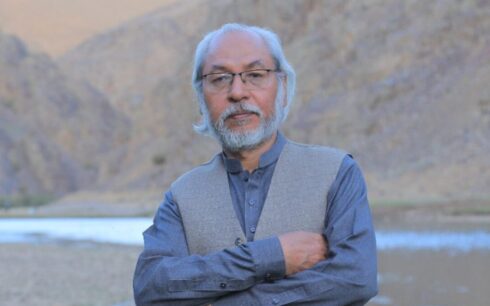
Najib Asil, founder and president of the Center for Freedom of Expression, said many exiled journalists struggled to rebuild professional careers in their host countries, even after years of experience and advanced journalism training.
“Continuing media work in exile is not easy,” Asil said. “Many journalists are forced to work outside their profession to support themselves while dealing with psychological pressure, separation from family and ongoing security concerns.”
He said the organization had spent the past three years building an international network connecting hundreds of exiled journalists and media workers from around the world.
The conference’s featured guest was Lyse Doucet, the BBC’s chief international correspondent and author of The Finest Hotel in Kabul: A People’s History of Afghanistan. In a conversation with CBC host Nahla Ayed, Doucet spoke about global press freedom and reflected on the development of Afghanistan’s media sector over the past two decades.
She also praised Afghan journalists in exile for continuing to document events inside Afghanistan despite mounting restrictions imposed since the Taliban’s return to power in 2021.
The center honored Doucet for more than four decades of reporting on Afghanistan and the broader region.
A panel discussion titled “How Can We Report on Our Countries When We Cannot Return?” examined the practical and emotional challenges of journalism in exile.
The discussion was moderated by Jennifer Hollett, chief executive of The Walrus, and featured Haroun Najafizada, head of Afghanistan International; Anderson Boscán, an investigative journalist from Ecuador; Arzu Yildiz, a Turkish investigative journalist living in exile; and Walid Al-Batrawi, a former Al Jazeera journalist from Palestine.
Panelists described difficulties including limited access to sources, safety threats and psychological strain, while emphasizing the importance of cooperation between exiled journalists and international media organizations to continue covering developments in their home countries.
The conference also honored Mostafa Al-Asr, an exiled Egyptian journalist working with the Toronto-based television network Mowj, as well as the leadership of New Perspective, an exiled media outlet serving African audiences from Toronto.
At the close of the gathering, participants called for greater international support for exiled journalists.
The participants urged the Canadian government and international media-support organizations to expand assistance for Afghan journalists seeking resettlement, particularly those currently stranded in Pakistan, Iran and Turkey.