A study by a Canada-based research group shows that 95% of Afghan women no longer trust the Taliban’s justice system and are unwilling to pursue legal cases, highlighting what researchers describe as a near-total collapse of confidence in legal institutions.
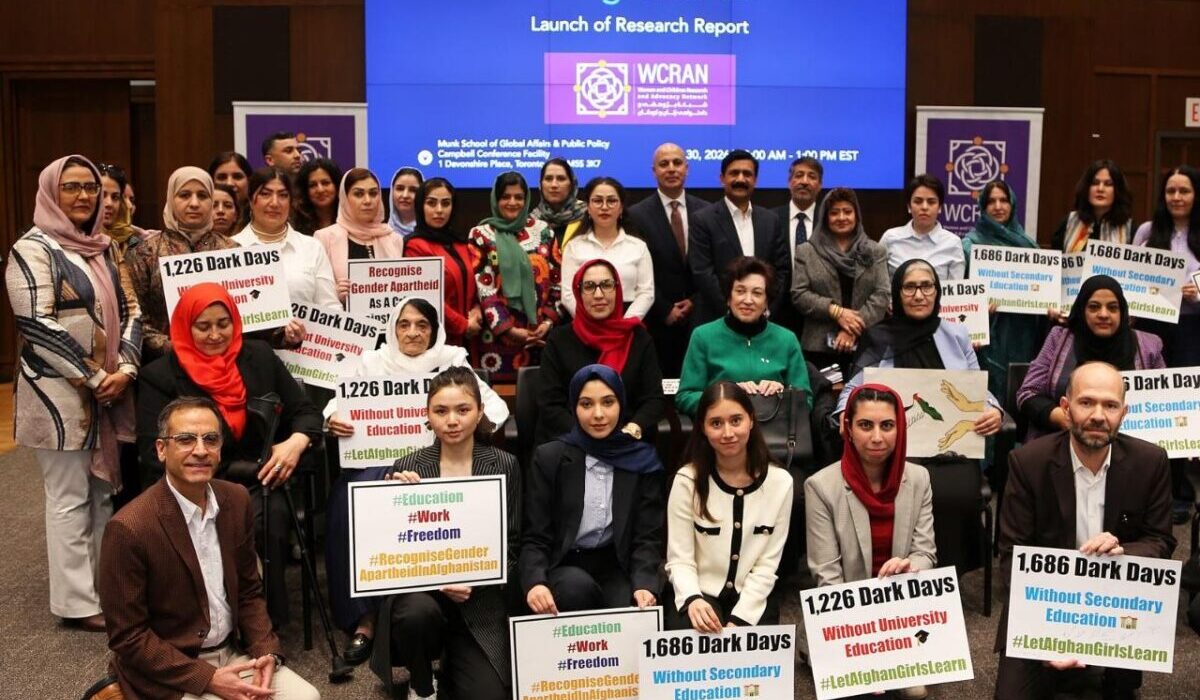
The report, published by the Women and Children Research and Advocacy Network in collaboration with the University of Toronto, was presented Friday, May 1, at an international conference in Toronto.
The findings point to sweeping structural changes in Afghanistan’s justice system since the Taliban returned to power in August 2021.
According to the report, 95% of respondents said they do not pursue legal claims due to lack of trust, 91% said the removal of female legal professionals has significantly affected case outcomes, 81% reported major or complete changes in the justice system and 65% described their experiences with courts as “very negative”,
The report did not specify the number of participants surveyed or details about how the data was collected.
Researchers say formal justice institutions have been largely replaced by informal mechanisms, weakening accountability and access to fair legal processes.
Zarqa Yaftali, founder of Women and Children Research and Advocacy Network, said the system has been “severely weakened,” creating conditions where impunity — particularly in cases of violence against women — has expanded.
Report presenter Freshta Karimi said the findings reflect the systematic exclusion of women from the justice system, contributing to increased violence, psychological harm and widespread despair.
Participants at the conference said women are increasingly denied access to lawyers and legal representation, with some warning that the justice system is being used as a tool of repression.
A separate panel focused on international legal responses, with participants calling for recognition of “gender apartheid” as an international crime.
Richard Bennett, the UN special rapporteur for Afghanistan, said sustained international pressure is needed to improve human rights conditions, particularly for women.
Former lawmaker Fawzia Koofi warned that the absence of fair trials and rising arbitrary detentions are contributing to instability.
Education advocate Ziauddin Yousafzai said restrictions on girls’ education are part of a broader pattern of rights violations.
Afghanistan’s ambassador to Canada, Hassan Soroush, called for a coordinated international response combining research, advocacy and accountability mechanisms.
Organizers said women in Afghanistan are facing one of the most severe forms of systemic discrimination globally, severely limiting access to justice and public life.
The event concluded with calls for stronger international action and support for women-led civil society groups.