Nearly eight months after a powerful earthquake struck eastern Afghanistan on Aug. 31, 2025, killing more than 2,150 people and devastating entire communities, hundreds of thousands of survivors remain in urgent need of assistance, according to the United Nations Office for the Coordination of Humanitarian Affairs (OCHA).
The quake, which measured above magnitude 6.0, affected nearly half a million people across Kunar and Nangarhar provinces. As of early 2026, more than 221,000 people continued to require humanitarian aid, the agency said.
Despite a rapid emergency response that reached more than 300,000 people with food, water, medical care and shelter, recovery has slowed markedly, OCHA reported. For many families, the crisis has shifted from immediate survival to a prolonged struggle to rebuild.
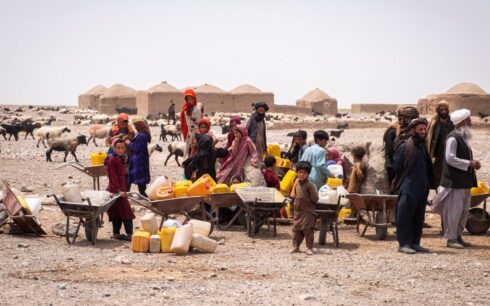
About 7,600 families remain in temporary shelters across displacement sites, where thin tents offer little protection against harsh weather, according to the agency. What was intended as a short-term solution has hardened into a long-term condition.
“I am a widow and I have only this one tent,” a woman in Kunar said in OCHA’s report, describing her young children’s exposure to the cold. Another resident said his family continues to move between a damaged home and a tent. “Even after months, we are still in the same situation,” he said.
The destruction of housing remains the central obstacle to recovery. Thousands of homes have yet to be rebuilt, and many families lack the financial means, materials or technical support to begin reconstruction, OCHA said. Humanitarian officials warn that funding shortfalls are limiting efforts to scale up shelter programs and transition communities out of displacement.
Basic services remain uneven. Many children are still without safe learning spaces as damaged schools and scarce resources disrupt education. Access to clean water and sanitation is inconsistent, raising health risks. Mobile health teams have expanded their reach, but significant gaps persist, particularly in remote and mountainous areas, according to the agency.
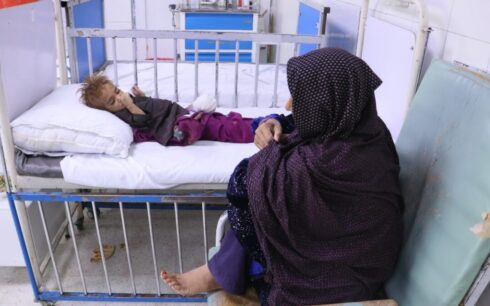
Those challenges are evident even near the capital. In Farza district, within Kabul province, a single sub-health center serves as the primary source of care for surrounding communities. Medical staff there treat more than 100 patients a day, most of them women and children, according to OCHA.
Patients often travel for hours on foot to reach the clinic, including pregnant women who must stop frequently due to exhaustion. The facility provides free consultations, medicines and maternal care, but resources remain strained. Some patients decline referrals for further treatment because they cannot afford additional costs, the report said.
Local residents have expressed concern that the clinic could close, highlighting the fragility of essential services even in areas relatively close to Kabul.
The earthquake unfolded against a broader humanitarian crisis. In 2025, Afghanistan faced overlapping shocks, including drought, displacement and economic hardship, according to OCHA. An estimated 22.9 million people required humanitarian assistance nationwide.
The Afghanistan Humanitarian Fund allocated $73.5 million in 2025, supporting aid for approximately 3.5 million people across sectors including health, food security, water, shelter and protection, the agency said. Joint funding efforts reached more than six million people, while $14.3 million in cash assistance helped households meet urgent needs.
Still, humanitarian needs continue to outpace available funding, forcing aid agencies to prioritize the most severe cases and leaving significant gaps in recovery efforts.
Aid officials say the focus must now shift beyond emergency relief to long-term rebuilding — restoring homes, livelihoods, education and healthcare systems. That transition, they warn, will require sustained international support.
For families still living under canvas, the timeline of recovery remains uncertain. As economic hardship deepens and seasonal extremes persist, the risk is not only prolonged displacement but a further deterioration in living conditions.
The earthquake may have struck in a matter of minutes, but for many Afghans, its consequences are still unfolding, day by day, with no clear end in sight, according to OCHA.